What Makes A Good Place To Learn To Surf?
The honest criteria that separate a good learn-to-surf beach from a bad one, and how Noosa's Main Beach, operator ratios and patrol setup measure against them.
A good place to learn to surf combines four things the official sources actually describe: a sheltered, north-facing beach rather than an exposed one, lifeguard patrols or clear safety cover, a beginner lesson format with a stated instructor ratio and included gear, and a school that adapts when conditions change. Noosa's Main Beach is one of the few Australian spots where all four are documented in operator and council pages rather than marketing claims.
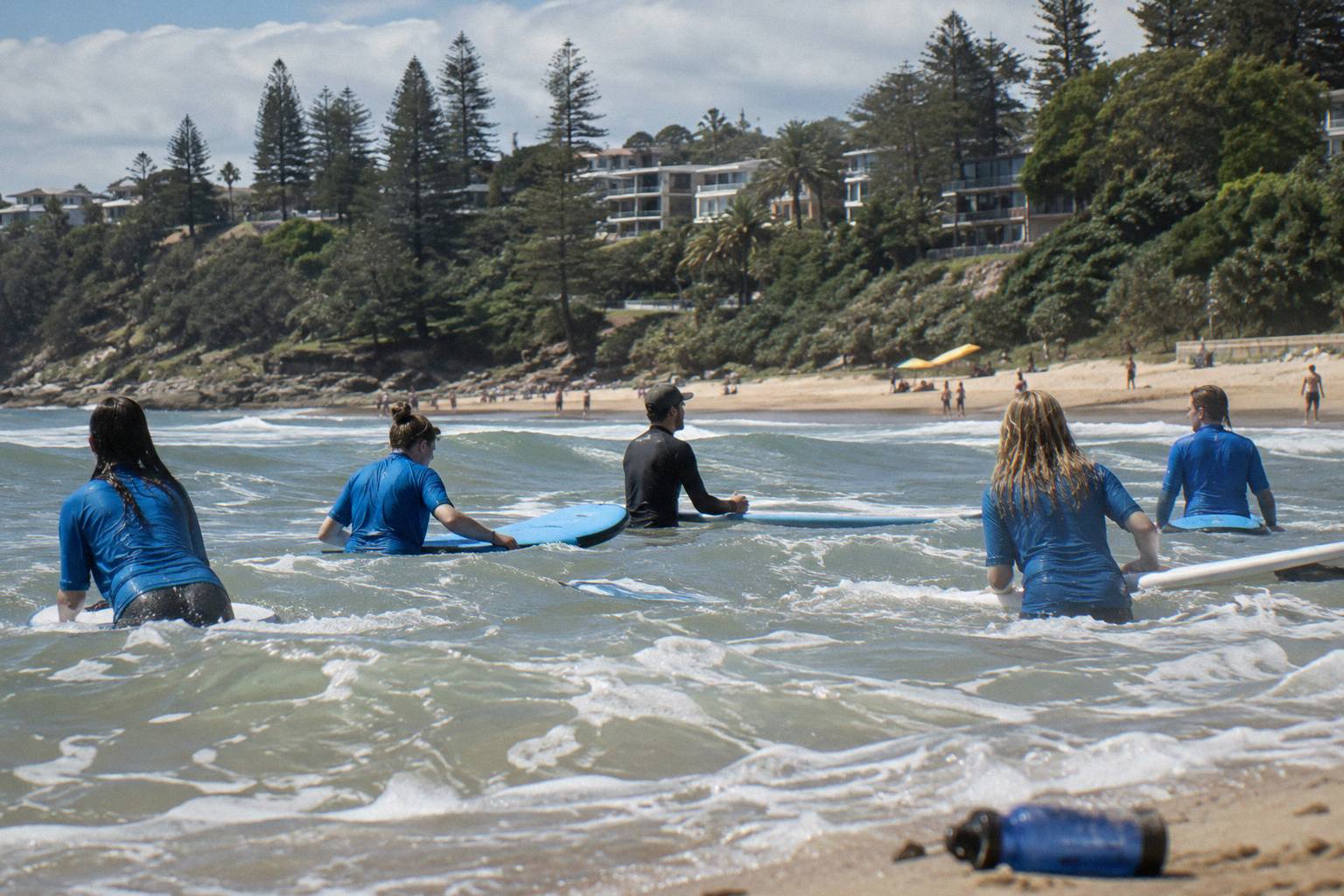
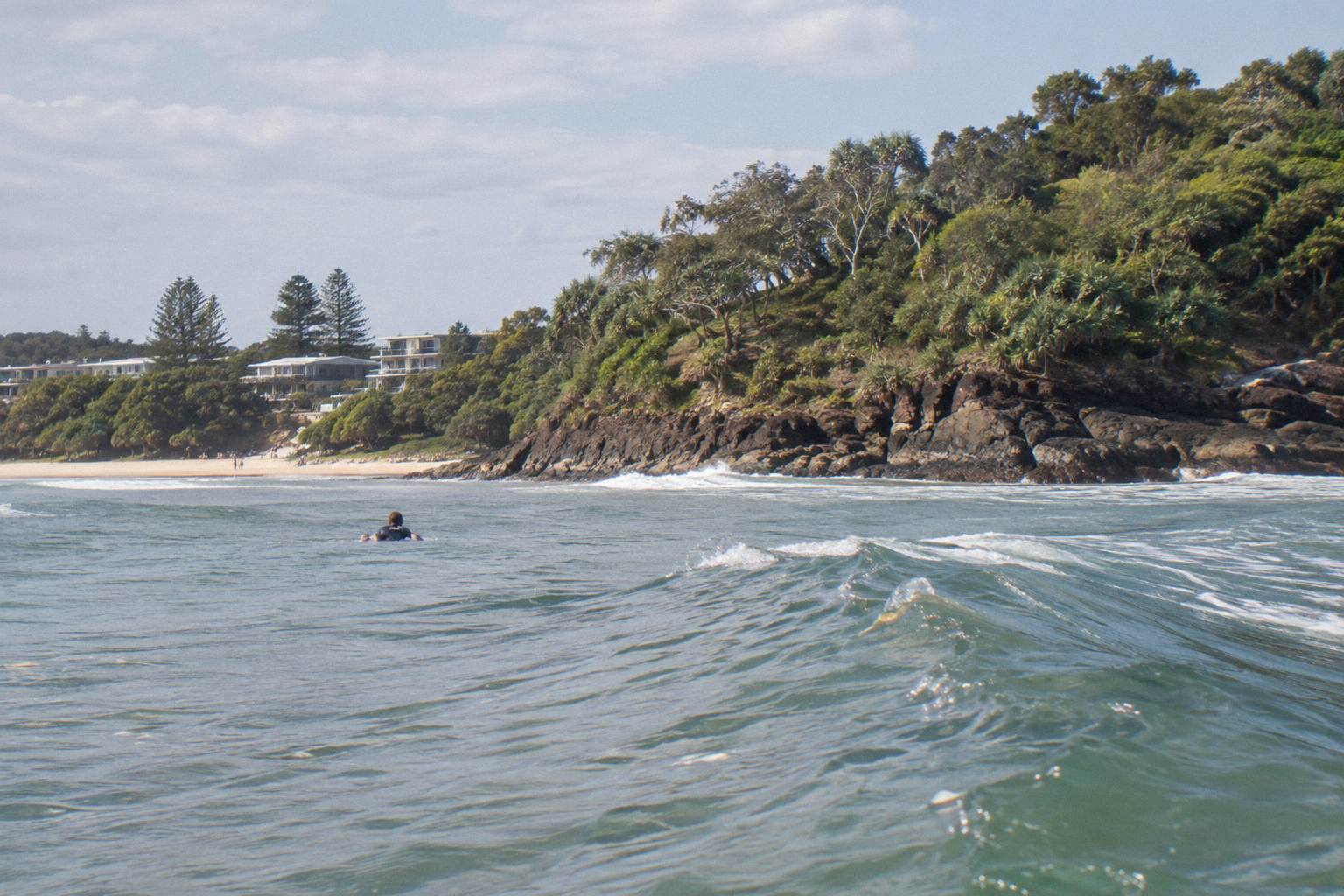
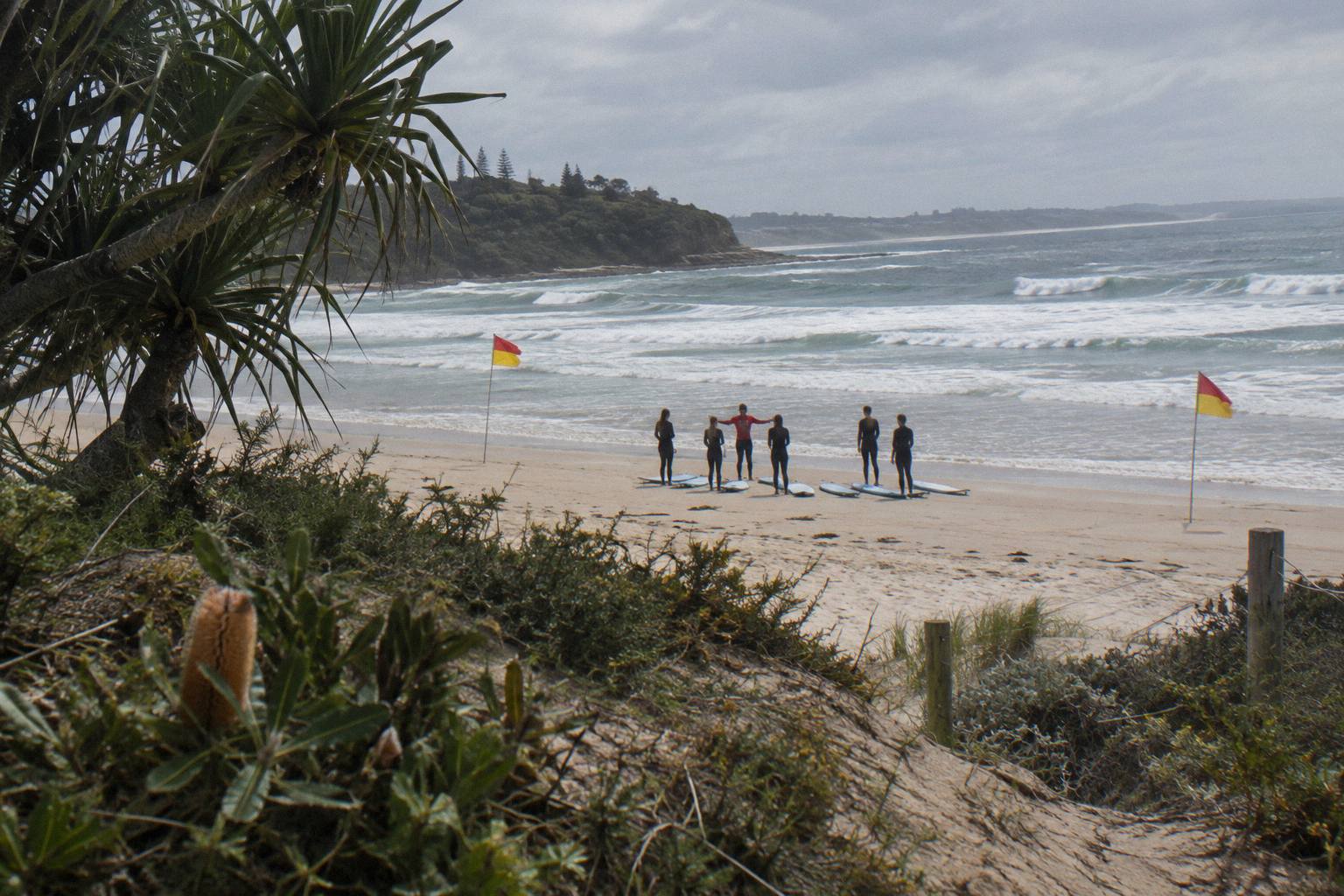
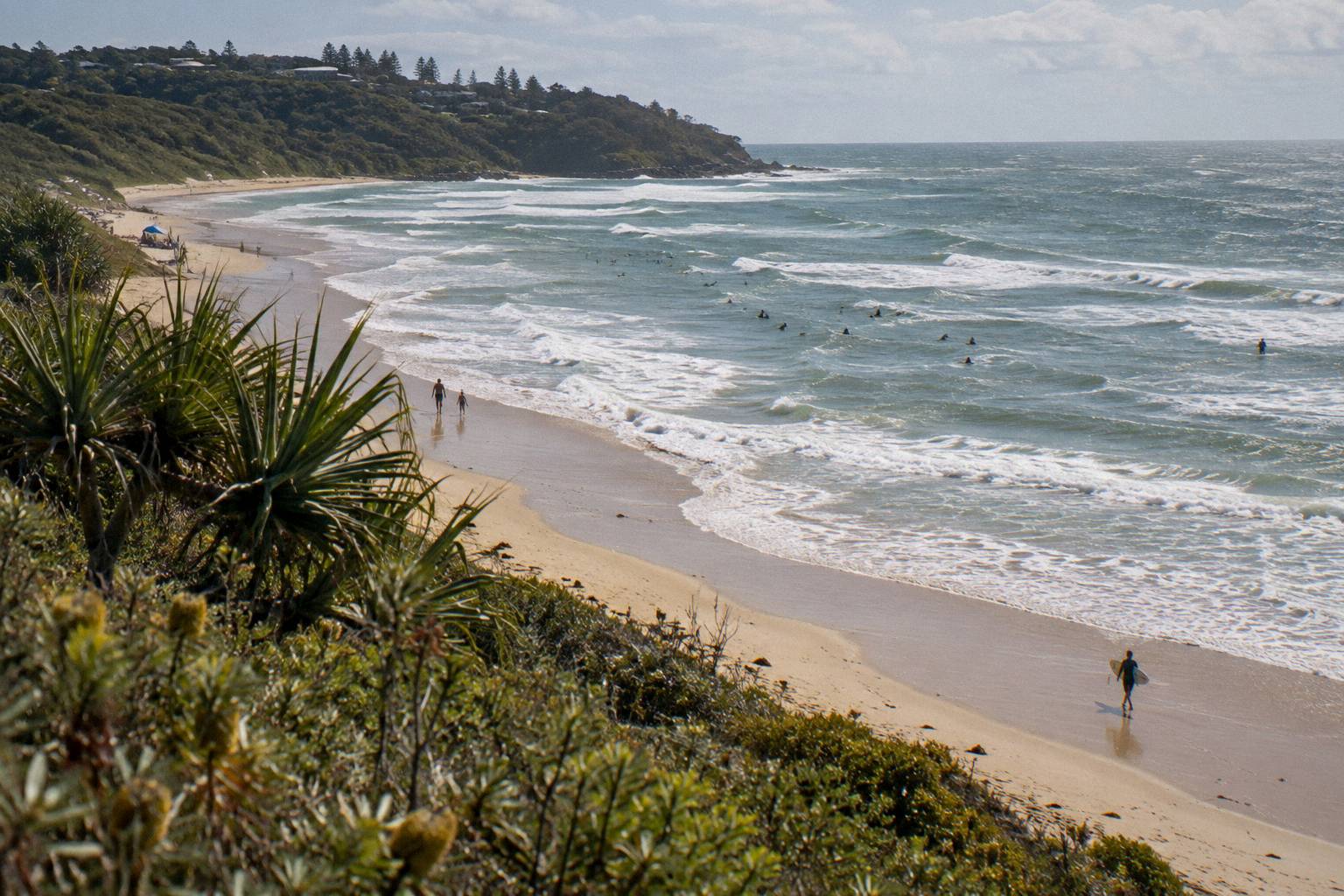
Those four criteria are the spine of this article. The first is geography. Noosa Council describes Noosa Main Beach as north-facing and 'sheltered', while the eastern beaches in the same stretch of coast, Sunshine, Sunrise, Castaways, Marcus and Peregian, are described as 'exposed to more powerful surf'. That single council distinction is the difference between a beach where a first-timer can stand up in waist-deep water and one where the same first-timer spends the whole lesson being worked over by shore break. A learner beach faces away from the dominant swell, and the council's own wording confirms Main Beach does exactly that.
The second criterion is safety cover. Noosa Council's beach safety page names Noosa Main Beach, Sunshine Beach and Peregian Beach as patrolled, with Sunrise Beach and North Peregian patrolled seasonally, and the council contracts Surf Life Saving Queensland for lifeguard services. The third is lesson structure: a stated ratio of instructors to students, gear included, and a clear policy on what happens when the surf is too large. The fourth is adaptability, and both of Noosa's Main Beach operators document it. Merrick's runs lessons in all weather and moves to the shore or reschedules if the water is unsafe, and Go Ride A Wave stays closer to shore or relocates to a more sheltered beach if the surf is large.
If you are weighing these options for a trip to Noosa, these are the three products this site covers that map most directly onto the criteria above:
- Board Plus Rash Vest Or Wetsuit
- Waist-Deep Beginner Groups
- 4x4 Beach Drive Surf Safari
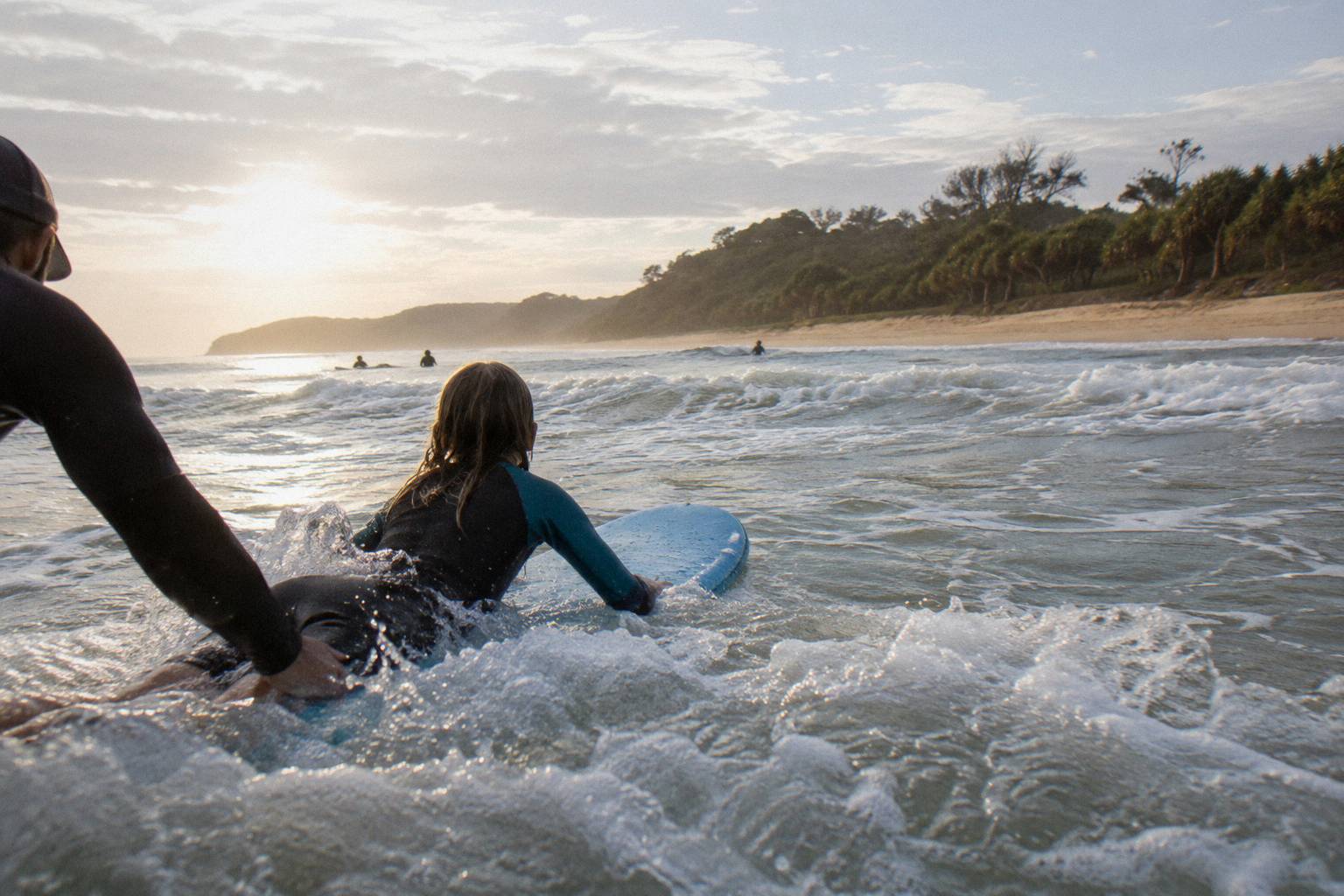
- Private Local Pro Session
Each of those three answers the beginner brief differently, and later sections unpack which suits which learner. For a fuller rundown of the town's teaching scene, the Noosa surf schools compared guide works through every operator on this site's roster side by side.
Why Noosa Main Beach Fits The Beginner Brief
Noosa Main Beach fits because it is the beach the council itself calls sheltered and north-facing, it is one of the three beaches in the area with lifeguard patrols, and it is where the commercial learn-to-surf permit locations actually sit: Main Beach West, Access 14 extending 50 metres west and Access 11 extending 50 metres east. The lesson infrastructure and the forgiving geography are on the same stretch of sand.
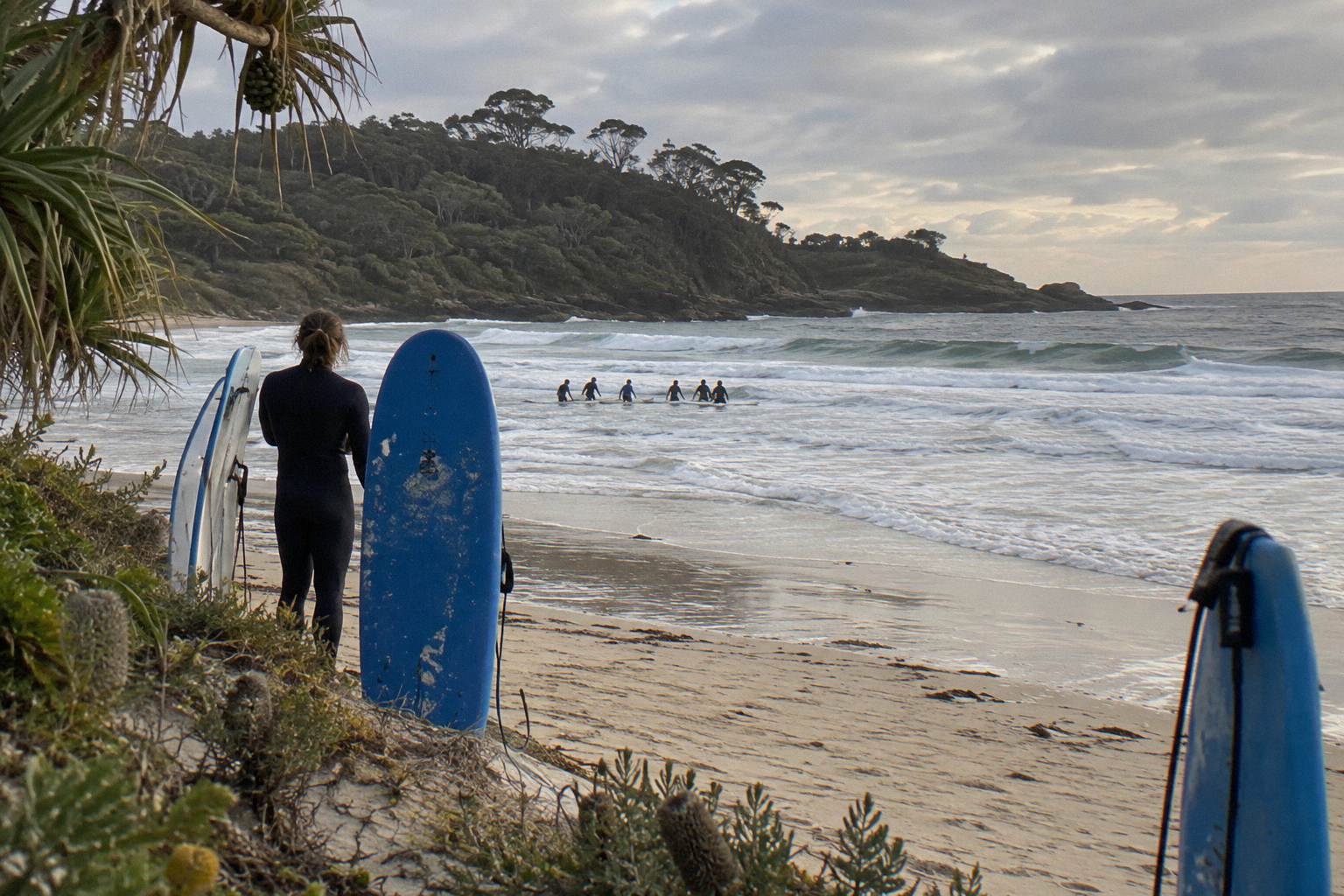
That last point deserves explanation, because it is not obvious from a first search. Noosa Council's commercial-use-of-community-land policy, endorsed 21 May 2026, defines exactly where 'Learn to Surf Lessons' may operate: Main Beach West, Access 14 extending 50 metres west, and Access 11 extending 50 metres east. Ten Commercial High Use permits are listed for Noosa Main Beach. The existing five-year permits expired on 30 June 2026 and a tender for new permits started on 1 July 2026. Who holds the new permits is not confirmed. What the policy does show is that the council has deliberately concentrated commercial surf teaching on the sheltered, patrolled, north-facing end of the coast rather than letting it scatter across the exposed eastern beaches.
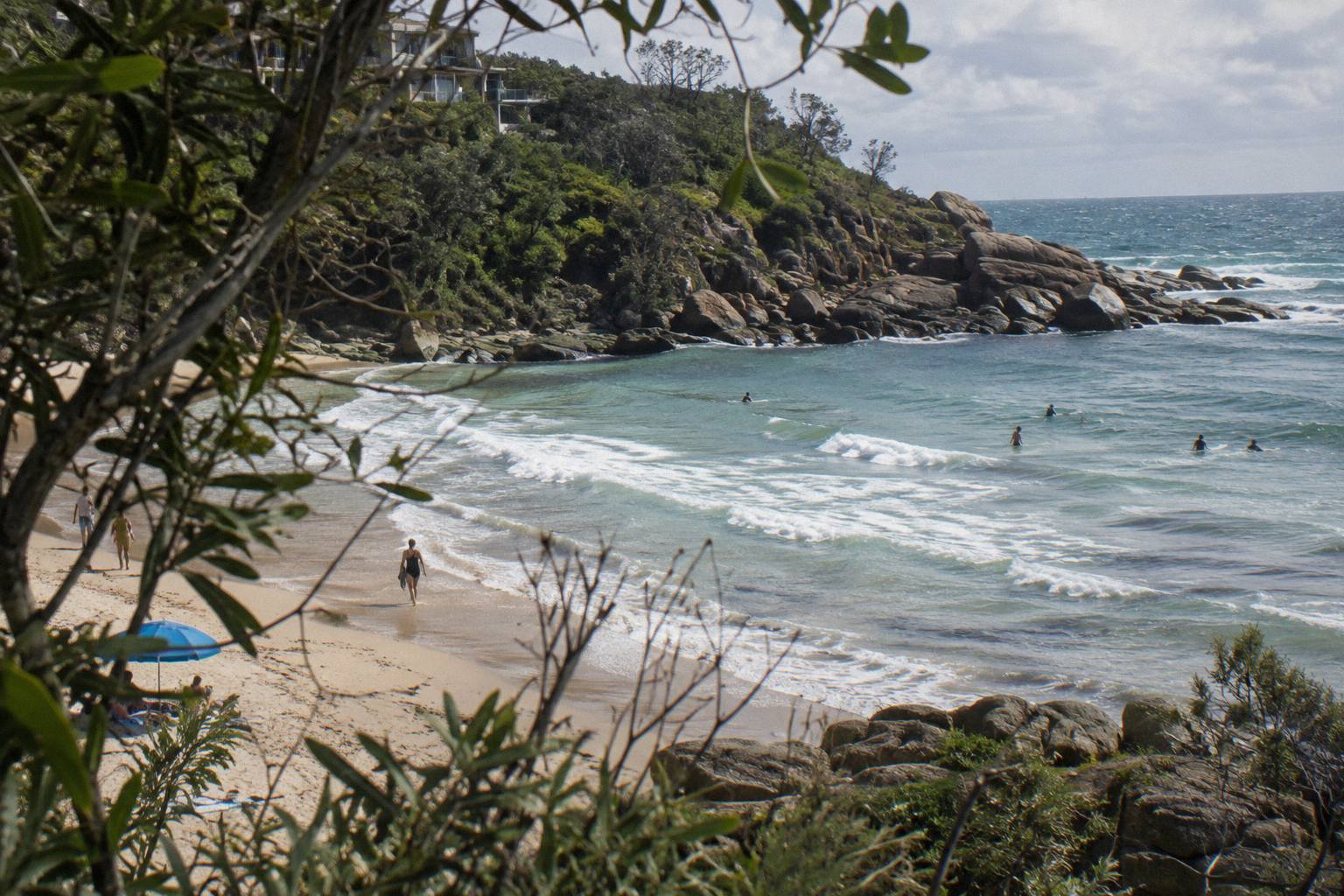
The two meeting points sit inside that zone. Merrick's Noosa Learn to Surf meets at Beach Access 14, Claude Batten Drive, and Go Ride A Wave meets at its white trailer at Beach Access 11 in Noosa Woods on the same road. Access 11 and Access 14 are two different meeting points, a detail that matters on the morning of a lesson. The full logistics are laid out in getting to Noosa Main Beach for a lesson.
There is a deeper reason this geography works for learners, and it connects to why the town has a surfing reserve at all. Noosa Council records the Noosa World Surfing Reserve as designated in 2020, describing 'five of the world's best point breaks', and the council itself calls Noosa 'one of the world's most iconic longboard waves'. The same headlands that shelter Main Beach from the raw Pacific swell are what shape those point breaks around the corner. The learner beach and the famous breaks are two faces of the same coastline, and the council plans a Surf Management Plan engagement in early 2027 that will keep that relationship under formal review.
How Instructor Ratios And Lesson Format Shape Learning
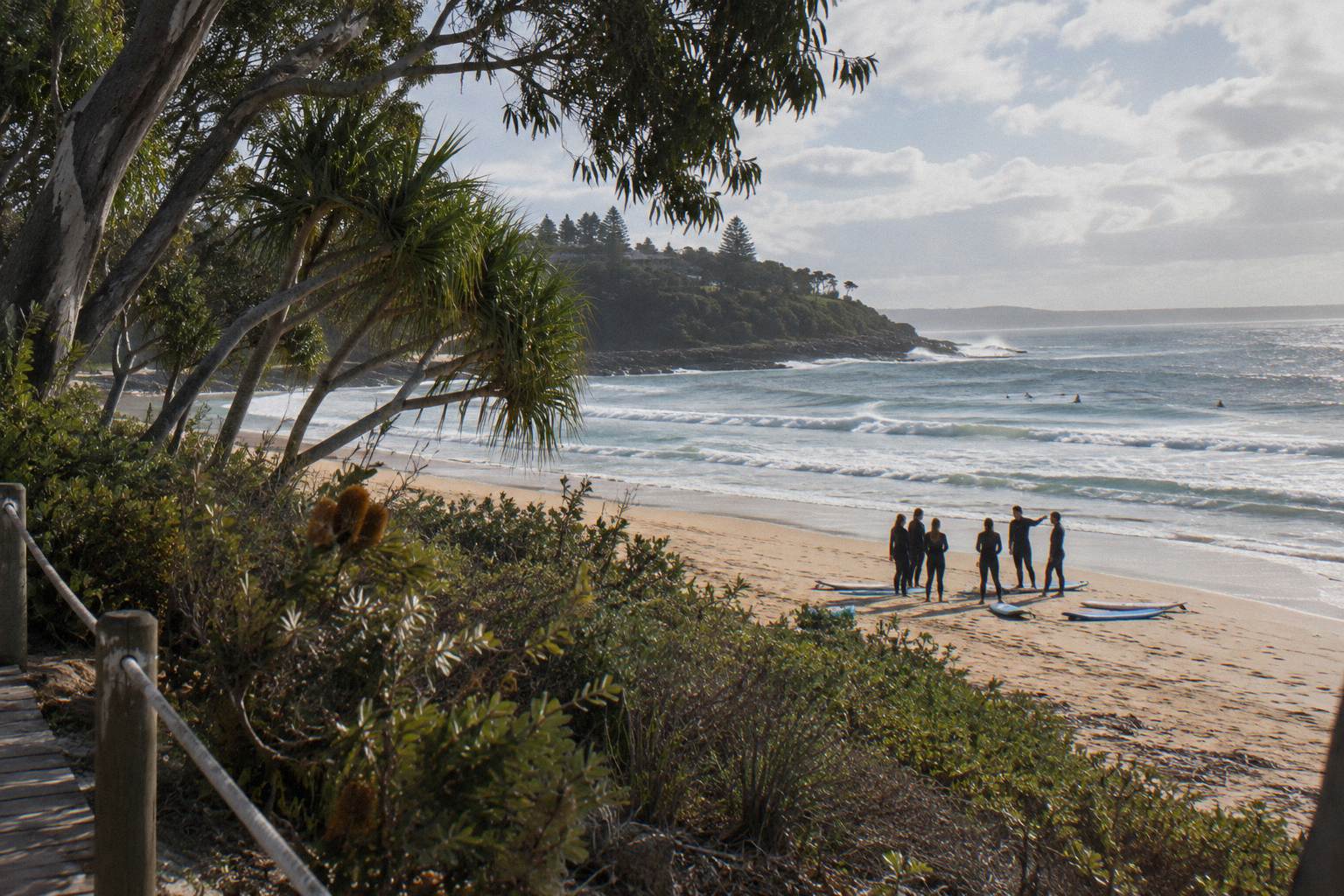
Merrick's states a group ratio of 1 instructor to 7 students on its product page, runs 2-hour group lessons daily at 8.45am and 1.15pm on its own page (the booking page shows 9.00am and 1.30pm), includes a surfboard and a rash vest or wetsuit, and requires a minimum age of 7 with the ability to swim 25 metres unassisted. That is the most complete beginner format published by any operator on this site, and completeness is itself a marker of a good learning beach.
A stated ratio is worth more than a superlative. A school that publishes '1 instructor to 7 students' is telling you what attention you will actually get, and you can compare it against anything else on offer. Go Ride A Wave does not publish a ratio, but it does describe its instructors as 'highly trained and fully qualified lifeguards' and states its lessons for beginners run in waist-deep water, with a soft beginner board, leg rope and a wetsuit or rash shirt included depending on the time of year. Its operator page gives a minimum age of 7 for public lessons. Neither school lists a minute-by-minute running order; what the operators state is the lesson length, the gear and the water depth, and that is enough to judge the format.
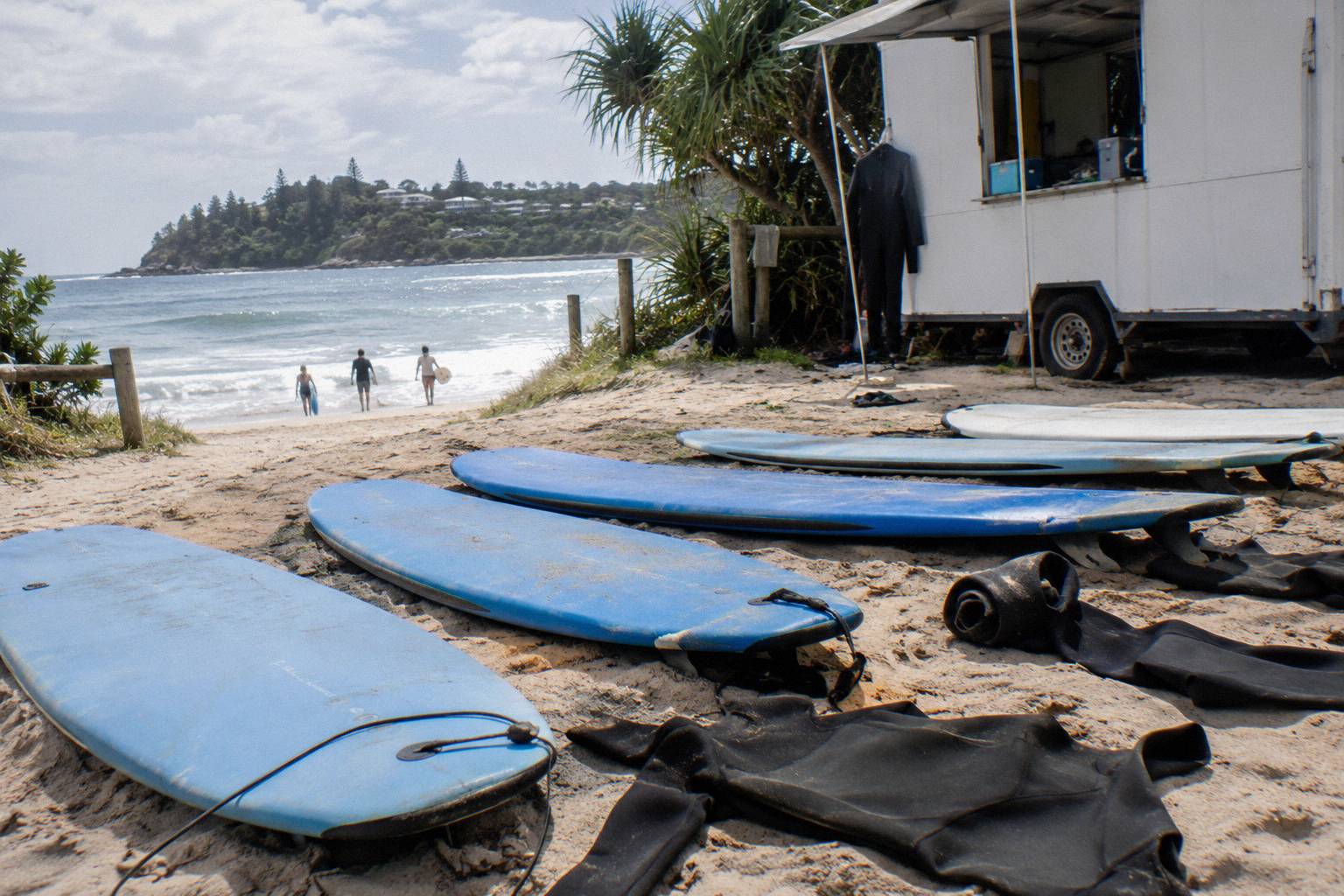
The lesson-booking specifics are on the operator's own page, learntosurf.com.au, and the times are worth confirming when you book: the operator's own page lists group lessons at 8.45am and 1.15pm, while the booking page shows 9.00am and 1.30pm. Private lessons run daily at 10.45am. Merrick's operates 363 days a year, closed only Christmas Day and New Year's Day. The group lesson is rated 4.8 on the live listing.
The pricing structure rewards commitment in a way that suits a learner who will need more than one session: the 2-hour group lesson is AUD 94 per person, a 2 x 2-hour block in one day is AUD 180, 3 x 2-hour is AUD 250 and 5 x 2-hour is AUD 385. Private 2-hour lessons run from AUD 250 for one person up to AUD 500 for five, booked by party size. If you want the full price picture across operators, how much surf classes cost in Noosa carries the whole ladder.
What Gear A Beginner Beach Should Provide
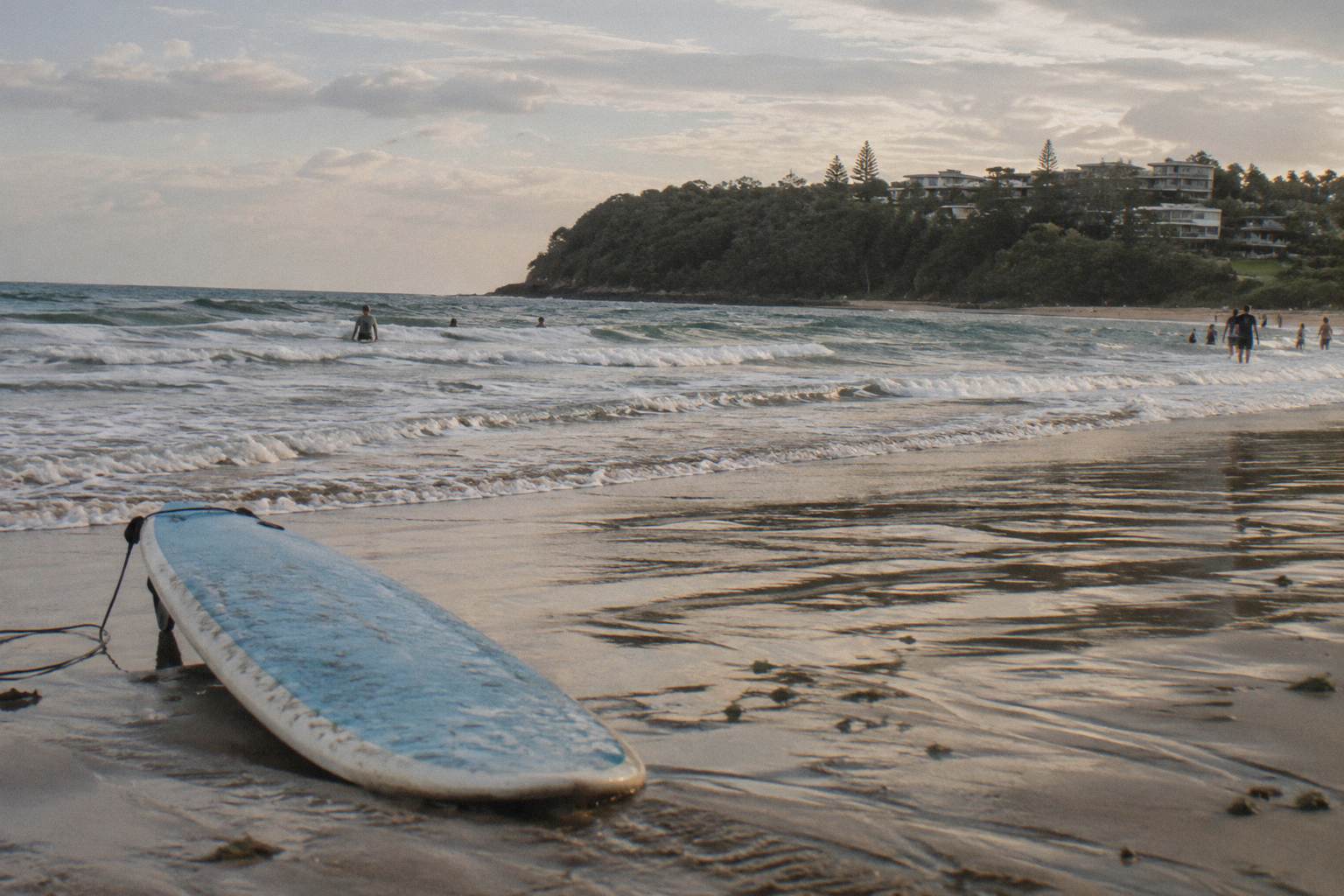
Every operator on this site includes the beginner gear in the lesson price: Merrick's includes a surfboard and a rash vest or wetsuit, Go Ride A Wave includes a soft beginner board, leg rope, a wetsuit or rash shirt and safety information, and both teach on soft beginner equipment. A learning beach where you must supply your own board is a red flag, and Noosa's Main Beach operators clear it on paper.
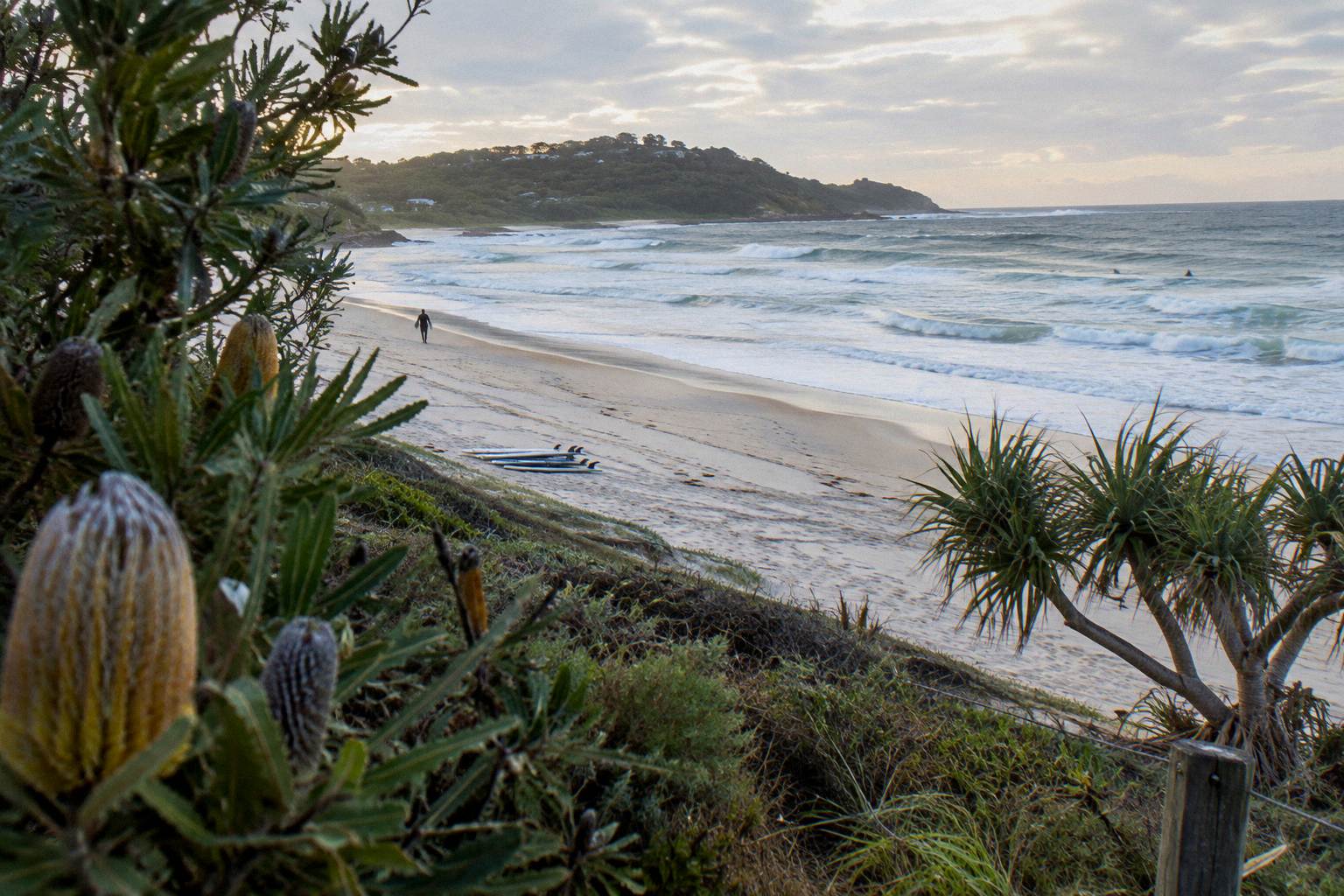
Beginner gear is soft gear, and the operators say so plainly. Go Ride A Wave's 2-hour experience uses a soft beginner board with a leg rope. Sunshine Coast Elite Surf Coaching, a direct-only school east of Noosa that specialises in intermediate and advanced surfers, includes Mick Fanning soft boards and charges AUD 20 more for a hard board. Send it Surf Academy at Peregian includes soft-top boards, rashies and seasonal wetsuits. Nobody in the roster teaches beginners on hard boards, which is the pattern you should expect anywhere that calls itself a learning beach.
What is not stated is just as telling. Sun protection, towels, water and what to wear underneath are not in the operator facts, so the answer is to ask the operator. If that is the gap you are filling, what to bring to a Noosa surf class and what to wear to a Noosa surf class work through the decisions with the same discipline.
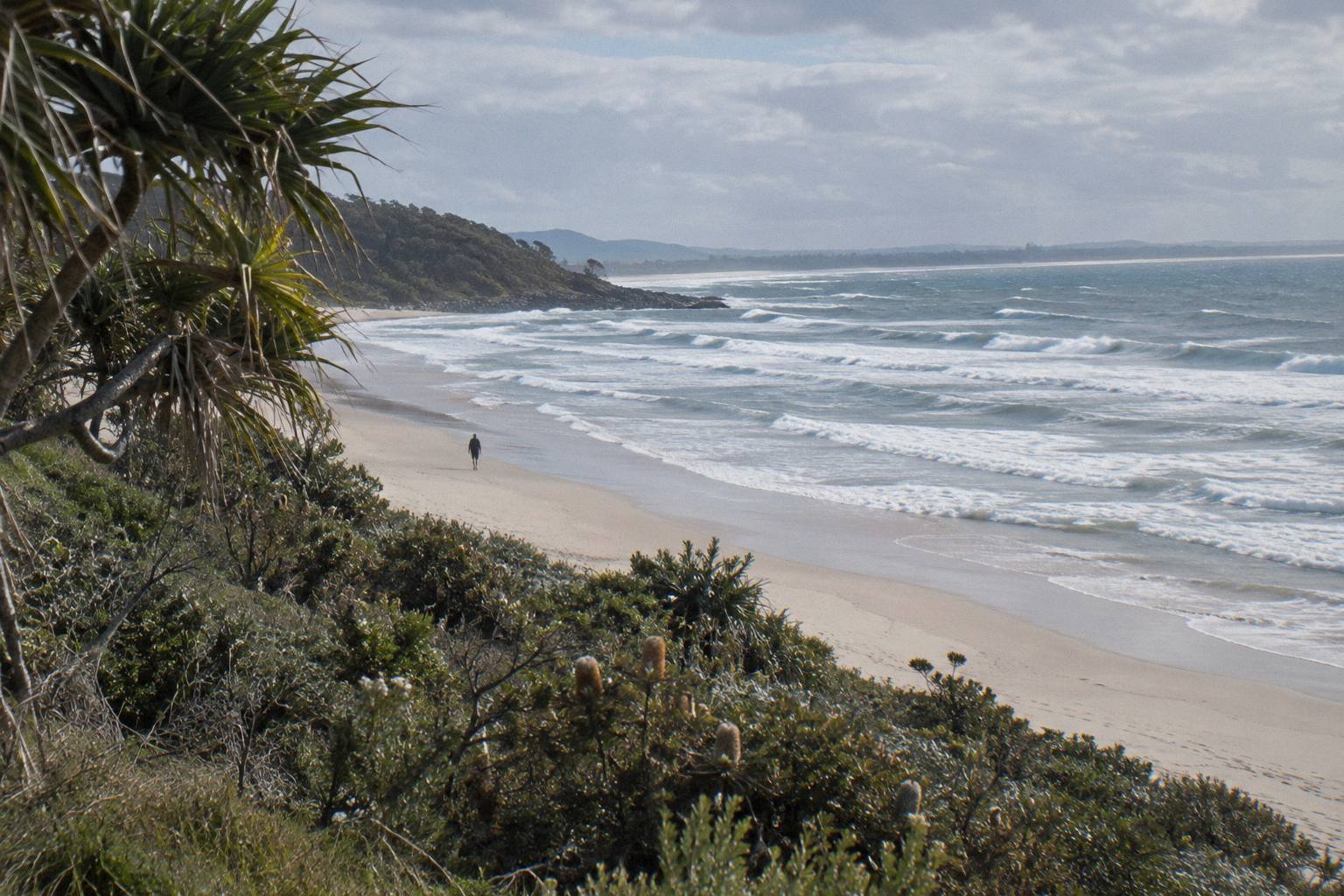
The water temperature shapes the gear conversation. Merrick's own visitor page gives water temperatures of about 19 °C in winter to about 25 °C in summer, a figure attributed to the operator rather than presented as an official reading, and a separate sea-temperature reference site gives a 10-year average of about 23.6 °C for mid November. That range explains why both Main Beach operators offer 'a rash vest or wetsuit' rather than one fixed outfit: the gear flexes with the season.
Is Noosa The Best Place In The World To Learn To Surf?
No world ranking of learn-to-surf destinations exists, so nobody can prove a ranking. Noosa meets every documented criterion of a good learning beach: sheltered north-facing sand, patrols, published ratios, included gear and adaptive operators, plus a World Surfing Reserve designated in 2020.
That restraint matters because the internet is full of listicles crowning one beach or another. The claims this site can actually verify for Noosa are specific: the sheltered, north-facing Main Beach described by the council, the patrol list on the council's beach safety page, Merrick's published 1:7 group ratio, and the reserve designation of 2020 recorded by Noosa Council. If another destination wants to beat that, it needs to show the same documented specifics, not a slogan.
There is one Noosa option that takes the learner away from Main Beach altogether, and it is the related tour for this article. The Epic Learn To Surf Safari, run by Epic Ocean Adventures, is a 4x4 trip to Double Island Point, about six hours all up, with the meeting point at The J Noosa at 60 Noosa Drive in Noosa Heads. No price, rating, start time, age rule or inclusion list is stated for it on this site, and the surf itself happens at Double Island Point rather than Main Beach. For a learner who has already stood up in the whitewater and wants a day-trip adventure around the lesson, it is the natural next step, and you can check availability alongside the internal rundown of the safari and private formats.
Which Noosa Lesson Format Suits Which Learner?
The 2-hour group lesson at AUD 94 per person fits a first-timer on Main Beach, the private local-pro session fits an adult seeking one-on-one attention, the safari suits a confident learner after a full-day trip, and Go Ride A Wave's 2-hour experience serves a beginner who wants lifeguard-trained instructors in waist-deep water. Once the beach is right, format, not destination, drives the choice.
Here is the comparison restricted to what the facts actually state. Where a figure is not published, the table says so, because a line-by-line comparison must only compare like for like and must say plainly when a price or detail is absent.
| Format | Operator | Length | Price | Who it suits |
|---|---|---|---|---|
| 2-hour group lesson | Merrick's Noosa Learn to Surf | 2 hours | AUD 94 per person | First-timers from age 7 who can swim 25 m |
| 2-hour Surf Experience | Go Ride A Wave | 2 hours | Not published | Beginners who want lifeguard-trained instructors |
| Learn To Surf Safari | Epic Ocean Adventures | About 6 hours | Not stated | Learners wanting a full-day 4x4 trip |
| Private session with a local pro | Local pro (operator not named) | About 3 hours | Not stated | Adults 18 and over, up to 4 people |
The private option deserves its own paragraph. The Noosa Surf Experience With A Local Pro is a private session for up to 4 people, about 3 hours long, meeting at 60 Hastings Street, Noosa Heads, with a minimum age of 18 read from the booking page. No price, rating, start time or inclusions are stated. What it offers structurally is the smallest possible learning unit, one instructor and your own party, on the same sheltered stretch of coast.
Age rules are the quiet filter in all of this. Merrick's takes students from 7 who can swim 25 metres unassisted, and the local-pro session is 18 and over. If you are planning around children, kids surf classes in Noosa covers the holiday programmes both Main Beach operators run direct.
Safety Signals To Check On Any Learning Beach
The official advice is consistent everywhere: swim between the red and yellow flags, never swim at unpatrolled beaches, and check the Beachsafe app for patrol status, hazards, swell and tide. Noosa Main Beach, Sunshine Beach and Peregian Beach are the patrolled beaches in this area, with Sunrise Beach and North Peregian patrolled seasonally, and lifeguard services are contracted to Surf Life Saving Queensland. Those are the checks that make a learning beach safe, in Noosa or anywhere else.
Marine stingers are a question every Queensland-bound learner asks, and the official answer is reassuring for Noosa specifically. Queensland Government and Surf Life Saving Queensland place the dangerous box jellyfish and Irukandji in tropical Queensland: box jellyfish north of Agnes Water, Irukandji north of southern Fraser Island, in a November to May season. Noosa sits south of both ranges. Bluebottles are the more likely local sting, so ask your instructor. Sharks are managed state-wide through the Queensland Shark Control Program, which lists Noosa, Sunshine Beach and Peregian Beach on the Sunshine Coast; no equipment details or risk statistics are stated here, because none are in the facts. On rips, the official line is: swim between the flags and ask a lifeguard or your instructor.
Both Main Beach operators also publish weather and cancellation terms that matter to a beginner booking ahead. Merrick's offers a refund or credit with 24 hours' notice, or if the instructor cancels for unsafe conditions, with no refund simply for rain, and unsafe water may shift the lesson to the shore or reschedule it. Go Ride A Wave offers a full refund or credit with 24 hours' notice or if the operator cancels for weather, charges no-shows in full, and moves to more sheltered water if the surf is large. The full picture, including how multi-lesson blocks are refunded, is in Noosa surf class weather and cancellations.
Go Ride A Wave's own details live on its operator page, including office hours of 8am to 5pm daily and the phone number 1300 132 441. Its operator page also claims a Gold Tier 'Best of Queensland Experience' recognition for 2026, which is the operator's wording, repeated here as attribution rather than as this site's claim. The 2-hour experience is rated 4.9 on the live listing.
How To Judge Any Learn-To-Surf Spot Yourself
Score any candidate beach on five documented signals: orientation and shelter, patrol status, a published instructor ratio or stated instructor qualifications, included beginner gear, and a written policy for large surf. Noosa Main Beach scores on all five from council and operator pages, which is why this site keeps routing beginner readers there rather than to the exposed eastern breaks.
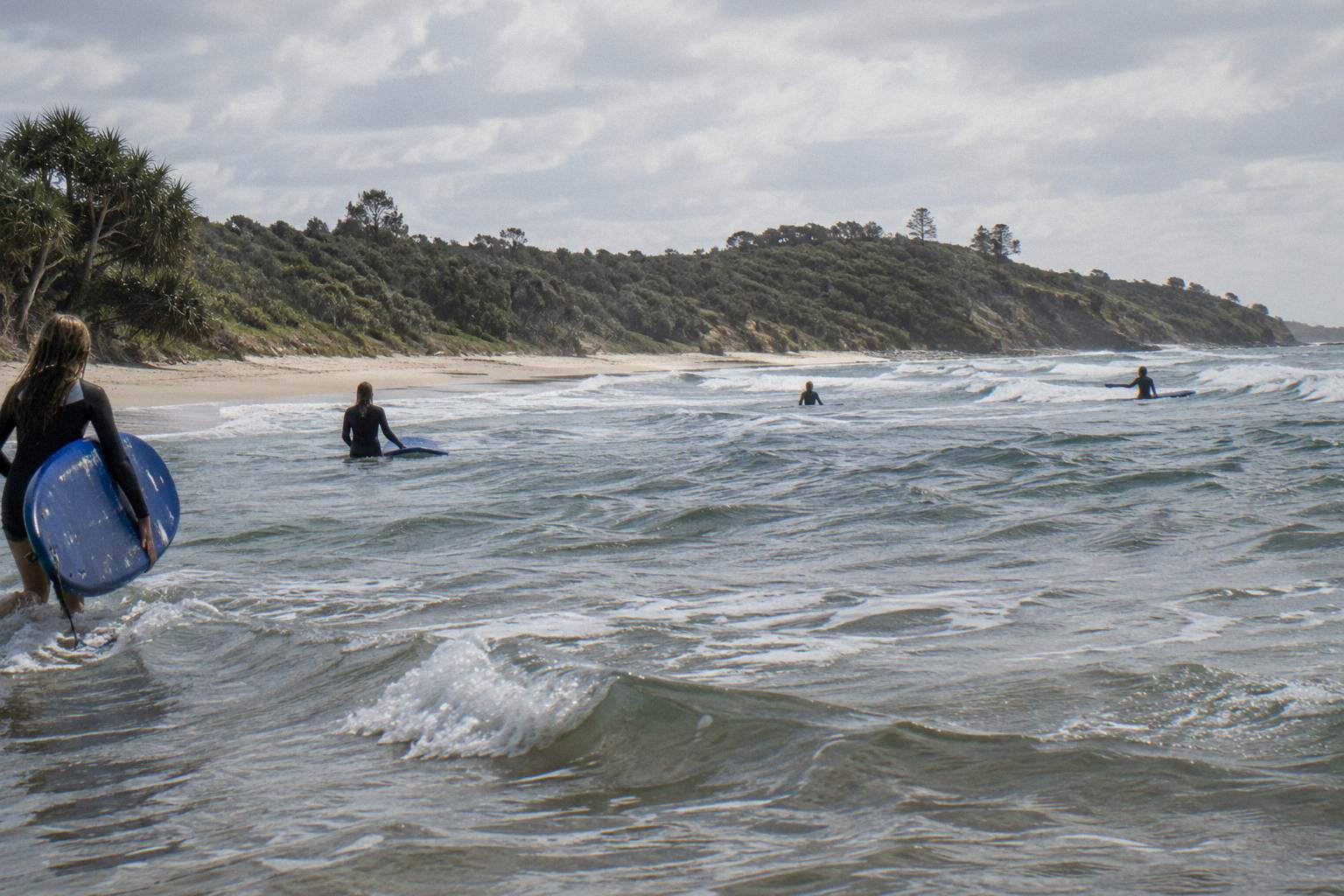
The checklist works as a portable version of everything above. It deliberately uses only the kinds of facts an official source or an operator page can supply, because those are the facts you can actually check before you book.
| Signal | What to look for | Noosa Main Beach status |
|---|---|---|
| Shelter | Council or official description of the beach's orientation | North-facing, described as 'sheltered' by Noosa Council |
| Patrols | Named patrolled beaches on an official safety page | Listed as patrolled; SLSQ contracted for lifeguards |
| Ratio or instructors | A published ratio or stated instructor credentials | Merrick's 1:7; Go Ride A Wave 'fully qualified lifeguards' |
| Gear | Soft beginner board and wetsuit or rash vest included | Included by both Main Beach operators |
| Large-surf policy | Written plan to move or reschedule | Stated by both operators |
One caution travels with the checklist: the eastern beaches fail the first test by the council's own wording, being 'exposed to more powerful surf', and Sunshine Coast Elite Surf Coaching, which roams Peregian, Marcus, Castaways, Sunrise and Sunshine Beach with the spot chosen daily, specialises in intermediate and advanced surfers even though it accepts beginners. A beginner can absolutely take a lesson on that side of the coast, but it is a different product with a different brief, and Noosa Surf Lessons keeps the two firmly separate when recommending formats. The council's Surf Management Plan engagement planned for early 2027 may reshape how that whole coastline is used.
Beyond the beginner stage, the question shifts. Noosa's reserve describes 'five of the world's best point breaks' and the named breaks, First Point, Little Cove, Tea Tree Bay, Granite Bay and Boiling Pot, exist as places on the map on the map. Learners who want to understand the progression anyway can start with First Point Noosa for learners and the guide to Noosa surf spots for beginners.
Common Questions About Learning To Surf
What Is The Best Place In The World To Learn To Surf?
No verified world ranking exists in this site's sources, so no destination can honestly be crowned. What the facts show is that Noosa meets every documented criterion of a good learning beach: a sheltered, north-facing Main Beach, lifeguard patrols through Surf Life Saving Queensland, a published 1:7 group ratio at Merrick's, included beginner gear and written large-surf policies at both Main Beach operators, all inside a World Surfing Reserve designated in 2020.
What Makes A Good Place To Learn To Surf?
Shelter first: a north-facing or otherwise protected beach with gentle whitewater rather than powerful shore break. Then patrols, a stated instructor ratio, soft beginner gear included, and an operator policy for moving or rescheduling when the surf is large. Water you can stand in helps too; Go Ride A Wave teaches beginners in waist-deep water on Main Beach.
Do I Need To Be A Strong Swimmer To Take A Surf Lesson In Noosa?
Merrick's requires students to swim 25 metres unassisted and sets a minimum age of 7. Go Ride A Wave states no minimum swimming ability and teaches beginners in waist-deep water. If swimming ability is a concern, say so when booking and the operator can place you accordingly; neither school publishes a stronger requirement than the ones stated here.
Are There Stingers Or Sharks At Noosa's Learner Beaches?
The dangerous box jellyfish and Irukandji risk sits in tropical Queensland, north of Agnes Water and southern Fraser Island respectively, and Noosa is south of both ranges. Bluebottles are the more likely local sting, so ask your instructor. The Queensland Shark Control Program lists Noosa, Sunshine Beach and Peregian Beach; no equipment or risk details are stated. Swim between the flags and check the Beachsafe app.
How Many Lessons Should A Beginner Book?
The operators do not publish a learning timeline, so no honest number can be given here. What exists is pricing that rewards blocks: Merrick's 2-hour group lesson is AUD 94 per person, with 2 x 2-hour at AUD 180, 3 x 2-hour at AUD 250 and 5 x 2-hour at AUD 385. Booking a block is the cheapest way to keep practising if one session is not enough.
Can Adults Learn To Surf In Noosa, Or Is It Mostly For Kids?
Adults are well catered for. Merrick's minimum age of 7 has no upper limit, Go Ride A Wave teaches mixed public lessons, and the Noosa Surf Experience With A Local Pro is a private session of about 3 hours for up to 4 people aged 18 and over, meeting at 60 Hastings Street. No teen-specific or adult-specific product exists on the booking pages, but every format except the kids programmes takes adults.