Noosa Surf Spots For Beginners: Points, Beaches And Reefs
Noosa is famous for its point breaks, but beginner lessons run somewhere else entirely. Here is where lessons happen, where the named breaks sit, and which beaches the council flags as more powerful.
Short answer
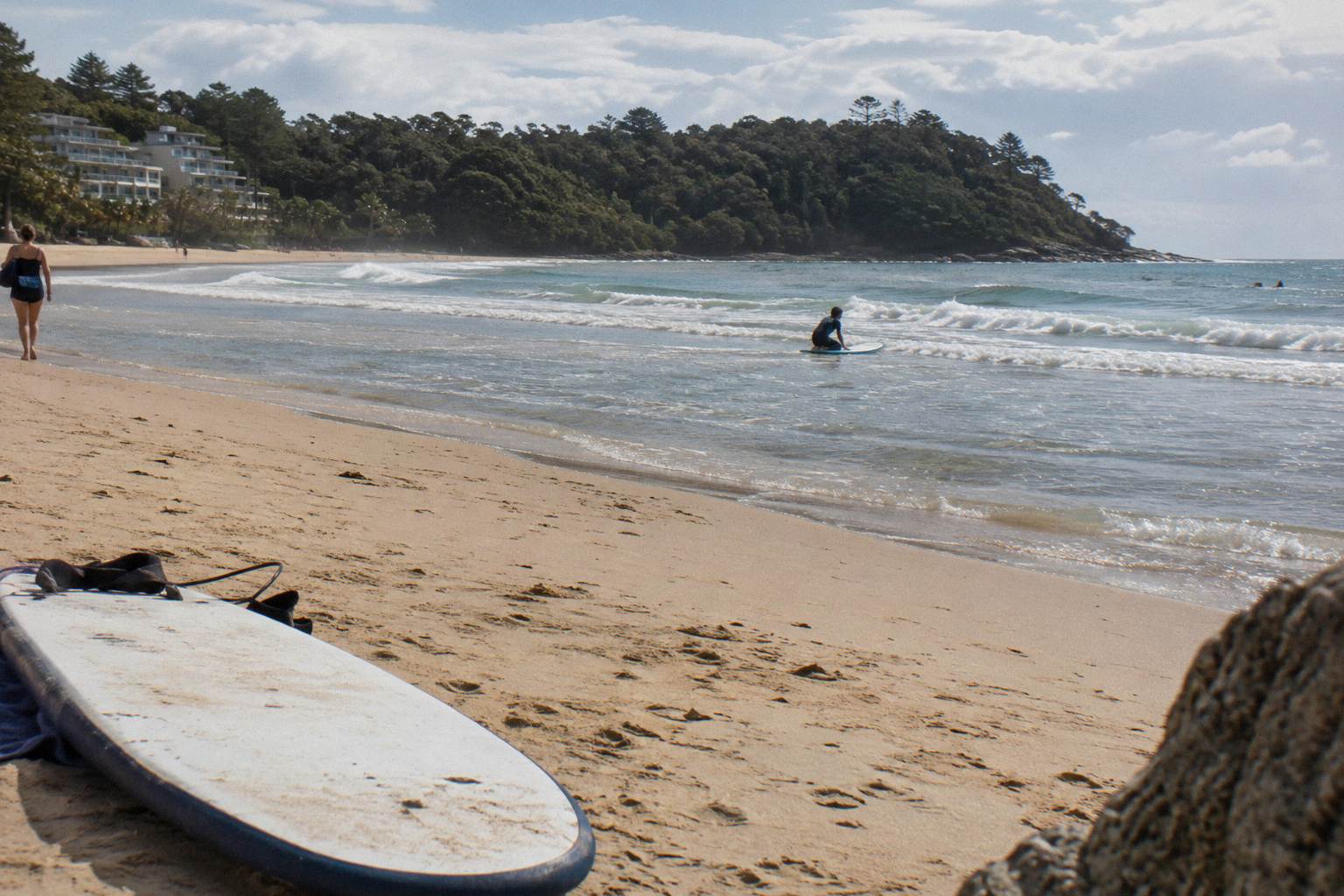
Beginner surf lessons in Noosa run on Main Beach, a sheltered, north-facing beach in the heart of Noosa Heads. Merrick's meets at Beach Access 14 for AUD 94 per person, and Go Ride A Wave meets at Beach Access 11, with its price unpublished. The famous points and the eastern beaches are not the lesson venues.
Noosa sells itself on point breaks. The Noosa World Surfing Reserve, designated in 2020 according to Noosa Council, describes "five of the world's best point breaks", and the council itself calls Noosa "one of the world's most iconic longboard waves". That reputation draws surfers from all over, and it confuses first-timers, because almost none of that famous surf is where a beginner lesson happens.
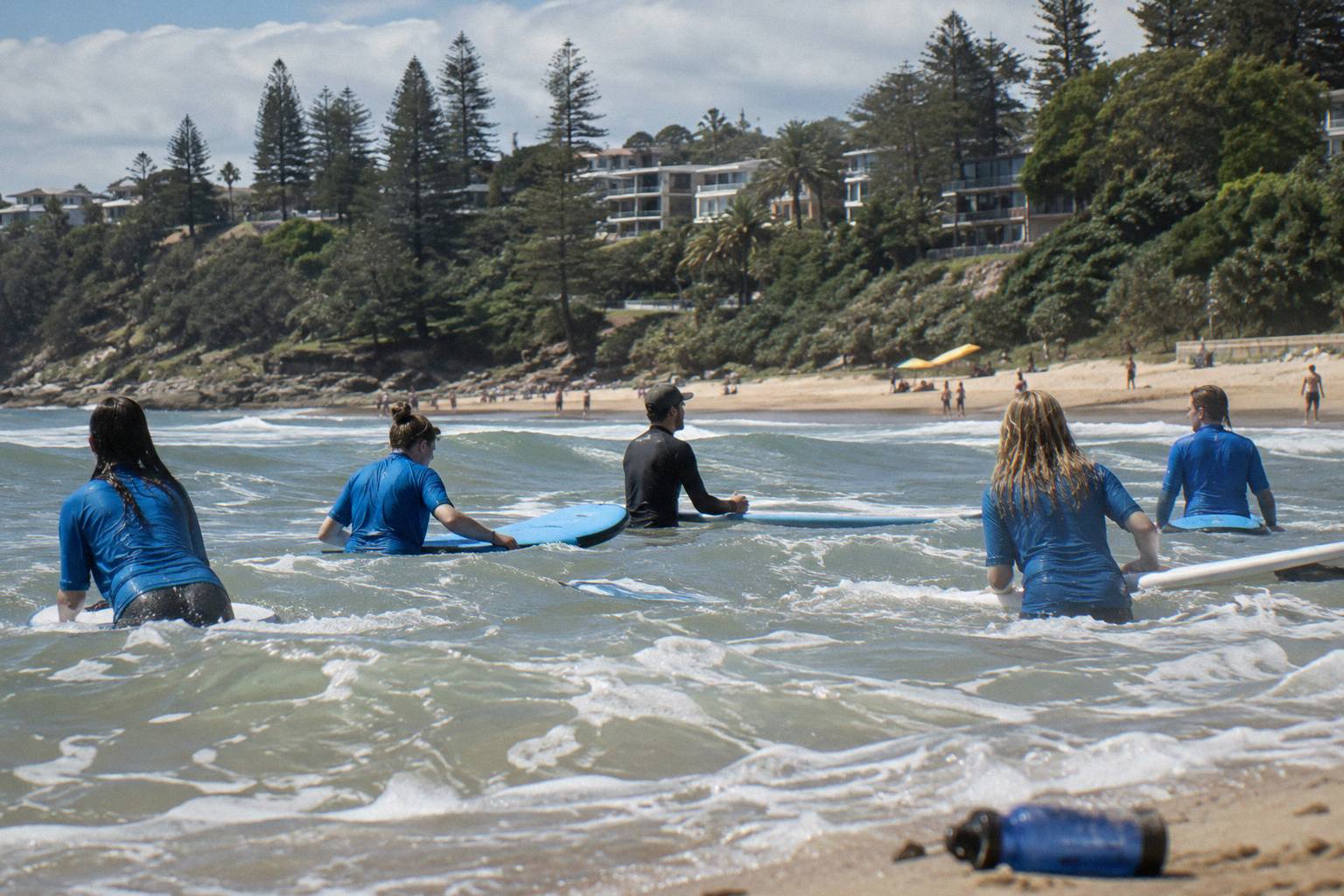
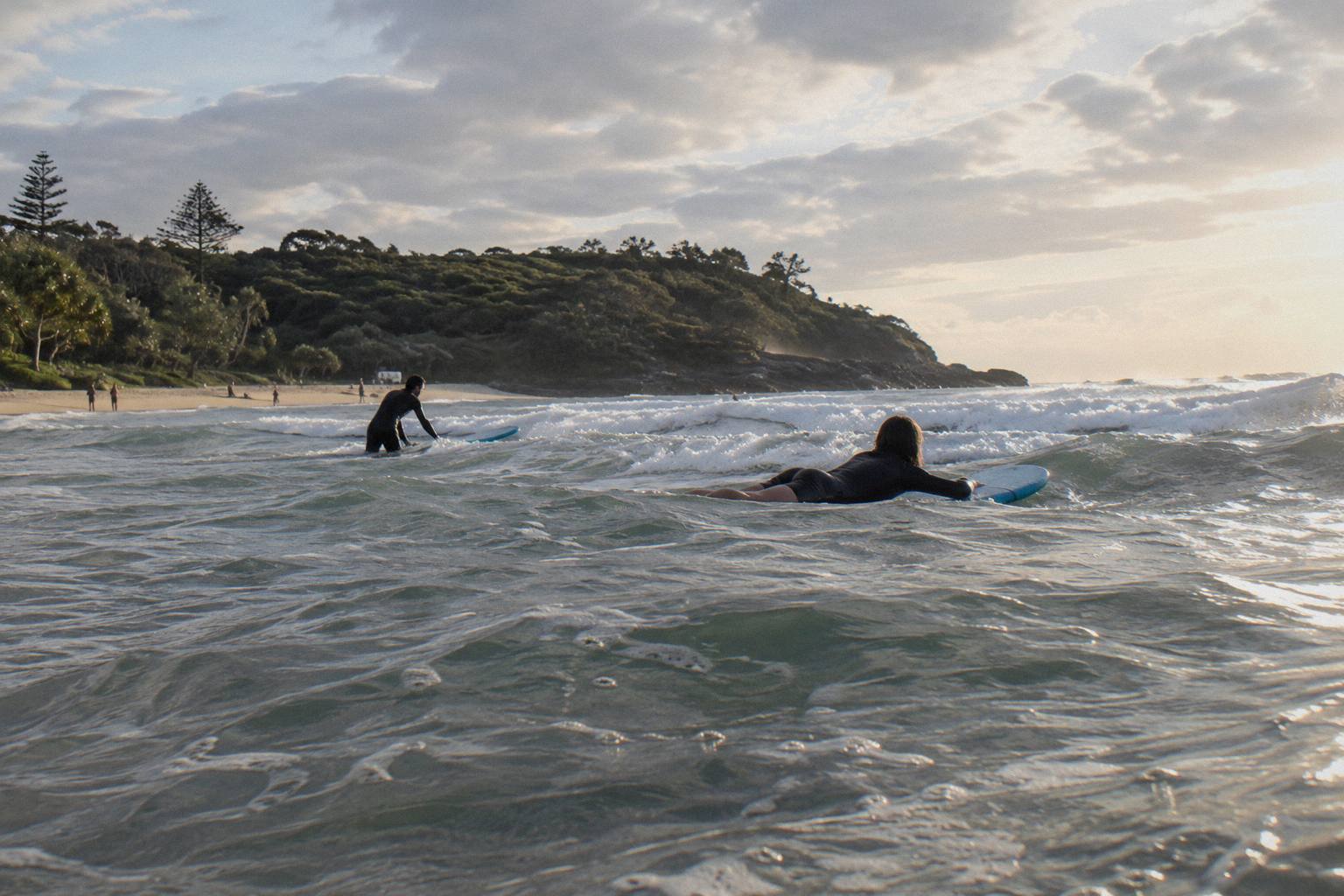
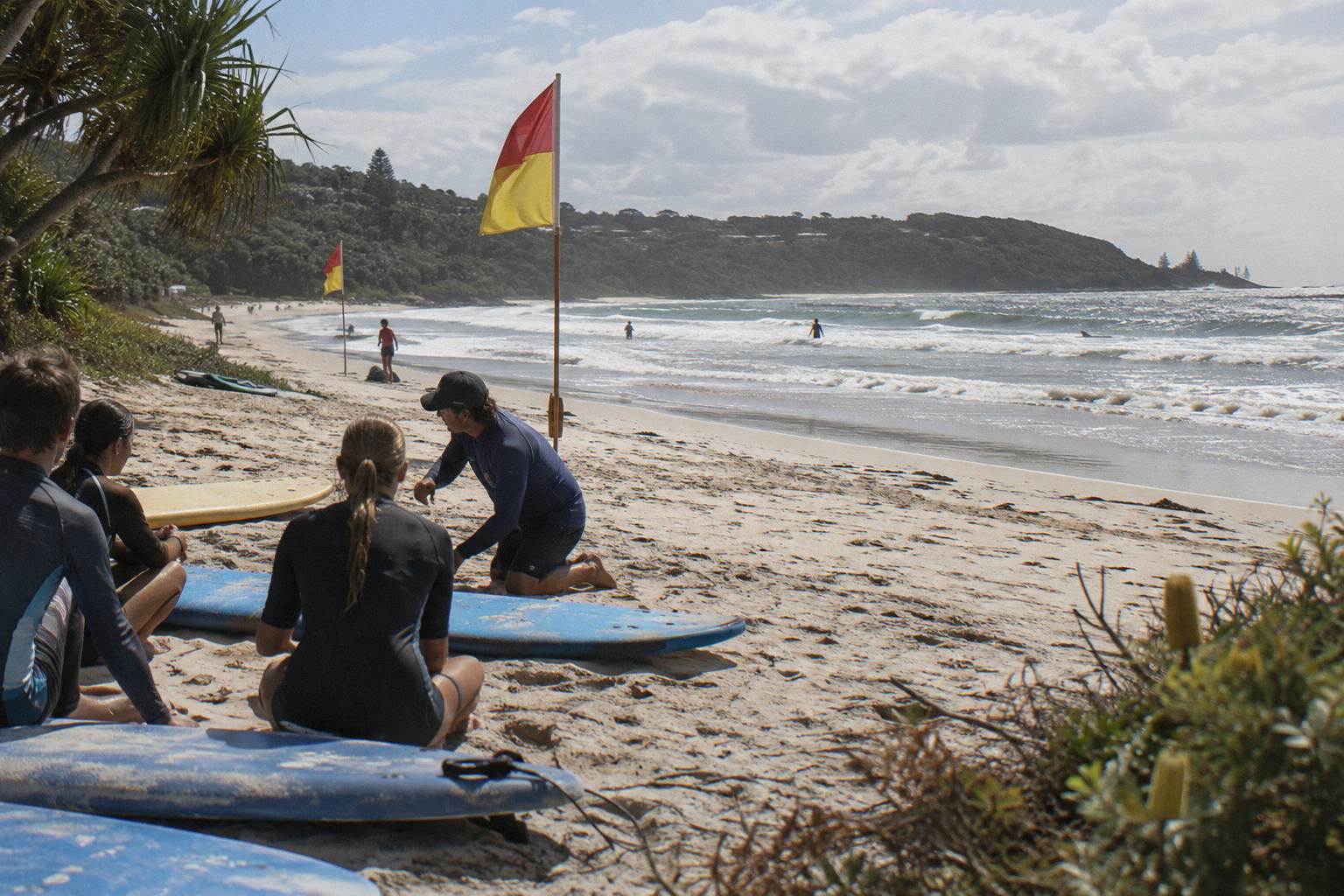
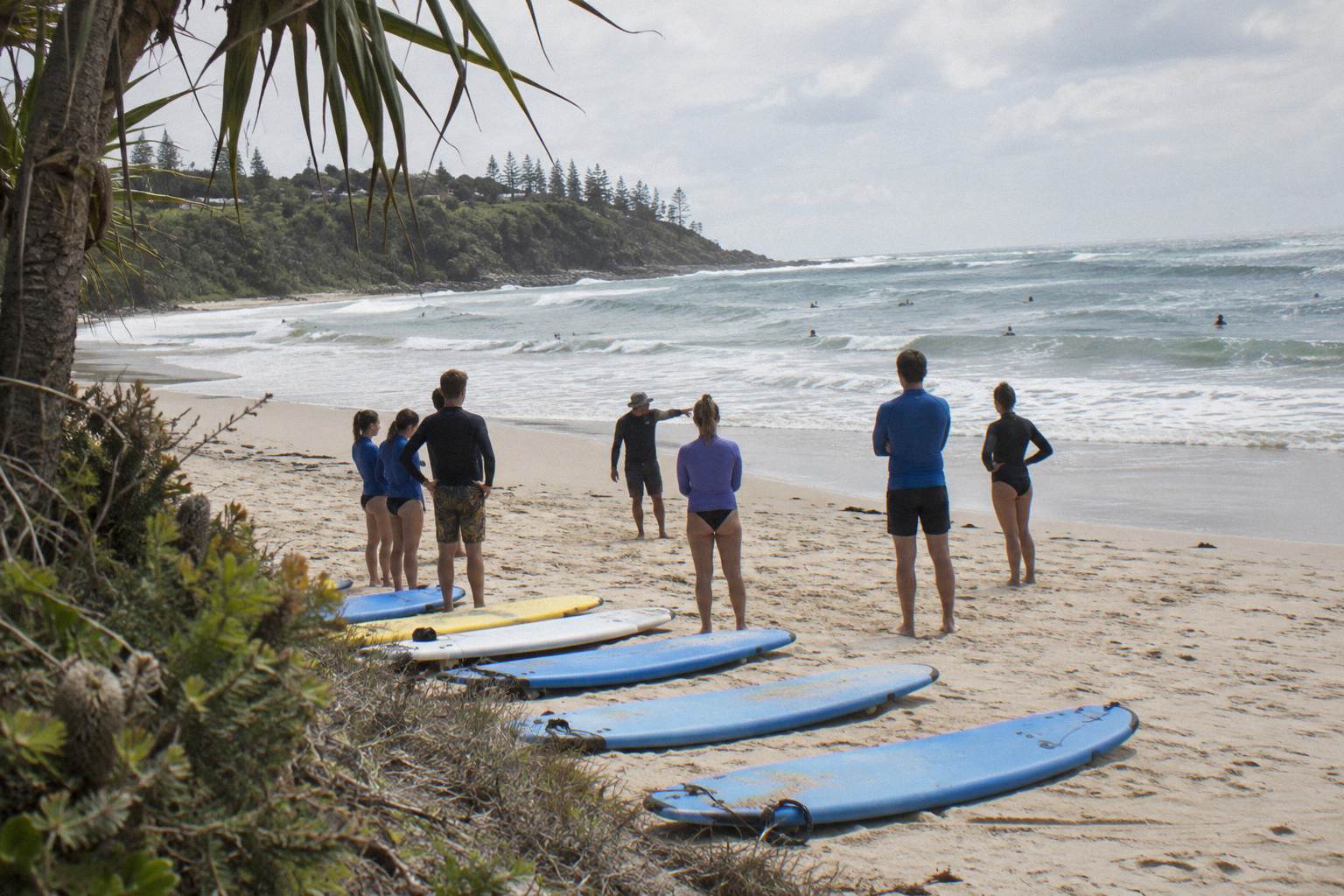
Lessons run on Main Beach. It is the sheltered, north-facing strip of sand in the centre of Noosa Heads, and it is where the council's own permit system places commercial learn-to-surf teaching. If you book a group lesson with the big operators, that is the water you will be standing in, waist deep, on a soft board, with an instructor a few metres away.
This guide maps the whole picture honestly: the learner beach, the two meeting points on Claude Batten Drive, the named point breaks of the reserve treated purely as places, the more powerful eastern beaches, and the safety rules that come from official sources rather than surf-shop folklore. For the broader question of which school to pick, start with our guide to Noosa Surf Lessons, then come back here for the geography.
Where Do Beginner Surf Lessons Actually Run In Noosa?
Beginner surf lessons in Noosa run on Main Beach, the sheltered, north-facing beach at the centre of Noosa Heads. The Noosa Council's commercial permit system lists three "Learn to Surf Lessons" locations, all on Main Beach: Main Beach West, Beach Access 14 extending 50 metres west, and Beach Access 11 extending 50 metres east. No other Noosa spot is a listed lesson location.
That permit detail matters more than any brochure. Under the council's commercial-use-of-community-land policy, endorsed 21 May 2026, commercial operators need a council permit to teach on community land, permits run five years, are allocated by tender, and one holder may hold at most two. The existing five-year permits expired on 30 June 2026 and a tender for new permits opened on 1 July 2026. The locations themselves are fixed in the policy: three teaching zones, all on Main Beach.
So the short answer to "which Noosa surf spot will my lesson be at" is Main Beach, whichever school you book. The two operator meeting points, Beach Access 11 and Beach Access 14, both sit on Claude Batten Drive and both feed into the same general stretch of learner water. Go Ride A Wave adds one wrinkle: the operator states that if the surf is large it stays closer to shore or moves to a more sheltered beach. That is the operator's own stated practice, and it is the only stated circumstance in which a Noosa lesson leaves its usual spot.
Those breaks exist, they are famous, and they are not the venue for a first lesson. Our breakdown of learning to surf in Noosa as a total beginner covers the skills side; this page is about the map.
Main Beach: The Sheltered Beach Where Lessons Happen
Main Beach is Noosa's learner beach because of its orientation: it faces north, and Noosa Council describes it as "sheltered". The eastern beaches, by the council's own wording, are "exposed to more powerful surf". Every listed lesson zone in Noosa sits on Main Beach, and it is also one of the council's patrolled beaches, with Surf Life Saving Queensland providing lifeguard services under council contract.
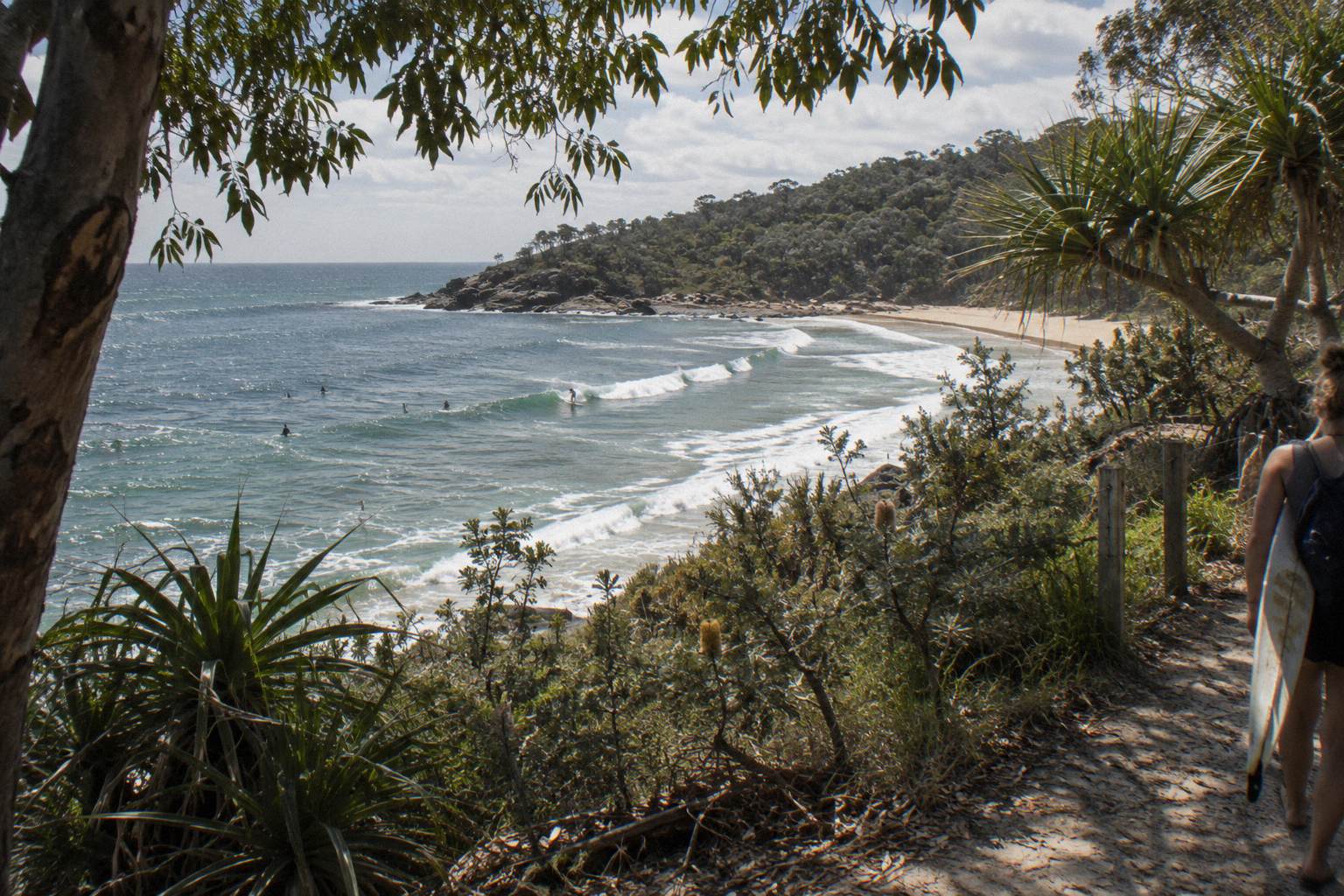
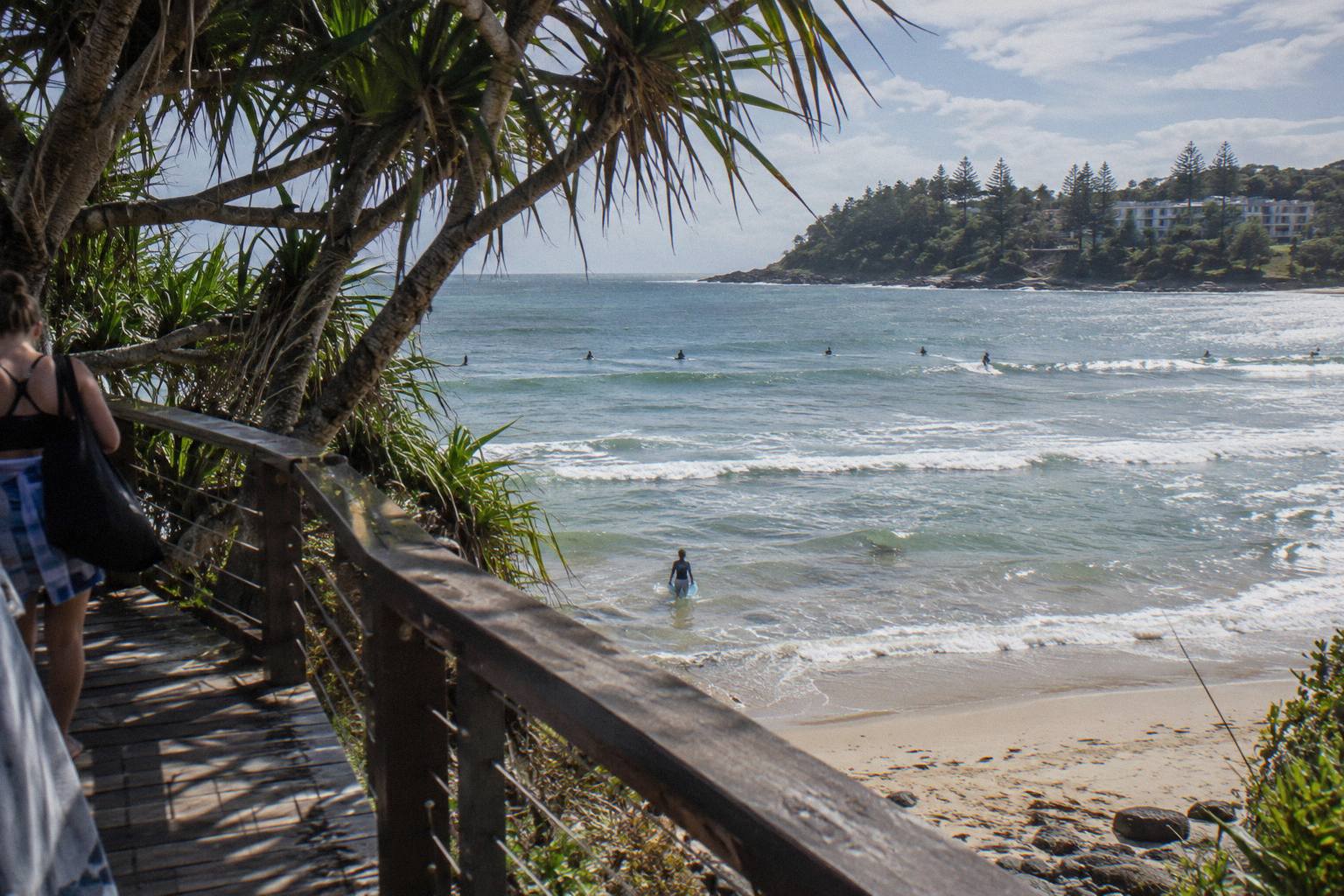
A north-facing beach in this stretch of coastline is a genuinely rare thing, and it is the single geographic fact that explains Noosa's whole learn-to-surf economy. The headland of the national park shelters the water, the council flags it as sheltered, and the permit system concentrates teaching there. The reserve's famous points wrap around the same headland, which is why walkers on the coastal track can watch longboarders and learner groups within sight of each other, doing completely different things.
| Main Beach fact | Source and wording |
|---|---|
| Orientation | North-facing, described as "sheltered" by Noosa Council |
| Lesson permit zones | Main Beach West; Access 14 extending 50 m west; Access 11 extending 50 m east |
| Lifeguards | Council contracts Surf Life Saving Queensland for lifeguard services |
| Listed on Shark Control Program | Yes, along with Sunshine Beach and Peregian Beach |
| Beginner water depth (one operator) | Go Ride A Wave teaches beginners in waist-deep water |
The practical takeaway for a nervous first-timer is simple: you are not being dropped into open ocean. Merrick's group lessons run at a ratio of one instructor to seven students, include the surfboard and a rash vest or wetsuit, and happen inside the sheltered Main Beach zone. Go Ride A Wave's 2-hour Surf Experience starts with safety information, uses a soft beginner board with a leg rope, and, per the operator, keeps beginners in waist-deep water. Neither operator promises anything beyond that, and neither should any article you read.
Timing is the one variable to check yourself. Merrick's own page lists daily group lessons at 8.45am and 1.15pm, while its booking page shows 9.00am and 1.30pm, so confirm the slot when you book. The operator runs 363 days a year, closed only Christmas Day and New Year's Day. The 2-hour group lesson costs AUD 94 per person on the operator's own pricing, with private 2-hour lessons from AUD 250 for one person up to AUD 500 for five.
Who Meets Where: Beach Access 14 And Beach Access 11
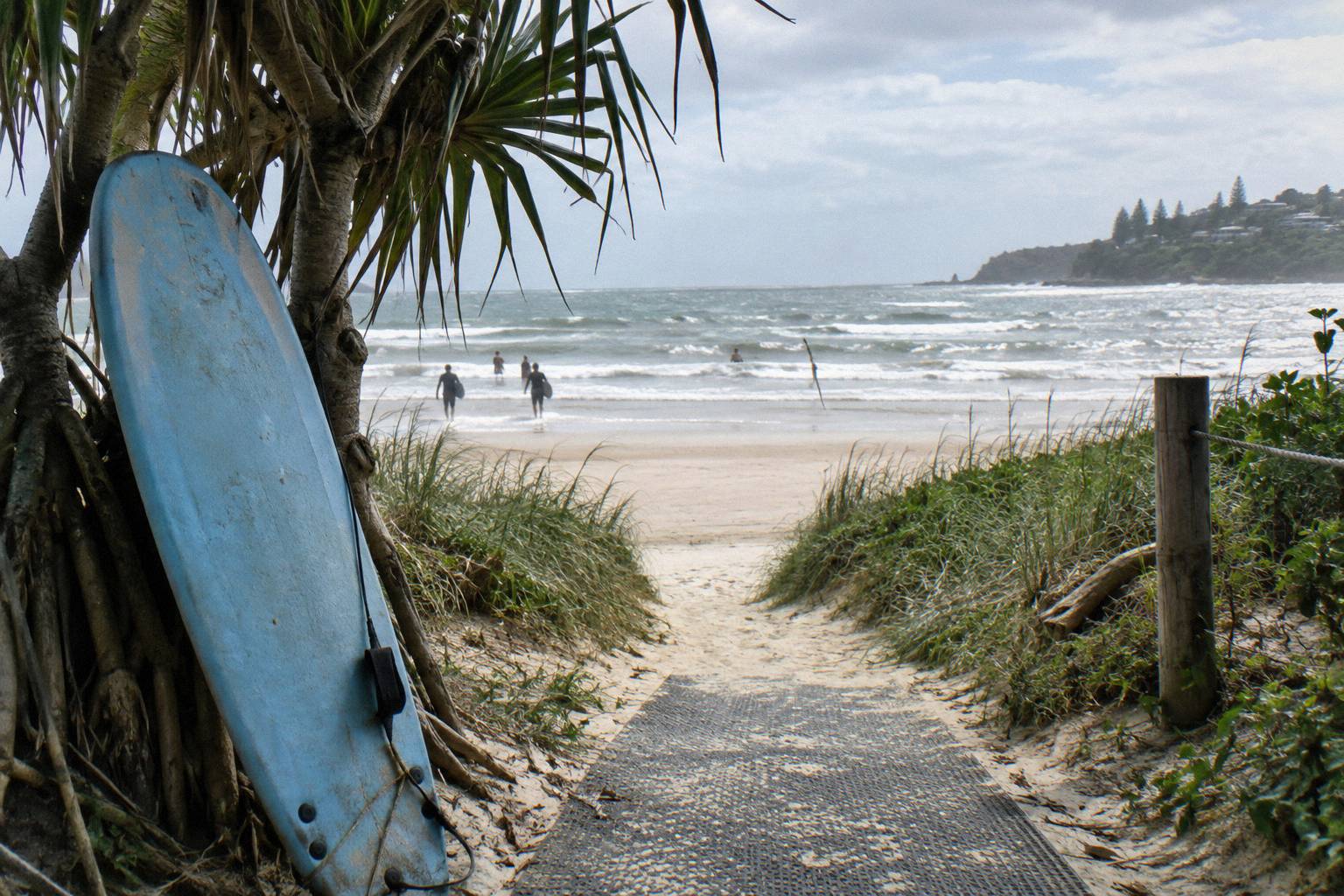
Merrick's Noosa Learn to Surf meets at Beach Access 14, Claude Batten Drive, Noosa Heads, the west end of Main Beach. Go Ride A Wave meets at its white trailer at Beach Access 11 in Noosa Woods, on the same road, and asks surfers to arrive 15 minutes early. These are two different meeting points feeding the same beach; Beach Access 14 also hosts a Go Ride A Wave board-hire trailer.
Getting the access numbers straight saves a wasted morning. Both operators publish their meeting points clearly, and both sit within a short walk of the Main Beach sand, but they are not the same gate. The details of getting between Hastings Street and these accesses, including what the operators themselves say, are in our piece on getting to Noosa Main Beach for a lesson. Ask your operator directly about parking and drive times rather than trusting a blog's guess.
| Operator | Meeting point | Stated start times | Lesson format |
|---|---|---|---|
| Merrick's Noosa Learn to Surf | Beach Access 14, Claude Batten Drive | Groups 8.45am and 1.15pm (operator page; booking page shows 9.00am and 1.30pm); private 10.45am | 2-hour group from AUD 94 per person |
| Go Ride A Wave Noosa | White trailer, Beach Access 11, Noosa Woods, Claude Batten Drive; arrive 15 minutes early | Not published | 2-hour Surf Experience; price not published |
| Epic Learn to Surf Safari | The J Noosa, 60 Noosa Drive (meeting point) | Not stated | About 6 hours, surfing at Double Island Point |
| Noosa Surf Experience With A Local Pro | 60 Hastings Street, Noosa Heads | Not stated | Private, about 3 hours, minimum age 18 |
Two of those four rows leave Main Beach, and it is worth being clear about which. The Epic safari is a 4x4 trip to Double Island Point, a different stretch of coast entirely, and the private local-pro session meets on Hastings Street for about three hours with a minimum age of 18. Neither has a published price or start time on this site, so the live listing is the only place those gaps get filled.
The Merrick's lesson, the most bookable product on this roster, is rated 4.8 on its listing and costs AUD 94 per person for the 2-hour group format. Private bookings are recommended 72 hours ahead, and the operator's refund policy offers refund or credit with 24 hours' notice, or if the instructor cancels for unsafe conditions. Rain alone is not a refund ground, which tells you something useful: lessons run in all weather, rain or shine.
The Noosa World Surfing Reserve And Its Five Point Breaks
The Noosa World Surfing Reserve, designated in 2020 according to Noosa Council, describes "five of the world's best point breaks" and maintains a Surfers Code. The council separately calls Noosa "one of the world's most iconic longboard waves" and has a Surf Management Plan engagement planned for early 2027. None of the point breaks is a listed beginner lesson location under the council's permit policy.
The reserve is the reason Noosa appears on world surfing lists, and it is worth understanding what it does and does not mean for a learner. It means the headland and its points carry international recognition, a code of conduct for surfers, and an ongoing council management conversation. It does not mean any of that water is where your first lesson happens.
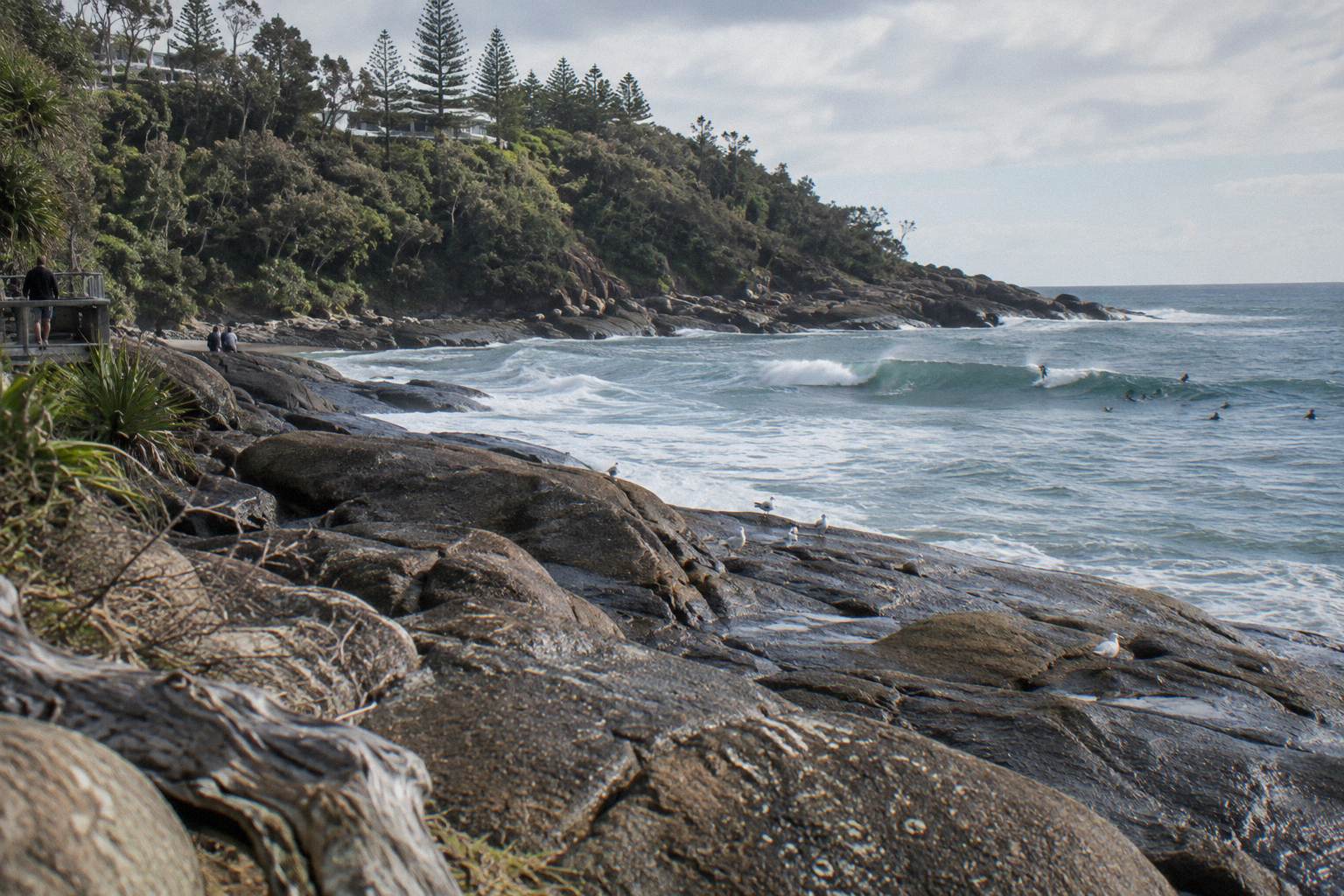
The named places exist, and you will hear them constantly: First Point, Little Cove, Tea Tree Bay, Granite Bay and Boiling Pot. They are points and bays wrapping the headland of Noosa National Park. Watching experienced surfers on them from the coastal track is one of the best free things you can do on a non-surfing day in Noosa.
For context on the two worlds sharing one headland, read our longer piece on First Point Noosa and what learners should know. The reserve is Noosa's surfing heritage, and Main Beach is Noosa's surfing classroom, and the two sit side by side without overlapping.
The Named Breaks, Treated Honestly As Places
First Point, Little Cove, Tea Tree Bay, Granite Bay and Boiling Pot are real, named places on and around Noosa's headland. No lesson listed here teaches at any of these breaks.
That paragraph will disappoint some readers, and it should be said anyway. Surf writing is full of confident break guides, and almost all of that confidence is second-hand. What can be stated from primary sources is structural: the reserve exists, it was designated in 2020 per the council, it names five point breaks, and it has a Surfers Code that applies to people surfing them. The council's Surf Management Plan engagement, planned for early 2027, may change how the breaks are managed, and that is a live thread worth watching if you care about the reserve's future.
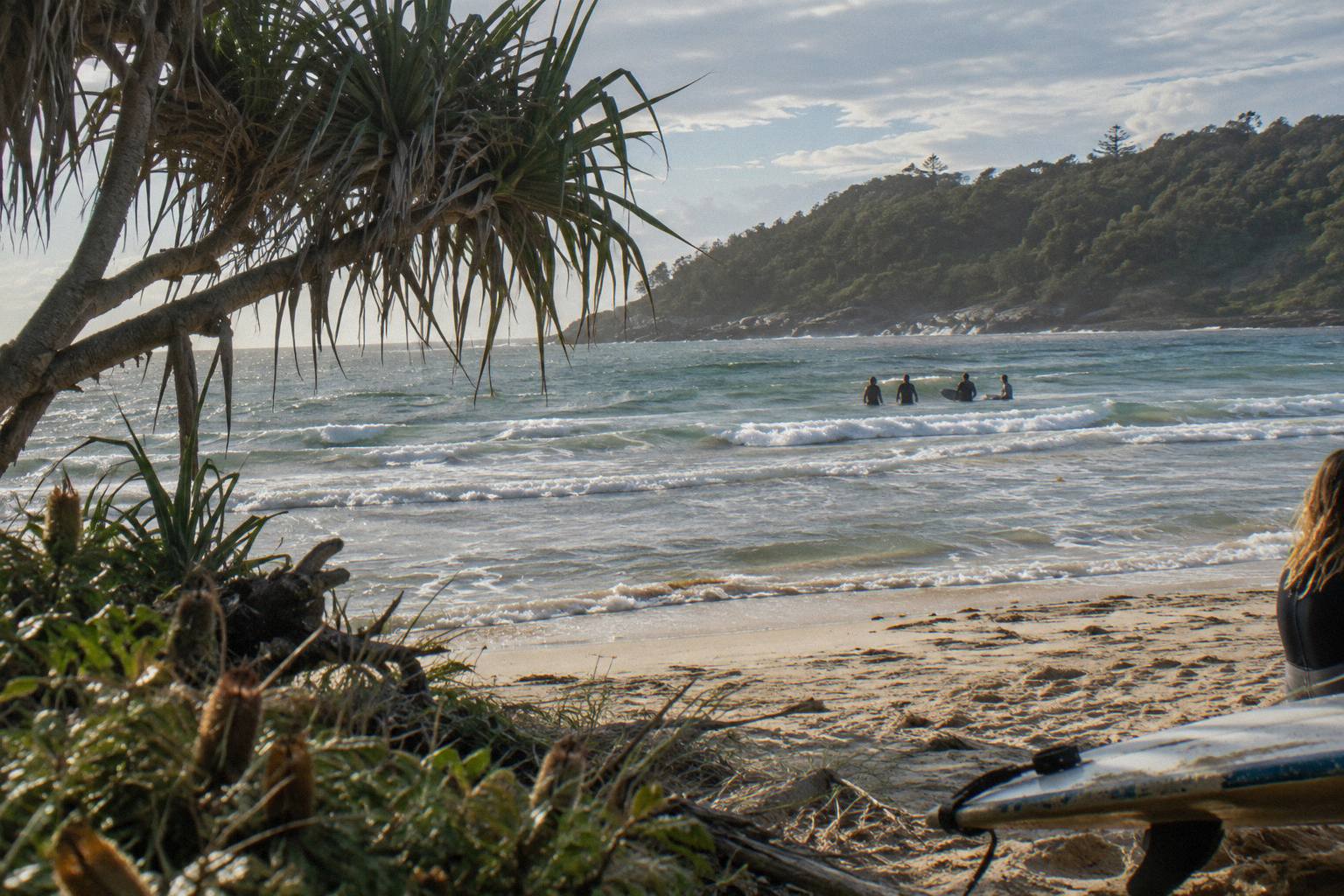
For a learner, the named breaks matter in one practical way: they explain why Noosa has a surf-school economy at all. The same geography that creates the points creates the shelter on Main Beach. When you stand in waist-deep water at the west end of Main Beach looking up at the headland, you are looking at the reason your lesson is calm and the reason the water around the point is not.
Go Ride A Wave's 2-hour Surf Experience is the other Main Beach group product worth knowing alongside Merrick's. It is rated 4.9 on its listing, price and start times are not published and are only available through the operator's own booking widget, and the operator describes its instructors as "highly trained and fully qualified lifeguards", its own wording. Its operator page also claims a Gold Tier "Best of Queensland Experience" 2026 recognition, again operator wording, reported here rather than repeated as fact.
The choice between the two Main Beach schools is less about the water, which is the same water, and more about format and price transparency. Merrick's publishes a full price ladder; Go Ride A Wave does not publish prices at all. Our full comparison of Noosa surf schools works through the differences in detail.
The Eastern Beaches: Sunshine, Marcus And Peregian
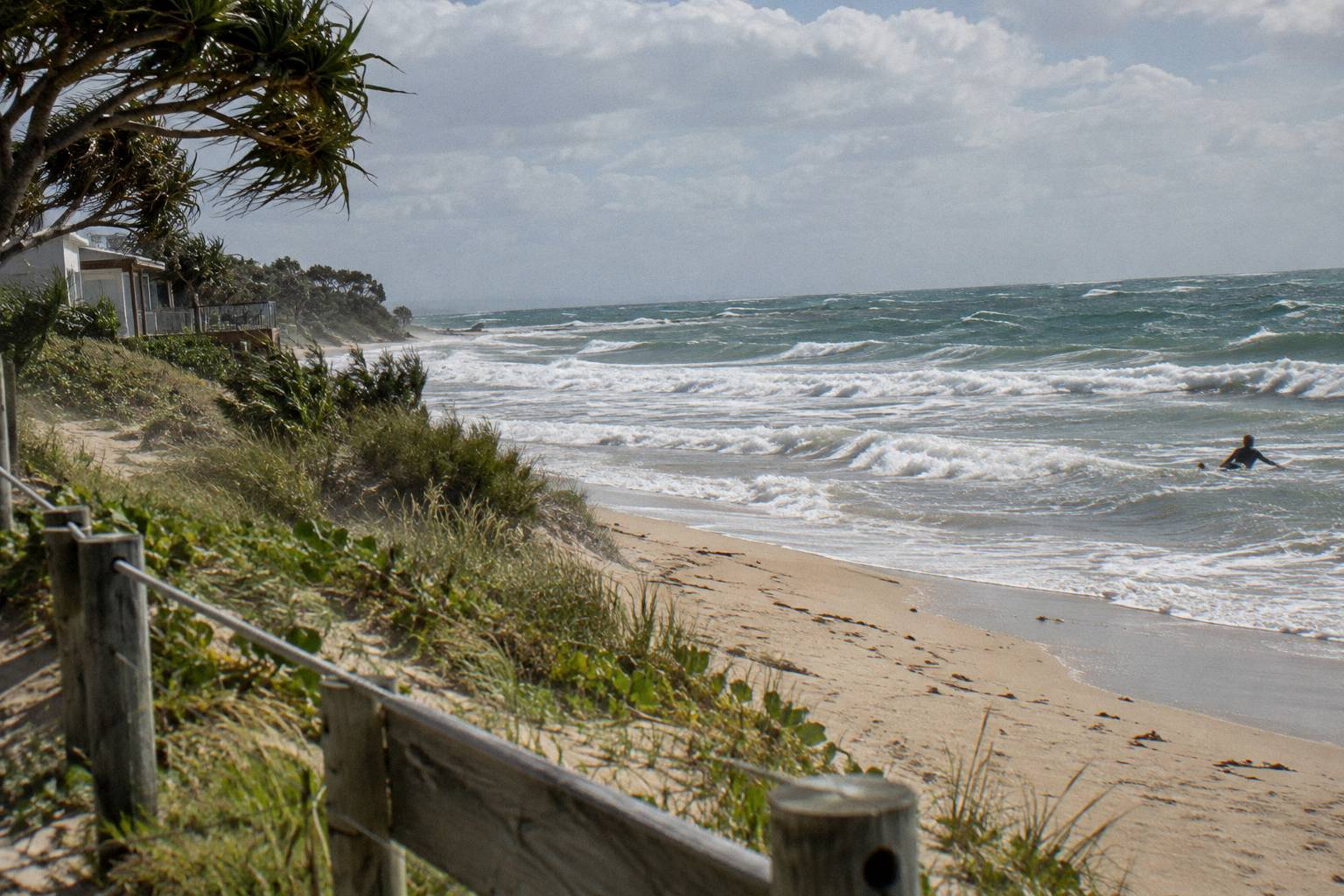
The eastern beaches are where local surfers go when they want more energy, and the council's wording, "exposed to more powerful surf", is the careful official version of what locals say more bluntly. For a reader mapping spots, the key facts are these: some teaching happens on these beaches, notably Sunshine Coast Elite Surf Coaching, a direct-booking school that roams between Peregian, Marcus, Castaways, Sunrise and Sunshine Beach with the spot chosen daily, and Send it Surf Academy, based at Peregian Beach. Neither is a Main Beach group school.
| Beach | Council description | Patrol status | Role for beginners |
|---|---|---|---|
| Noosa Main Beach | North-facing, "sheltered" | Patrolled | Where beginner lessons run |
| Sunshine Beach | "Exposed to more powerful surf" | Patrolled | Stronger beach break; some schools use it |
| Sunrise Beach | "Exposed to more powerful surf" | Patrolled seasonally | Not a listed lesson zone |
| Marcus Beach | "Exposed to more powerful surf" | Not listed as patrolled | Used by one roaming school |
| Peregian Beach | "Exposed to more powerful surf" | Patrolled | Base for two direct-booking schools |
If your interest is the eastern beaches specifically, our guides to Sunshine Beach surf for learners and Peregian Beach surf for learners cover them in depth. The one-line version: the water is different in character from Main Beach, the schools that use it are booked direct rather than through a listing, and a first-ever lesson on a more exposed beach is a decision to make with an instructor, not with an article.
What About Double Island Point?
The safari is a real product on the roster, and for some travellers it is the appeal of the whole region: a proper 4x4 trip to Double Island Point with a surf lesson attached. No published price, no rating, no start time. What can be said is logistical: the meeting point is The J Noosa, the day runs about six hours, and the surfing happens at Double Island Point, not Main Beach.
Choosing between a Main Beach two-hour lesson and a six-hour safari trip is really a choice about the kind of day you want. The Main Beach lesson is short, cheap by comparison with any day trip, and happens in the sheltered learner zone. The safari is a day out with a lesson inside it. If your priority is standing up on a board for the first time with the least friction, Main Beach wins on every stated fact; if the 4x4 journey is the point, the safari is the product, and its live listing is where the gaps in the published facts get filled.
Beach Safety: Flags, Patrols And Marine Life
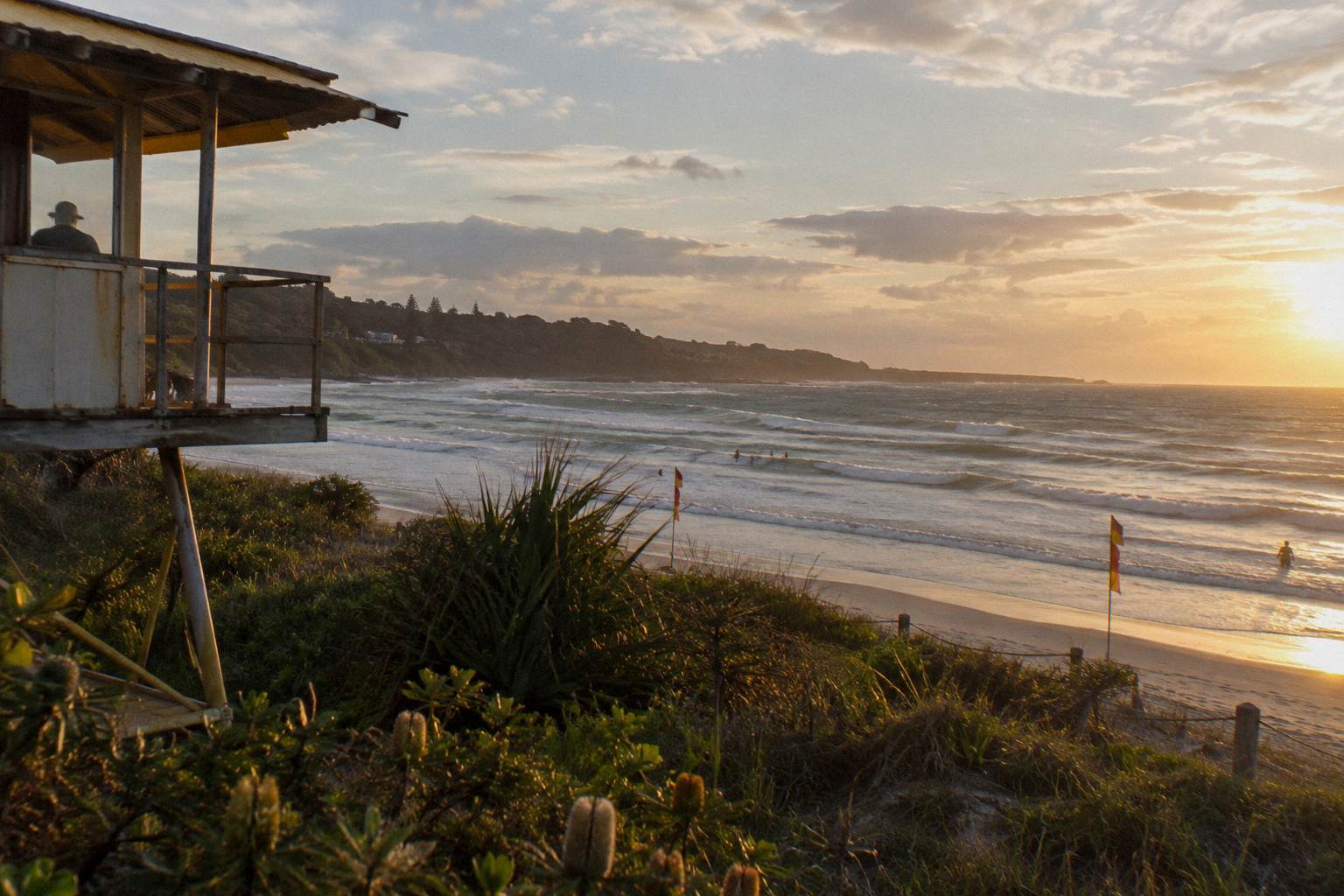
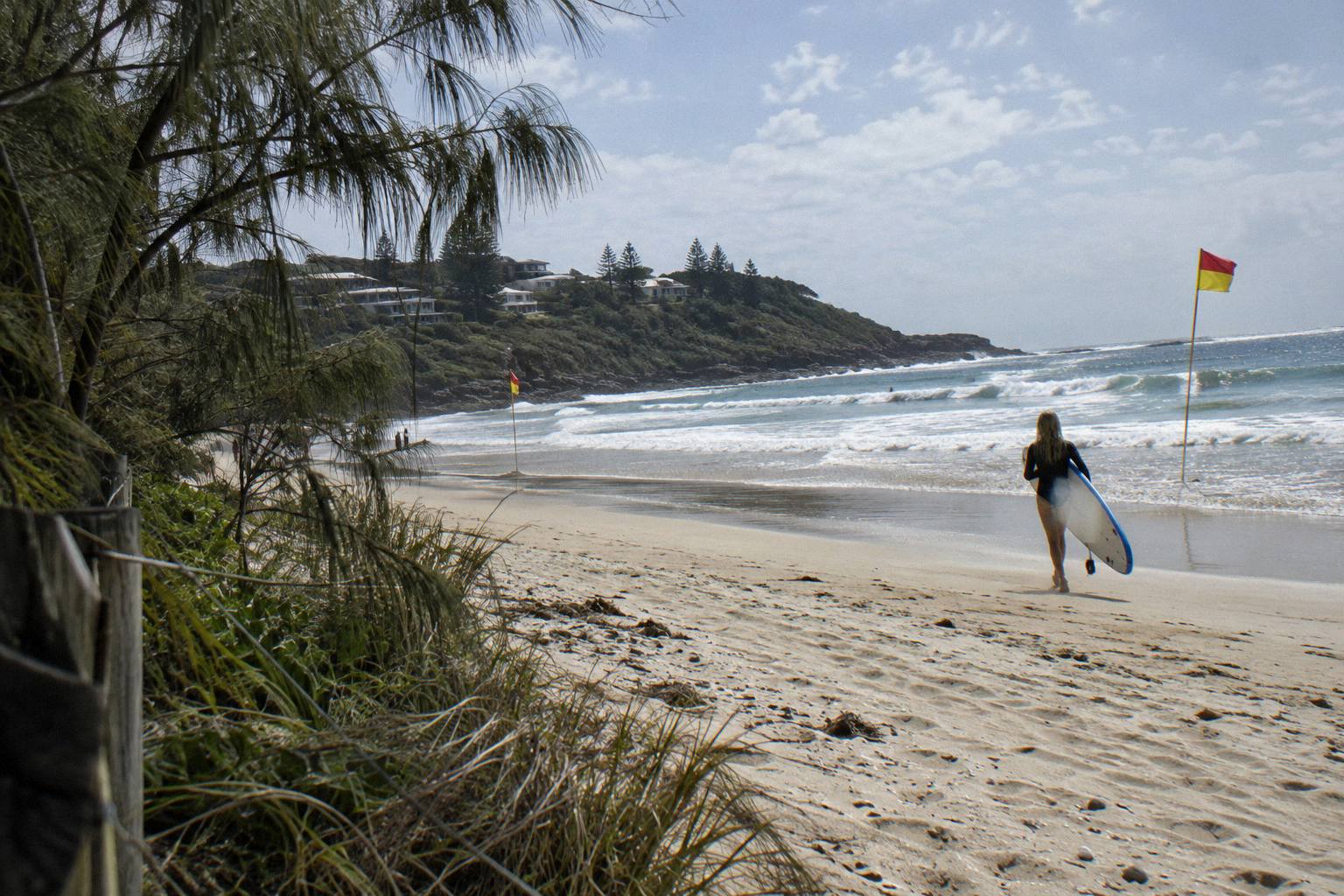
Noosa Council lists Noosa Main Beach, Sunshine Beach and Peregian Beach as patrolled, with Sunrise Beach and North Peregian patrolled seasonally, and contracts Surf Life Saving Queensland for lifeguard services. The official advice is to swim between the red and yellow flags, never swim at unpatrolled beaches, and check the Beachsafe app for patrol status, hazards, swell and tide. Noosa is south of the stated box jellyfish and Irukandji ranges, which sit in tropical Queensland.
That cluster of facts comes from official sources, and it is the safety baseline that applies to every spot on this page. The council page states the beaches; the flags advice is the standard official line; the Beachsafe app is the tool both council and lifesaving bodies point to for current conditions. Patrol dates and hours change, so check the app for current details.
Marine stingers deserve one careful paragraph, because search results on this are routinely wrong. Queensland Government and Surf Life Saving Queensland place dangerous box jellyfish north of Agnes Water and Irukandji north of southern Fraser Island, with the season running November to May, in tropical Queensland. Noosa sits south of both ranges. The more likely sting locally is a bluebottle, and that is an inference, not an official statement, so the practical line is simply: bluebottles are the more likely sting, ask your instructor. Never write off the question, but do not let a tropical-Queensland warning scare you off a Noosa lesson either.
Sharks get a factual sentence and nothing more: the Queensland Shark Control Program lists Noosa, Sunshine Beach and Peregian Beach on the Sunshine Coast. This site states what equipment is installed nowhere and risk levels nowhere. On rips, the official advice is the whole answer: swim between the flags, ask a lifeguard or your instructor. Your lesson's instructor is the person who knows that morning's water, and asking them is not a sign of nerves, it is what they are there for.
For a fuller treatment, see whether surfing in Noosa is safe for learners, which works through the same official sources with more context.
Matching The Spot To The Lesson You Book
Match the spot to your goal, not the other way around: a first-timer wanting the fastest result books a Main Beach group lesson, from AUD 94 per person with Merrick's, while a traveller wanting a full day books the Double Island Point safari. Every listed beginner lesson zone in Noosa is on Main Beach, so the format, not the beach, is the real choice.
That reframing is the most useful thing this guide can give you. Because the permit zones fix the teaching geography, your actual decision is format, price transparency and meeting point, and those differences are concrete. The infographic below sums up how the bookable formats split across the spots and what each one costs where a price is published.
| Format | Where it runs | Duration | Published price | Notes |
|---|---|---|---|---|
| Group lesson (Merrick's) | Main Beach, Access 14 | 2 hours | AUD 94 per person | Min age 7, swim 25 m, 1:7 ratio |
| Group lesson (Go Ride A Wave) | Main Beach, Access 11 | 2 hours | Not published | Waist-deep water for beginners, operator states |
| Private (Merrick's) | Main Beach | 2 hours | AUD 250 to AUD 500 by party size | Recommended 72 hours ahead |
| Private local pro | Meets 60 Hastings Street | About 3 hours | Not stated | Up to 4 people, min age 18 |
| Safari (Epic) | Double Island Point | About 6 hours | Not stated | Meets at The J Noosa |
A note on multi-lesson options, since spot-mapping often coincides with commitment questions. Merrick's sells blocks direct: 2 x 2-hour lessons in one day at AUD 180, 3 x 2-hour at AUD 250, and 5 x 2-hour at AUD 385, all on the same Main Beach water. Go Ride A Wave runs a 3-lesson Surf Course with a free online Surf Theory component, direct with the operator. None of these changes the geography, which is the point: in Noosa, more lessons means more of the same good learner beach, not a progression to new spots.
The private local-pro session is the one product that hints at a different experience without leaving the area: about three hours, up to four people, meeting at 60 Hastings Street, minimum age 18, with no price, rating or inclusions stated.
Whatever you choose, the pre-booking questions are the same three: which Beach Access do we meet at, what time does my slot actually start, and what does the operator provide versus what do I bring. Merrick's answers are published: Access 14, board plus rash vest or wetsuit included. Go Ride A Wave's are published for gear but not for price or time. For everything else, the operator's live listing or a phone call beats any article, including this one.
Common Questions About Noosa Surf Spots For Beginners
Which Beach Do Beginner Surf Lessons Run On In Noosa?
Main Beach. It is the sheltered, north-facing beach in central Noosa Heads, and every listed "Learn to Surf Lessons" permit location under the council's policy sits there: Main Beach West, Access 14 extending 50 metres west, and Access 11 extending 50 metres east.
Are The Noosa Point Breaks Suitable For Beginners?
No verified source states how any named Noosa break behaves, so no honest article can rate First Point, Little Cove, Tea Tree Bay, Granite Bay or Boiling Pot as beginner-friendly or otherwise. What is stated is that none of them is a listed beginner lesson location.
What Is The Difference Between Beach Access 11 And Beach Access 14?
They are two different meeting points on Claude Batten Drive. Merrick's Noosa Learn to Surf meets at Beach Access 14; Go Ride A Wave meets at its white trailer at Beach Access 11 in Noosa Woods and asks surfers to arrive 15 minutes early. A Go Ride A Wave board-hire trailer also sits at Access 14.
Are Sunshine Beach And Peregian Beach Good For Learning?
Noosa Council describes the eastern beaches, including Sunshine and Peregian, as "exposed to more powerful surf" compared with sheltered Main Beach. Both are patrolled beaches, and some direct-booking schools teach around them, but they are not the Main Beach beginner permit zones.
Does A Noosa Surf Lesson Ever Happen Anywhere Other Than Main Beach?
Two exceptions exist. The Epic Learn to Surf Safari is a 4x4 trip to Double Island Point, about 6 hours with the meeting point at The J Noosa. And Go Ride A Wave states that if the surf is large it stays closer to shore or moves to a more sheltered beach.
Is Main Beach Safe For A First Surf Lesson?
Main Beach is a council-patrolled beach, described as "sheltered", with Surf Life Saving Queensland lifeguards contracted by the council. Official advice applies everywhere: swim between the red and yellow flags and check the Beachsafe app for patrol status and conditions.