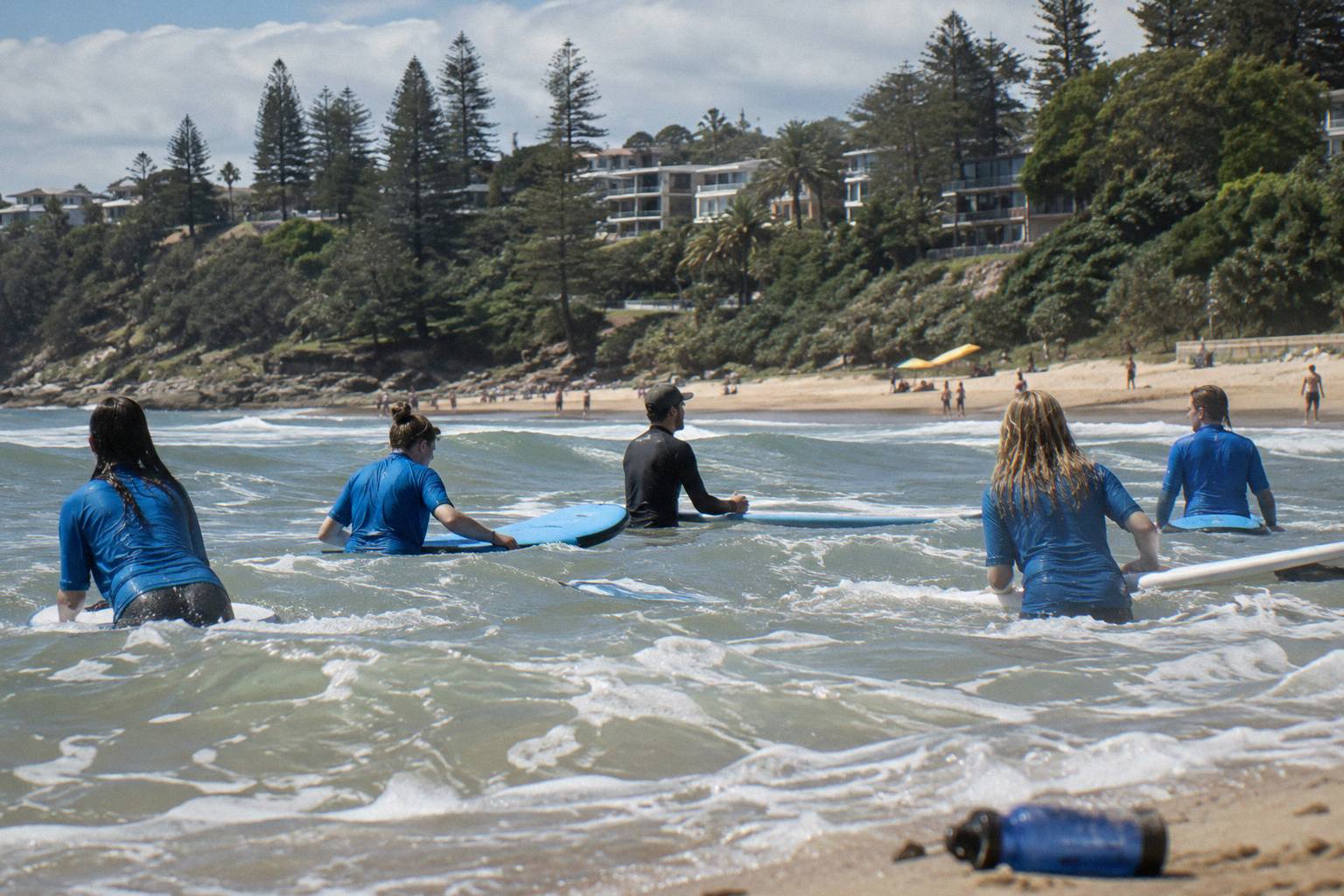
What To Wear To A Noosa Surf Class: Rashies, Wetsuits And Sun
Every Noosa operator on this site supplies the boards and the thermal layer. The gaps are yours to fill, and the honest answer on several items is simply to ask the operator.
Short answer
Merrick's includes a surfboard and a rash vest or wetsuit; Go Ride A Wave includes a soft beginner board, leg rope and a wetsuit or rash shirt depending on the season. Sun protection, towels, water and what to wear underneath are not stated by the operators, so ask when booking. Bring swimwear that stays on in the surf.
Beginner lessons on Noosa Main Beach run in waist-deep water with all the technical gear supplied. The clothing question is narrower than most packing guides make it: the board comes with the lesson, the thermal layer comes with the lesson, and what is left is the layer only you can bring. This guide sets out exactly what each Noosa operator states it provides, where the facts run out, and what to ask before you stand on the sand at Beach Access 14 or Beach Access 11.
The short version: swimwear that survives a wipeout, whatever sun protection you personally need, and a towel for afterwards. Anything beyond that is either included or not stated, and this page refuses to invent operator rules that do not exist. What to bring beyond clothing, water bottles, bags and valuables, is covered separately in the guide to packing for a Noosa surf class; this page sticks to what you wear on your body.
What Do The Noosa Surf Schools Actually Provide?
Every operator listed on this site supplies the board and a thermal layer of some kind. Merrick's includes a surfboard and a rash vest or wetsuit with its 2-hour group lesson. Go Ride A Wave includes a soft beginner board, a leg rope, and a wetsuit or rash shirt depending on the time of year. The direct-only schools supply similar kit: SC includes Mick Fanning soft boards and Send it includes soft-top boards, rashies and seasonal wetsuits.
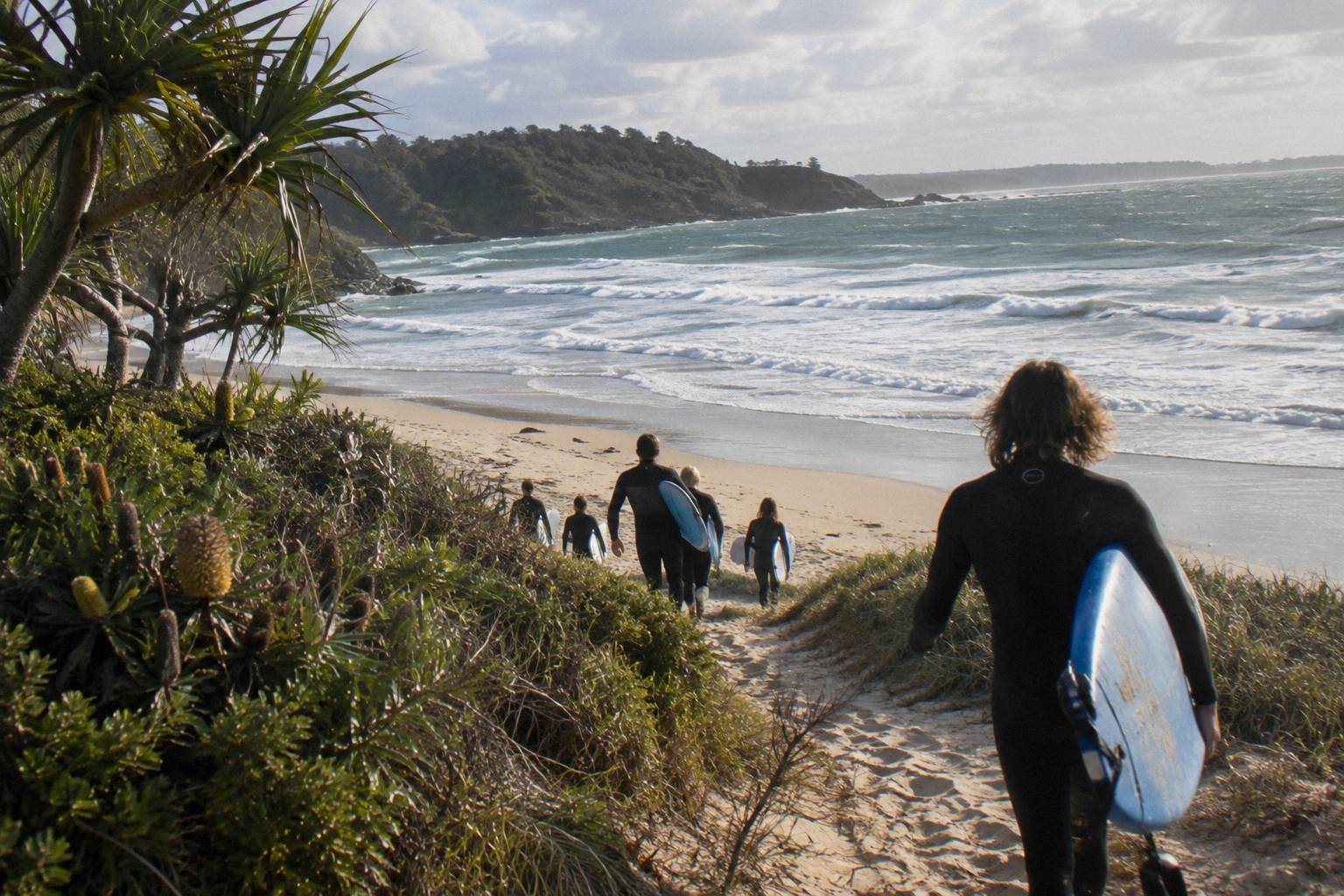
That is the complete list. It is worth reading closely, because it settles the two questions learners most often over-pack for. You do not need to bring a board, and you do not need to bring a wetsuit to any of the Main Beach group lessons. The thermal decision is made by the operator, not by you, and Go Ride A Wave's own phrasing, "depending on the time of year", is the whole logic: the Noosa water is warm enough in summer that a rash shirt does the job, and cool enough in winter that a full wetsuit earns its place.
What the operators do not state matters just as much. Sun protection, towels, water and what to wear underneath a wetsuit or rashie appear nowhere in the operator pages. The honest instruction is to ask the operator when you book, and this guide tells you where those gaps are so your question is a short one.
Here is the kit each school states it provides, side by side:
| Operator | Meeting point | Board provided | Thermal layer provided |
|---|---|---|---|
| Merrick's Noosa Learn to Surf | Beach Access 14, Claude Batten Drive | Surfboard | Rash vest or wetsuit |
| Go Ride A Wave Noosa | White trailer, Beach Access 11, Noosa Woods | Soft beginner board and leg rope | Wetsuit or rash shirt, depending on the time of year |
| Sunshine Coast Elite Surf Coaching | Roaming: Peregian, Marcus, Castaways, Sunrise, Sunshine Beach (direct only) | Mick Fanning soft boards | Not stated beyond boards |
| Send it Surf Academy | Peregian Beach (direct only) | Soft-top boards | Rashies and seasonal wetsuits |
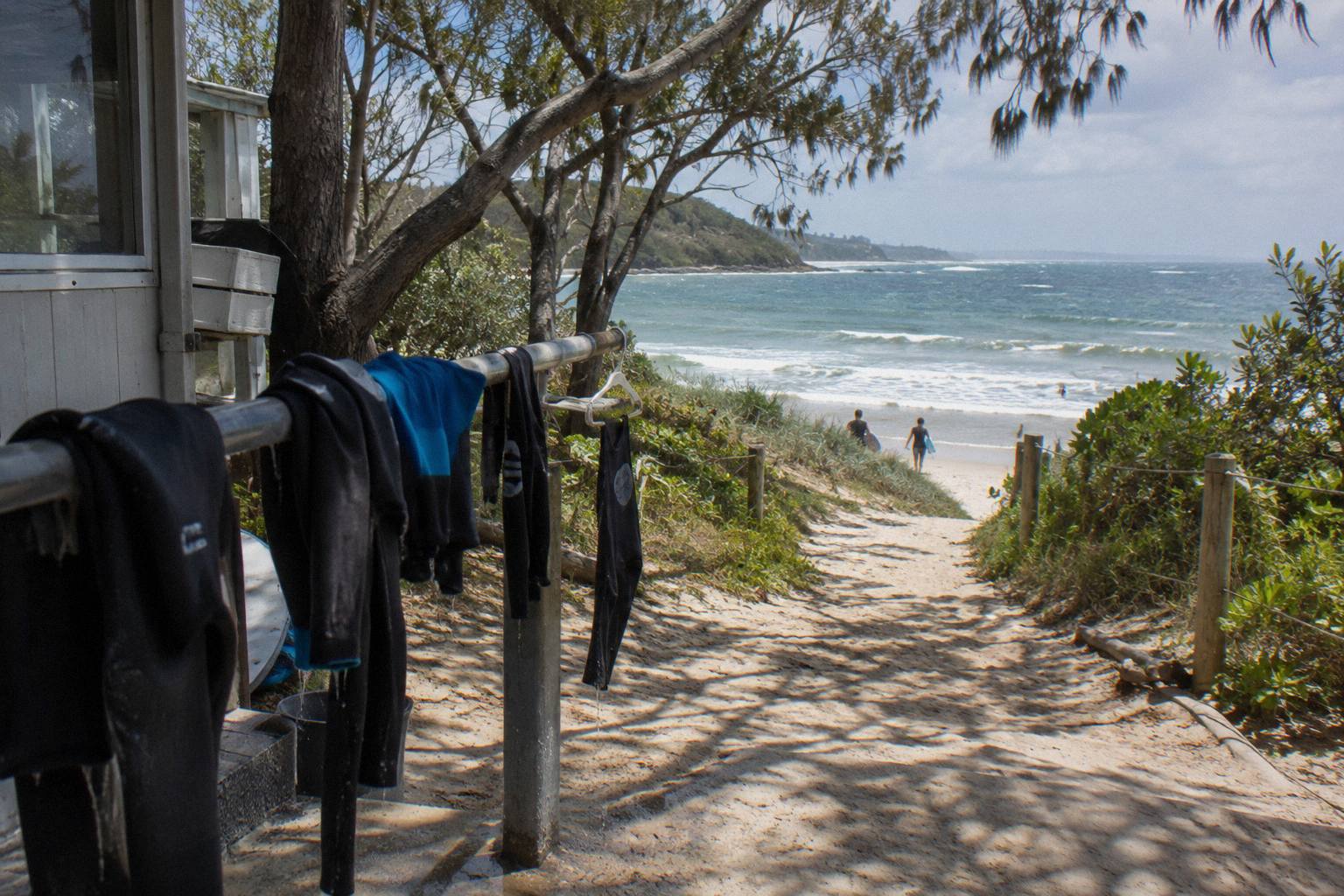
Note the pattern in the right-hand column. Rash vests and wetsuits are a package deal at both Main Beach schools, so your only real clothing decision is what sits underneath them, and the operators do not state rules for that. The Go Ride A Wave Noosa operator page is the source for its inclusions, and Merrick's states its kit on its own product pages. If your lesson is with a school not listed here, the same principle applies: read the inclusions line, and ask about anything it does not mention.
The 2-hour Go Ride A Wave Surf Experience is a useful example of how little you actually wear of your own. Its stated inclusions are the lesson, safety information, a soft beginner board, a leg rope and a wetsuit or rash shirt. That list has no sunscreen, no towel, no footwear and no under-layer, and the absence is the packing list.
Rashie Or Wetsuit: Who Decides, And When?
At the Main Beach schools the operator decides, based on the season. Go Ride A Wave states a wetsuit or rash shirt "depending on the time of year", and Merrick's states a rash vest or wetsuit as a flat inclusion with no seasonal split published. You do not choose, and you do not need to bring either item.
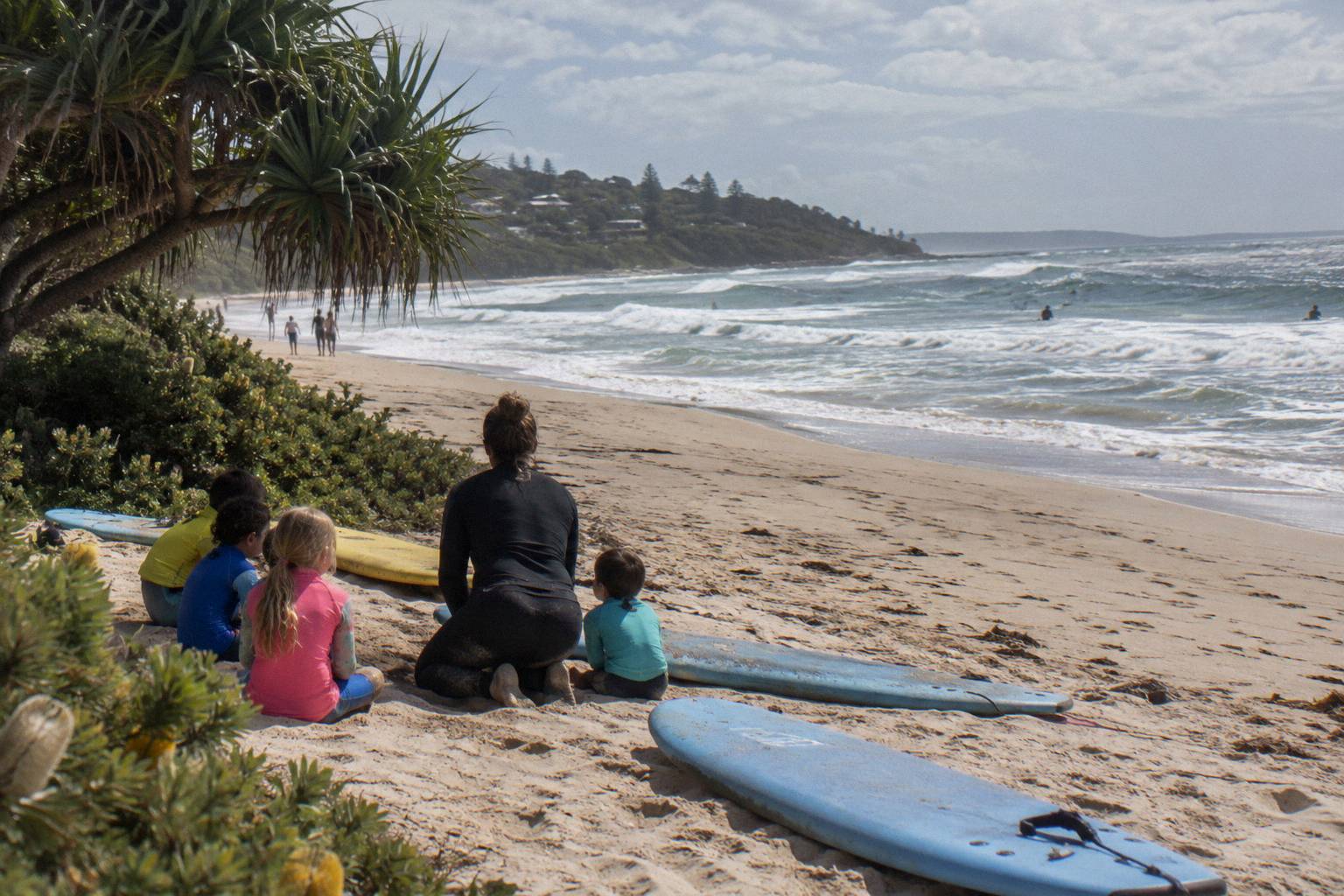
That answer surprises people who have read generic surfing advice written for cold-water coasts. In much of the world the wetsuit is a survival item and the choice of thickness is a whole sub-hobby. In Noosa the water is mild year-round, which is why the operators can treat the thermal layer as a simple either-or handed to you on the beach. Merrick's own visitor pages give a range of about 19 °C in winter to about 25 °C in summer, a figure worth attributing to Merrick's rather than treating as an official reading. A separate sea-temperature reference site gives a 10-year mid-November average of about 23.6 °C, which sits comfortably inside that band.
What does this mean for your body, practically? A full wetsuit at 25 °C water is more than most people need, and a short session in a rash shirt at 19 °C is brisk but bearable for a 2-hour lesson where you are moving constantly. Since the operator makes the call, your job is only to make the under-layer work: swimwear that fits close, stays put when a wave finds you, and does not hold water. Boardshorts with a drawstring work; loose cotton does not, because a wetsuit over soggy cotton folds and chafes.
| Season guide (Noosa) | Likely water feel | Operator layer you can expect | Your under-layer |
|---|---|---|---|
| Summer months | Around the top of the range, near 25 °C | Rash shirt most likely | Swimwear only; snug fitting |
| Shoulder months | Mid-range | Either, operator's call | Swimwear that suits both |
| Winter months | Around 19 °C | Wetsuit most likely | Close-fitting swimwear, nothing cotton |
Treat the season column as a planning frame, not a promise. The water-temperature figures come from Merrick's visitor page and a reference site, not from an official Bureau table, and no operator publishes a month-by-month garment schedule. If you feel the cold badly, mention it when booking and ask whether the lesson you chose runs in wetsuits that week; that one question replaces a page of speculation. How weather affects the lesson itself, rain, reschedules and cancellations, is a separate topic with its own Noosa Surf Lessons guide covering weather and cancellation terms, so this page stays on clothing only.
What Should You Wear Underneath The Provided Kit?
The operators do not state a rule for what to wear underneath, so treat it as your own decision guided by fit, not fashion. For a wetsuit, close-fitting swimwear is the practical choice: it cannot bunch, fold or soak. For a rashie over warm water, ordinary swimwear works. Nothing in the operator pages mandates any specific under-layer.
This is the one clothing question where the facts genuinely run out, and it is better to say so than to manufacture a rule. No Main Beach operator page specifies an under-wetsuit garment, and generic cold-water advice about thermal layers and neoprene hoods has no relevance to water that sits between roughly 19 °C and 25 °C. The decision logic is simple: the wetsuit does the warming, and your under-layer only has to not interfere.
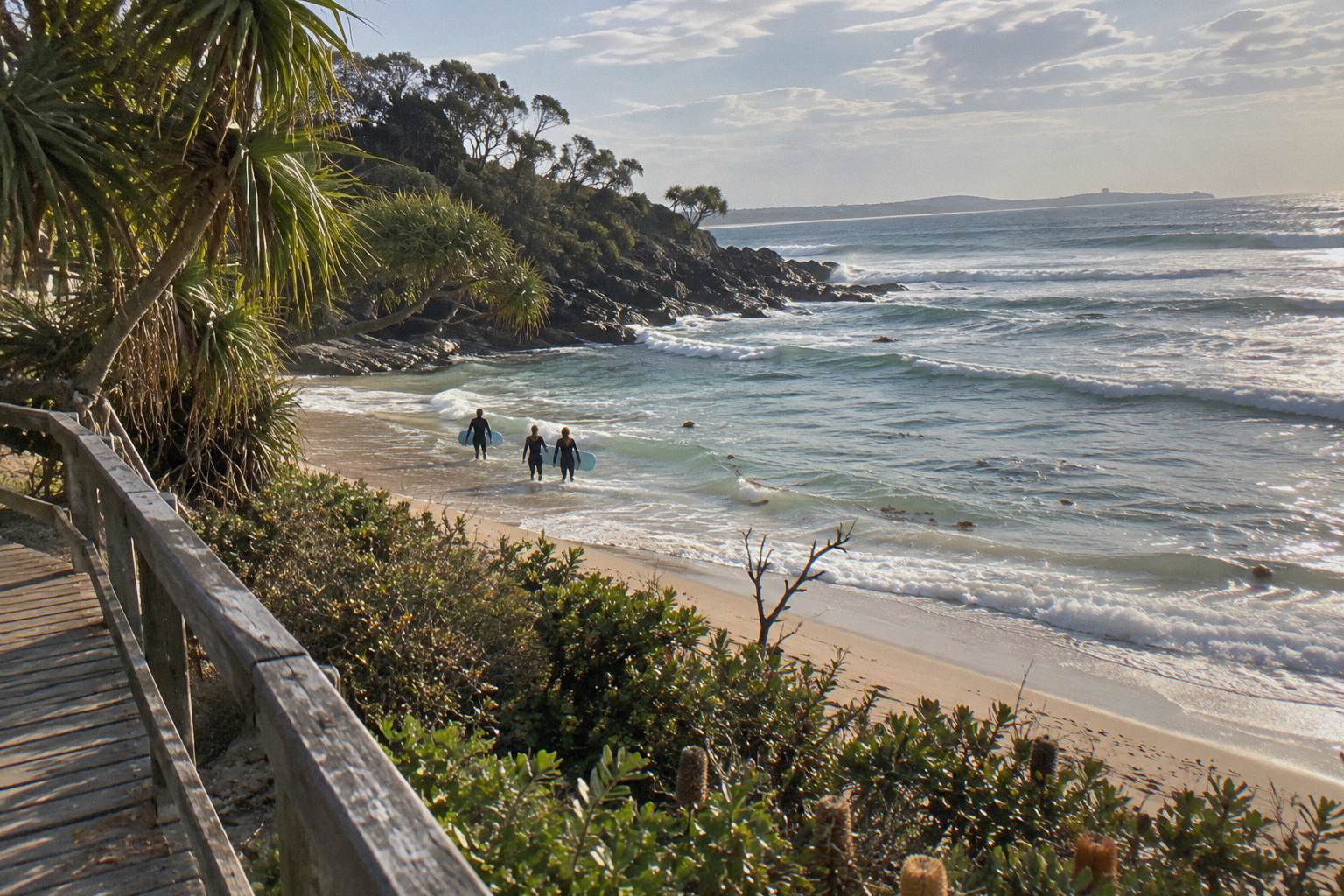
Interference is the real enemy. Anything loose under a wetsuit traps water, folds against skin and rubs across a 2-hour lesson that involves repeated paddling. Swimsuits designed for actual swimming, not lounging, solve this. The same logic applies to the rashie in warmer months: the shirt is there to protect your torso from the board's wax and the sun, and bulky layers underneath defeat both purposes. If you have a question about a specific garment, a quick message to the operator settles it; their contact details are published, Merrick's on 0418 787 577 and Go Ride A Wave on 1300 132 441, office hours 8am to 5pm daily.
For women, the same principle holds: a one-piece or a secure two-piece that stays put through a wipeout beats anything chosen for the beach photo. For men, drawstring boardshorts or swim jammers both work under a wetsuit, with the shorter option the less bunch-prone. For kids aged 7 and up, the minimum age at Merrick's, a swimsuit they can put on and take off wet without help is the kindest choice, and the same no-cotton rule applies doubled, because children notice cold and discomfort faster than adults do.
One genuine decision worth ten seconds of thought: swimwear you have already tested. A new swimsuit's first surf lesson is a bad first date. Wear whatever you wore swimming last summer, check the drawstrings and straps still do their job, and you have handled the entire under-layer question. Readers who want the fuller run-down of what to wear as a complete beginner, beyond the operator kit, will find the beginner surfing gear explained guide covers the wider picture.
Do You Need Surf Shoes, A Hat Or Sunglasses?
No operator on this roster lists footwear, hats or sunglasses as provided or required, and none states a rule about them. The practical position for a Noosa beginner lesson in waist-deep water on a sandy, sheltered beach is that most people wear nothing on their feet and nothing on their head while in the water.
That position is an inference from what is stated, not an operator instruction, and it deserves the honest framing. Go Ride A Wave states its beginner lessons run in waist-deep water; Merrick's lessons run on Main Beach, which Noosa Council describes as north-facing and sheltered. Neither page mentions reef, rocks or footwear. If footwear were needed, the operator would say so in inclusions or safety information, and neither does.
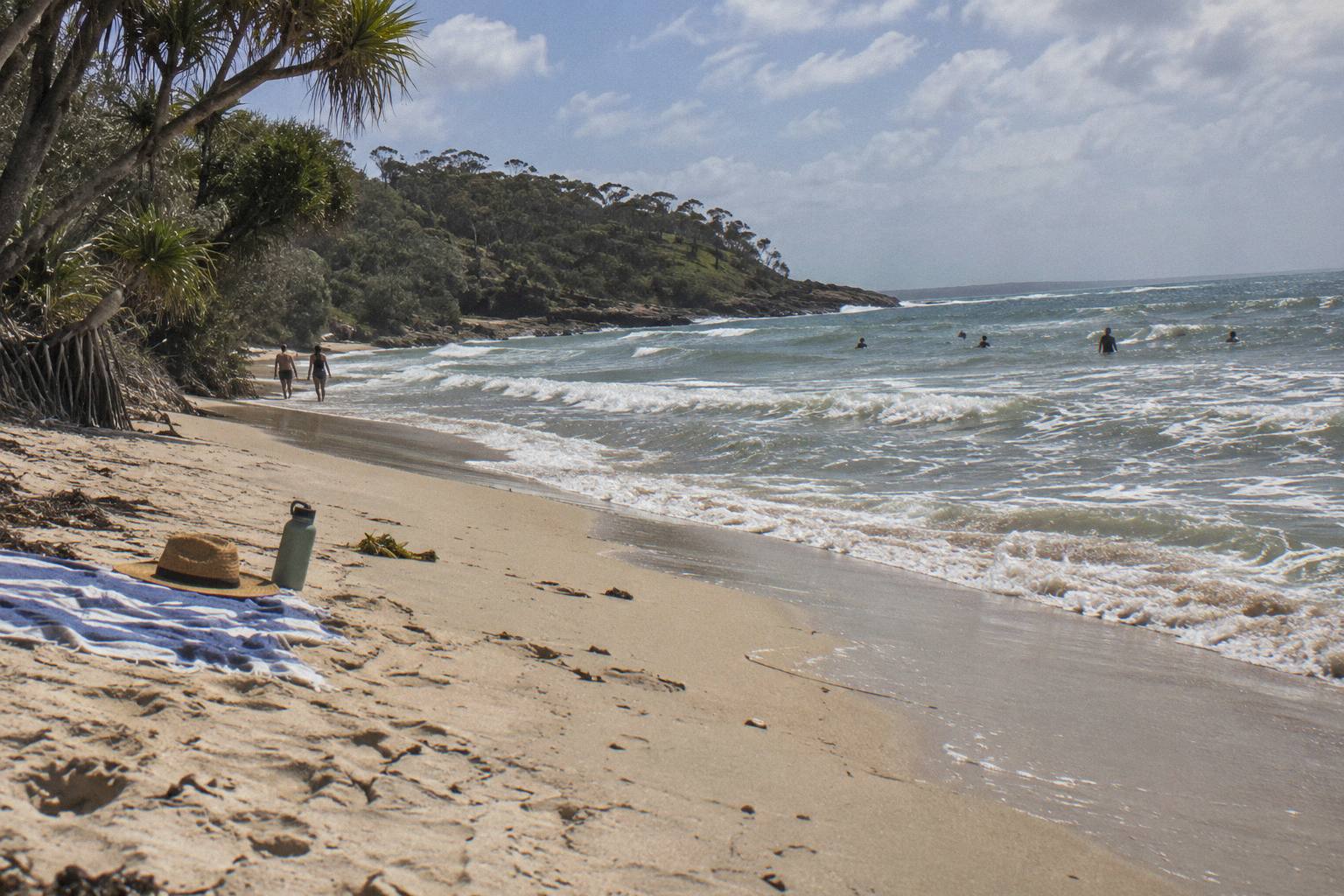
Hats and sunglasses are a different case, because they are sun-protection questions, and the operators do not state a sunscreen, hat or glasses rule of any kind. The general Queensland sun reality needs no citation to anyone who has stood in it, but what to do about it in the surf is genuinely your call. Sunglasses in the water are usually lost sunglasses; a hat with a strap is a matter of personal preference. The zinc-and-sunscreen question is real on a 2-hour lesson, and since no operator states a policy, bring your own and ask the instructor if in doubt.
What the operator pages do support is the frame around the question. Sun protection items are explicitly in the "not stated" bucket, so this page will not tell you the school hands out sunscreen, because that would be an invented comfort. Pack as though you are responsible for your own sun care, because as far as any operator page states, you are.
How Does The Season Change What You Wear?
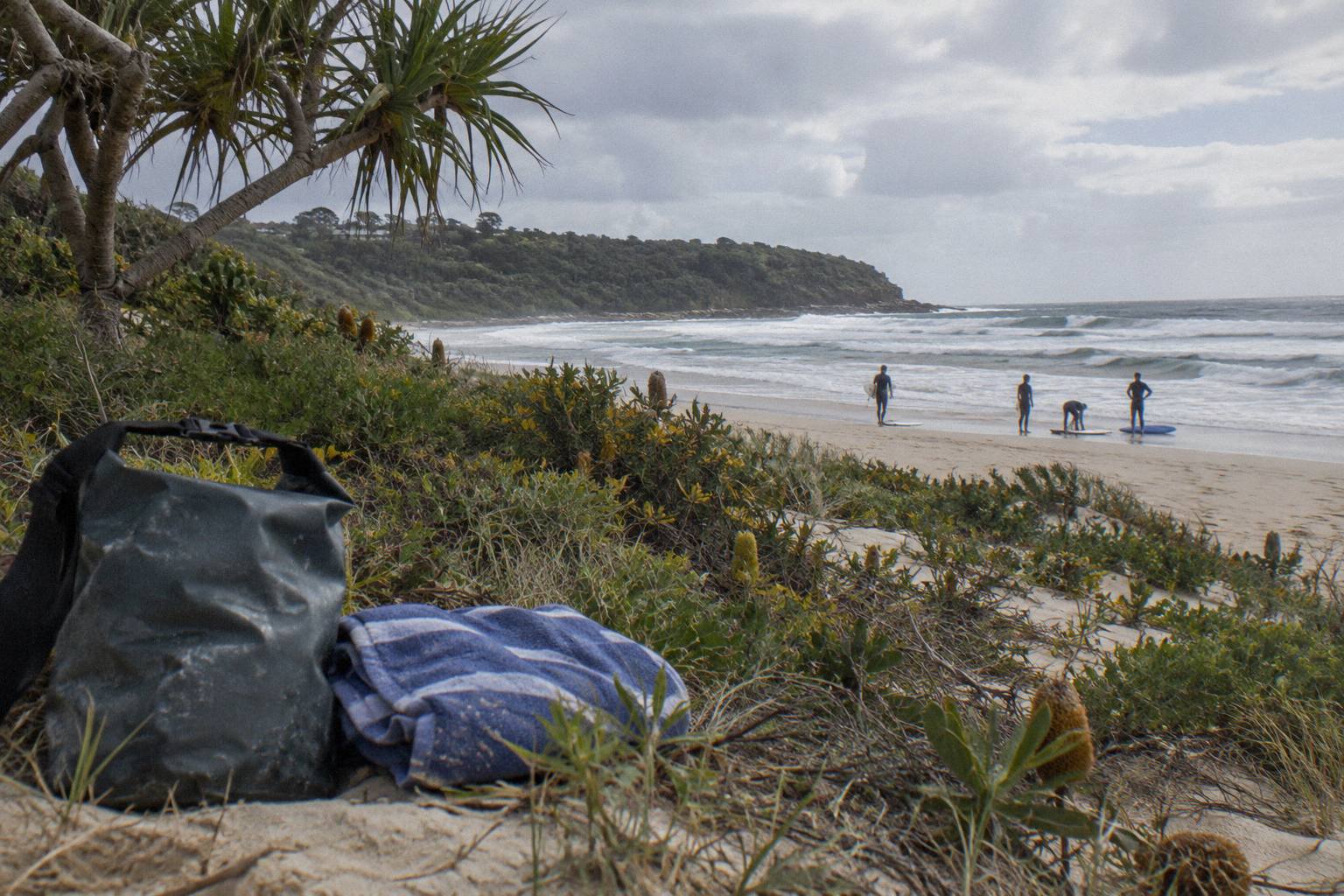
Water temperature moves the operator's thermal choice, and air temperature moves yours. The sea runs from about 19 °C in winter to about 25 °C in summer on Merrick's visitor-page figures, so winter means a wetsuit handed to you and warm dry clothes for after; summer means a rash shirt and the least clothing you are comfortable in.
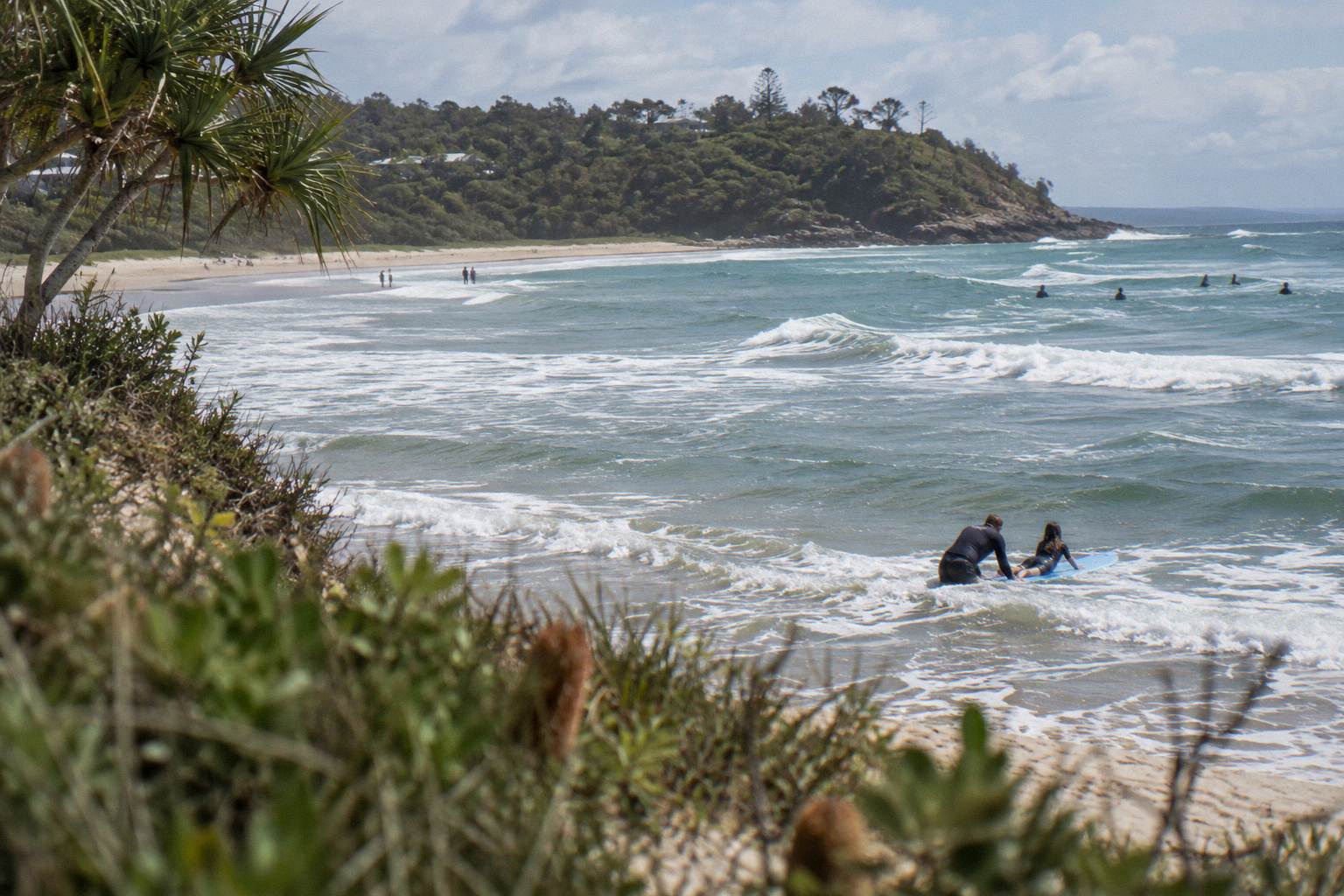
The seasonal swing is mild by world standards but real. A winter morning 8.45am group lesson at Merrick's, one of the two daily group slots on the operator's page, begins with air that can feel sharp next to 19 °C water, and the walk back to the car park is a lot happier with a warm layer waiting. Summer's afternoon 1.15pm slot flips the problem entirely: the water is near bath temperature and the sun, not the cold, is the thing your clothing answers. Neither operator publishes a seasonal clothing guide, so these are the frames a local would use rather than operator rules.
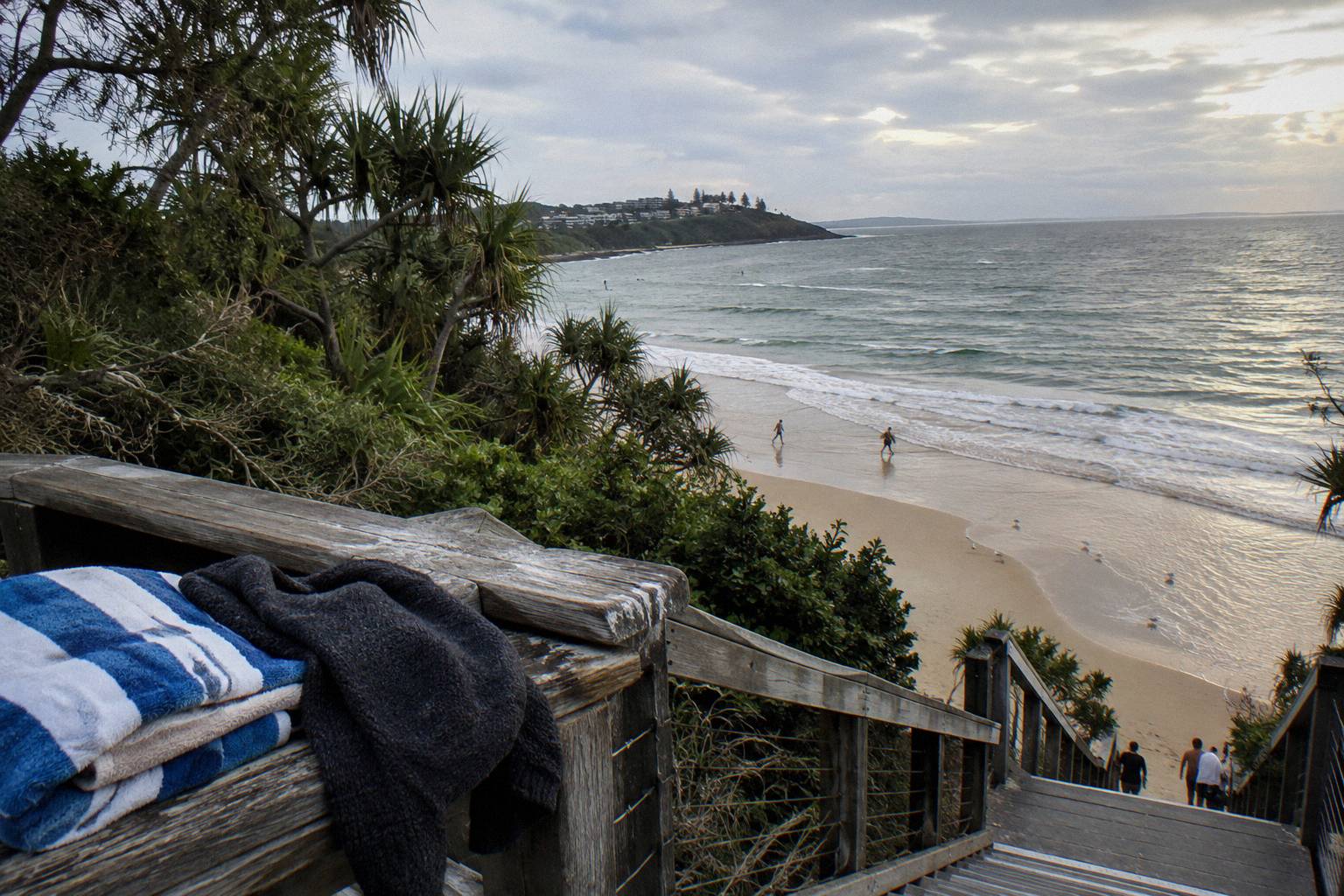
The after-lesson layer is the underrated half of the packing question. You will be wet, salty and possibly sandy, and the clothing you wear home is the item no operator provides and every surfer needs. In winter this matters more than anything you wear in the water. A jumper, something for your legs, and a towel cover the gap; if you want the full checklist of non-clothing items, the what to bring guide handles it, including the items this page deliberately leaves alone.
A quick seasonal frame, using only the stated figures:
| Item | Winter lesson | Summer lesson | Operator states? |
|---|---|---|---|
| Wetsuit or rashie | Provided, wetsuit likely | Provided, rash shirt likely | Yes, provided; split by season at Go Ride A Wave |
| Under-layer | Snug swimwear | Swimwear | Not stated |
| Dry change of clothes | Strongly practical | Practical | Not stated |
| Sun protection | Yes, your own | Yes, your own, more of it | Not stated |
| Towel | Yes | Yes | Not stated |
The last column is the honest one: much of what you wear around the lesson is governed by your own judgement because the operators stay silent on it. That silence is not carelessness; it is the simple reality that a school's job is the board, the water and the teaching, and the clothing you arrive in was always yours.
What Should Kids Wear To A Noosa Surf Lesson?
Merrick's takes children from age 7 who can swim 25 m unassisted, and its kit inclusion, surfboard plus rash vest or wetsuit, applies the same as for adults. No child-specific clothing rule is stated by any operator, so children wear snug swimwear and the provided thermal layer.
The kids question collapses to the adult answer plus two adjustments. First, children get cold faster and notice discomfort more, so the dry-change-of-clothes layer after the lesson matters double, and a wetsuit handed over in the shoulder months is a friend, not a burden. Second, kids' swimwear has a stronger failure mode: loose straps and decorative ties that tangle or drag; the same close-fit logic applies with less tolerance.
Beyond the group lesson, the direct options for children are real but separate from the bookable tour products. Merrick's runs a five-day kids holiday series for ages 7 and over, with coaches the operator describes as "fully qualified, lifeguard certified, and hold blue cards", operator wording worth attributing rather than adopting. Go Ride A Wave offers SurfGroms for kids, and Send it Surf Academy at Peregian runs a 6-week kids term programme of one hour weekly with five kids to one coach, plus a kids holiday programme. None of these states a clothing rule beyond the kit each school includes, so the parent's packing job is identical across all of them. Families weighing the broader options can compare them in the kids surf classes guide.
One practical note on age: the local-pro private session on this roster is 18 and over, and the Epic safari states no age rule at all, so neither is the kids' route. The bookable product a Noosa family with a 7-year-old lands on is the 2-hour group lesson, which brings the conversation straight back to the kit table at the top of this page.
What About Hair, Jewellery And Things That Fall Off?
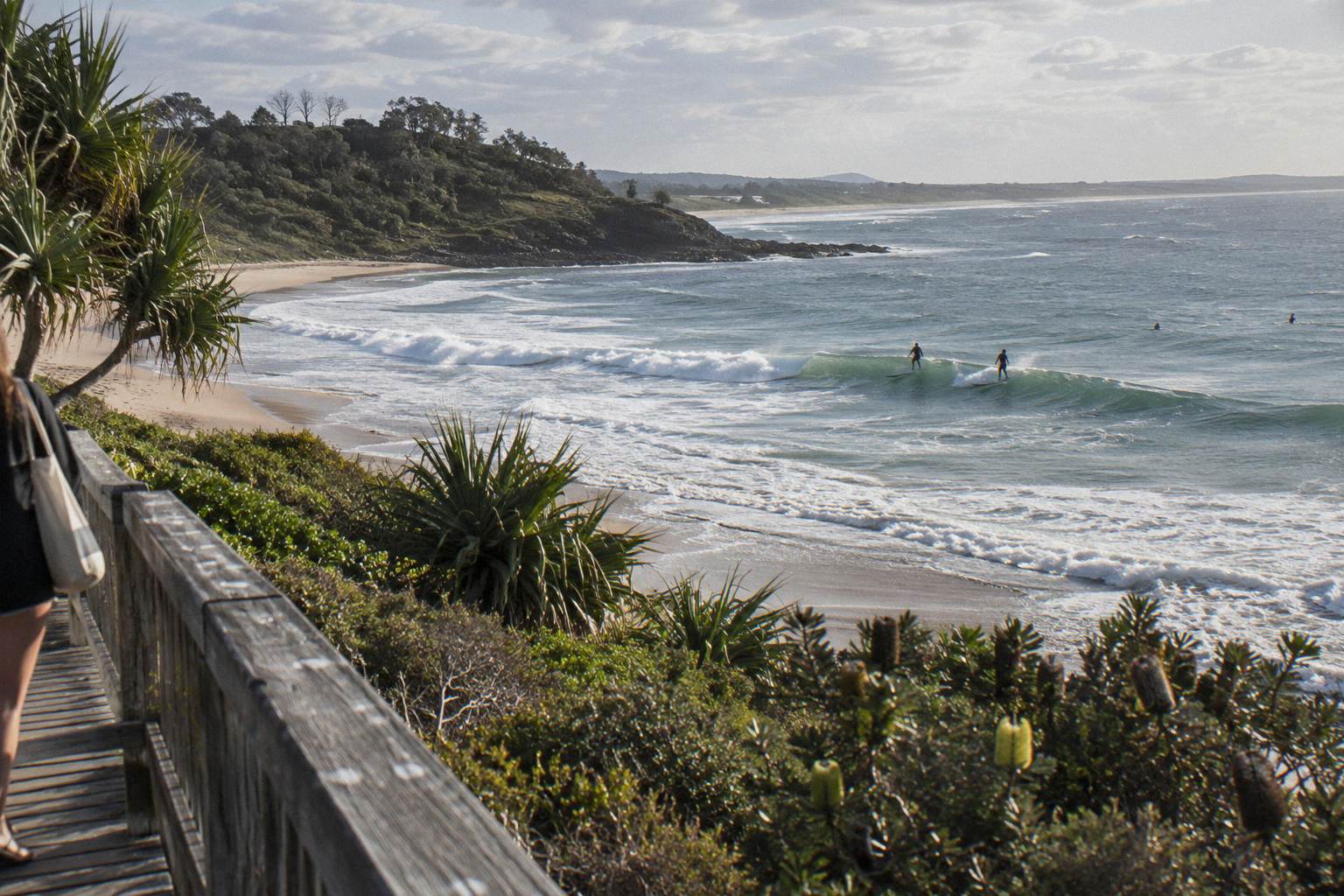
No operator publishes rules on hair ties, jewellery or glasses, but the physics of a 2-hour lesson in moving water answers most of it: anything that dangles, tangles or floats away will dangle, tangle or float away. Practical wear means secured hair, removed jewellery and a decision made in advance about prescription glasses.
Treat this section as physics, not policy, because none of it is operator-stated. Hair long enough to sit in your face when wet will spend the whole lesson in your face; a tie that holds is worth more than any garment choice. Rings and bracelets survive lessons fine until they do not, and a wetsuit over a bulky watch is a pressure point for two hours. Prescription glasses are the one item with a real decision: leave them with a non-surfing companion, secure them ashore, or accept blurred distance vision for the session; the instructors cannot safeguard them, and no operator page suggests they do.
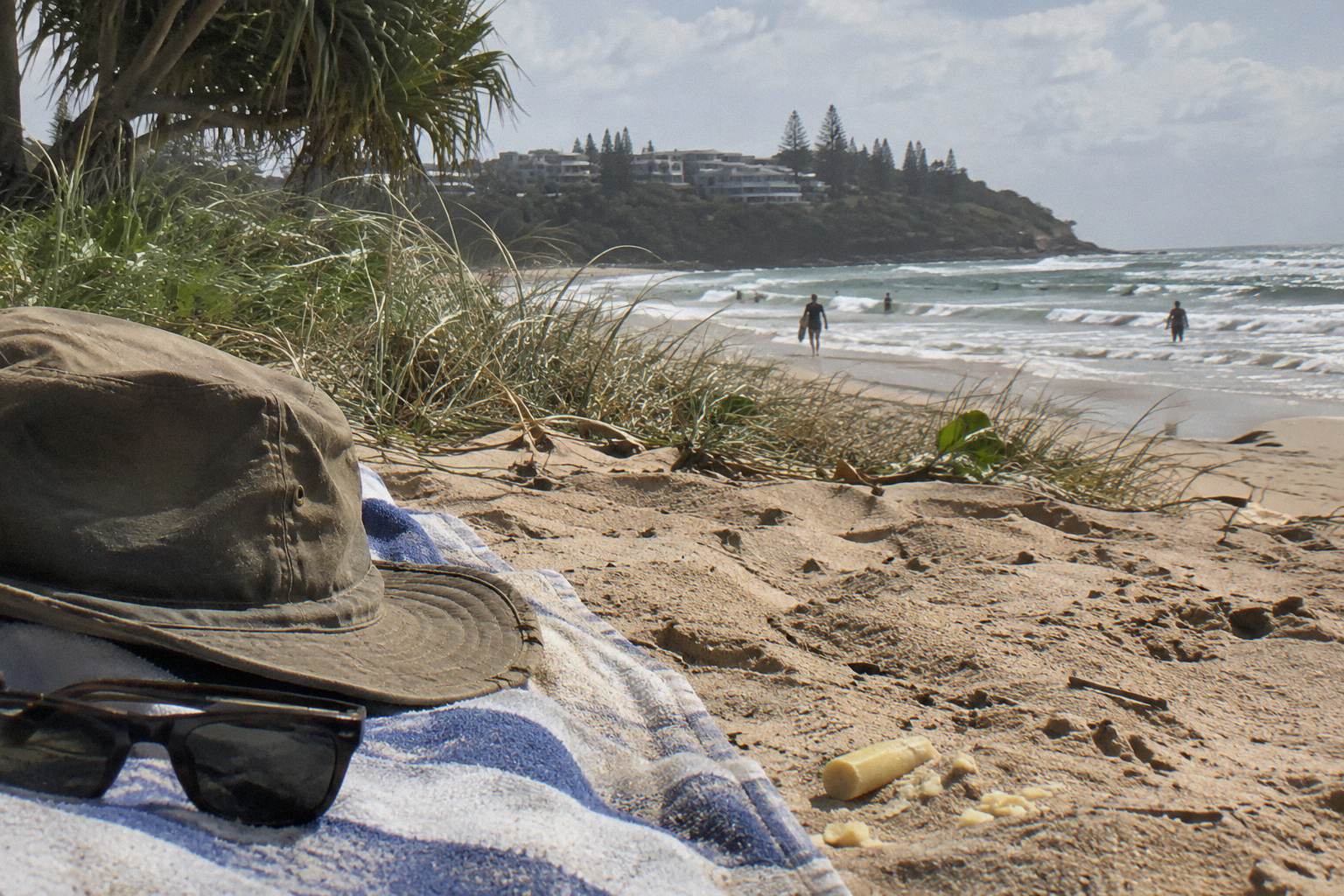
The same logic covers zinc, hair clips and anything else small and precious. The beach at Beach Access 14 and Access 11 is a working beach with a lesson to run, not a cloakroom. A sensible read is that everything you cannot afford to lose stays in the car or with your dry bag, and everything on your body is either snug swimwear or the operator's provided kit. Beyond clothing entirely, the question of what to bring, bags, water, valuables, has its own page, and the full what-to-bring checklist is where that list lives rather than duplicated here.
Which Lesson Format Suits What You Want To Wear And Do?
The bookable formats differ mainly in water, time and meeting point, not clothing. The Main Beach group lessons are 2 hours at Beach Access 14 or Access 11 with full kit provided. The Epic safari is about 6 hours with a 4x4 trip to Double Island Point. The local-pro private session runs about 3 hours from Hastings Street and is 18 and over.
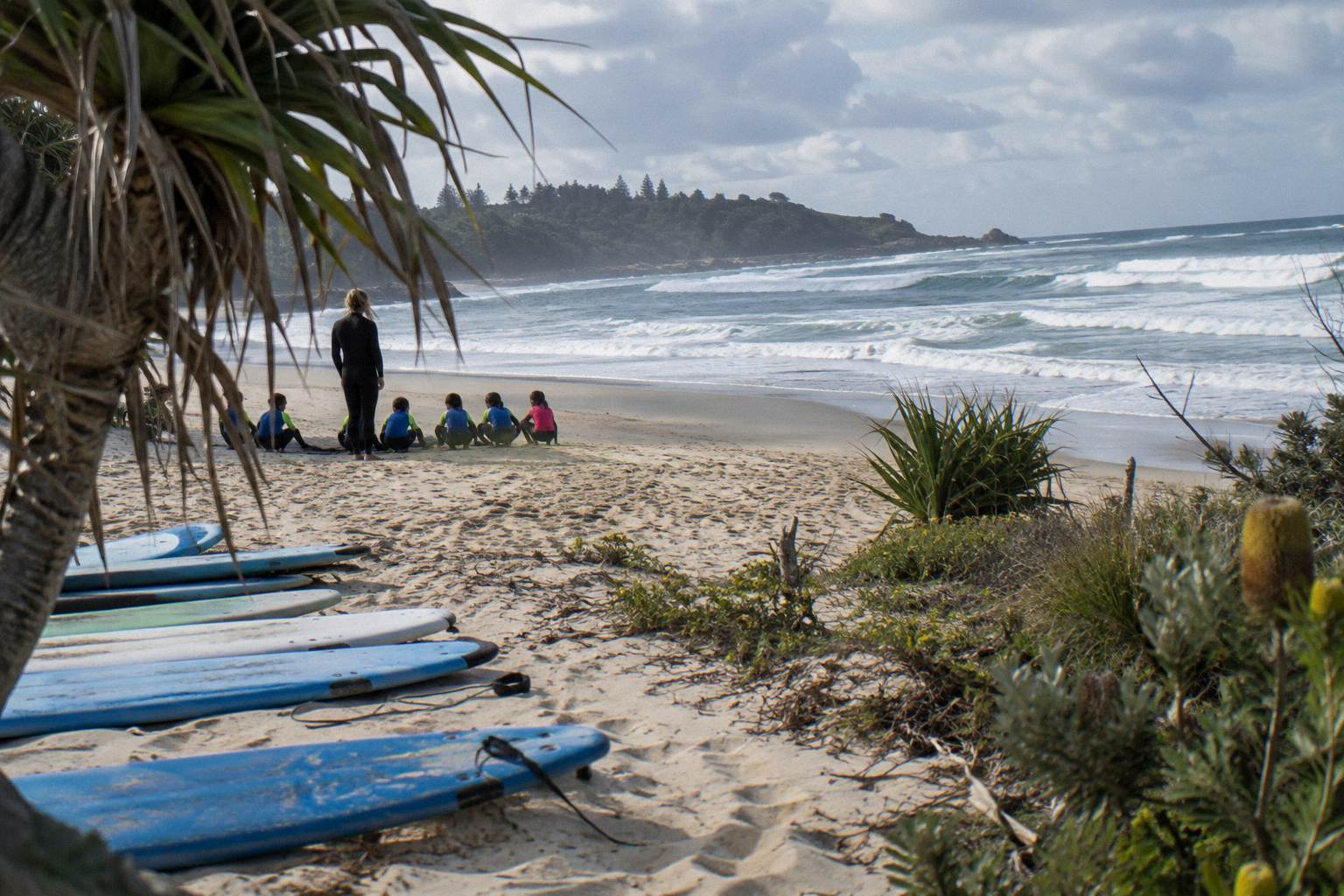
Clothing-wise, all three sit on the same principle: the operator provides what it provides, and your swimwear decisions travel with you. The differences are practical. A 2-hour Main Beach lesson is a compact commitment: arrive, wear the provided layer, surf, change, done. Merrick's group lesson runs at 8.45am and 1.15pm on the operator's own page, though the booking page shows 9.00am and 1.30pm, so confirm the exact slot when you book; the operator recommends private bookings 72 hours ahead. The lesson itself is a 1:7 instructor ratio with board and thermal layer included, at AUD 94 per person for the single 2-hour group session, and multi-lesson blocks of 2 x 2-hour at AUD 180, 3 x 2-hour at AUD 250 and 5 x 2-hour at AUD 385 if a wardrobe repeat visit appeals.
The longer formats change your day, not your outfit. The Epic Learn To Surf Safari is about 6 hours door to beach and back, meeting at The J Noosa, 60 Noosa Drive, with the surf at Double Island Point rather than Main Beach; no price, start time or inclusion list is stated on this site for it, so the clothing question there is genuinely one to ask the operator, since a six-hour day needs more after-water layers than a two-hour one. Its rating and age rules are likewise not stated.
The private route splits two ways. The local-pro session is about 3 hours for up to 4 people from 60 Hastings Street, 18 and over, with no price, start time or inclusions stated. Merrick's own private 2-hour lessons run daily at 10.45am at AUD 250 for one person, AUD 275 for two, AUD 375 for three, AUD 450 for four and AUD 500 for five. Private coaching in any form is the choice when you want the instructor's attention rather than the group's energy, and the private surf coaching guide works through that trade-off in full.
Common Questions About What To Wear To A Noosa Surf Class
Do I Need To Bring A Wetsuit To A Noosa Surf Lesson?
No. Merrick's includes a rash vest or wetsuit, and Go Ride A Wave includes a wetsuit or rash shirt depending on the time of year. The direct-only schools similarly include thermal kit: SC includes Mick Fanning soft boards and Send it includes rashies and seasonal wetsuits.
What Do I Wear Under The Wetsuit Or Rashie?
The operators do not state a rule. Close-fitting swimwear is the practical choice, because it cannot bunch or trap water under a wetsuit, and anything loose or cotton chafes across a 2-hour lesson. If in doubt about a specific garment, ask the operator when booking.
What To Wear To A Noosa Surf Class In Winter?
Snug swimwear under the provided wetsuit, plus a full dry change of clothes and towel for afterwards, because the sea sits around 19 °C on Merrick's visitor-page figure. No operator states rules for the after-lesson layer, so pack for yourself.
Do The Schools Provide Sunscreen Or Towels?
No operator on this roster lists sunscreen or towels in its inclusions, so treat both as your own. The verified inclusions cover boards and thermal layers only, and the honest advice is to bring your own sun protection and ask the operator if you want confirmation.
Should I Wear Surf Shoes To A Beginner Lesson?
No operator mentions footwear as provided or required. Beginner lessons run in waist-deep water on Main Beach, a north-facing sheltered beach in the council's wording, and neither Main Beach operator's inclusion list mentions reef or rocks.
What Should Kids Wear To Their First Lesson?
The same as adults: snug swimwear that survives a wave, with the operator providing the board and thermal layer. Merrick's takes children from age 7 who can swim 25 m unassisted, and its kids holiday series for ages 7 and over carries the same kit inclusion as the group lesson.