How To Read The Noosa Surf Report Before A Lesson
Checking the surf report before a Noosa lesson is mostly about knowing which beach you are on, what the flags are doing, and how your operator handles big surf. Here is how to read it like a local, using only what official sources and the operators themselves state.
Short answer
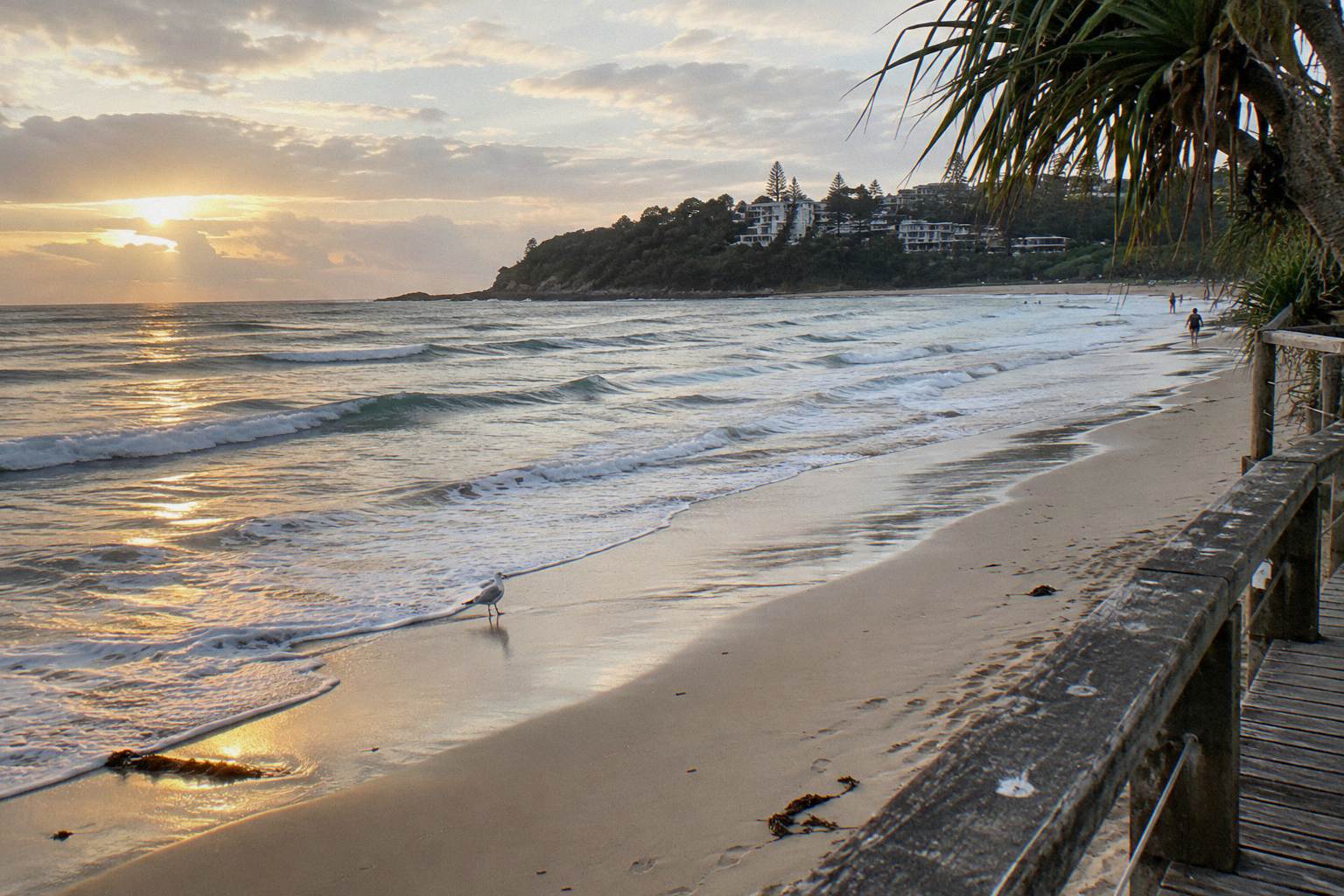
The official source for surf conditions at Noosa is the Beachsafe app, which shows patrol status, hazards, swell and tide. Beginner lessons run on the sheltered, north-facing Main Beach, and operators respond to large surf by staying closer to shore, moving to a sheltered beach, or rescheduling. Merrick's 2-hour group lesson costs AUD 94 per person.
A surf report answers one question for a beginner: will the water my lesson sits in be manageable on the day? At Noosa that question splits into three smaller ones. Which beach is the lesson on, because Main Beach and the eastern beaches behave very differently. What do the flags and the patrol status say, because that is the official safety picture. And what will the operator actually do if the report turns ugly overnight, because the answer is rarely cancellation, it is usually adaptation. This guide works through all three, using only what Noosa Council, Surf Life Saving Queensland and the operators themselves publish, and it flags every point where a genuine figure simply does not exist in the official record.
What Does A Noosa Surf Report Actually Tell You?
A Noosa surf report, properly read, is four separate checks rather than one number: the swell, the tide, the patrol status at your beach, and any flagged hazards. The Beachsafe app is the official source that carries all four in one place, and it is the only one this site recommends as a baseline. Everything else, including any wave height you see quoted elsewhere, is a forecast rather than an observation. Noosa Council's beach safety page directs swimmers to the red and yellow flags and to the Beachsafe app for patrol status, hazards, swell and tide, and the council contracts Surf Life Saving Queensland to run the lifeguard service on the beaches that matter to learners. So the discipline is simple: open Beachsafe, look up your lesson beach, and read those four lines before anything else. If a forecast site tells you something the official app does not, treat it as a hint, not a fact.
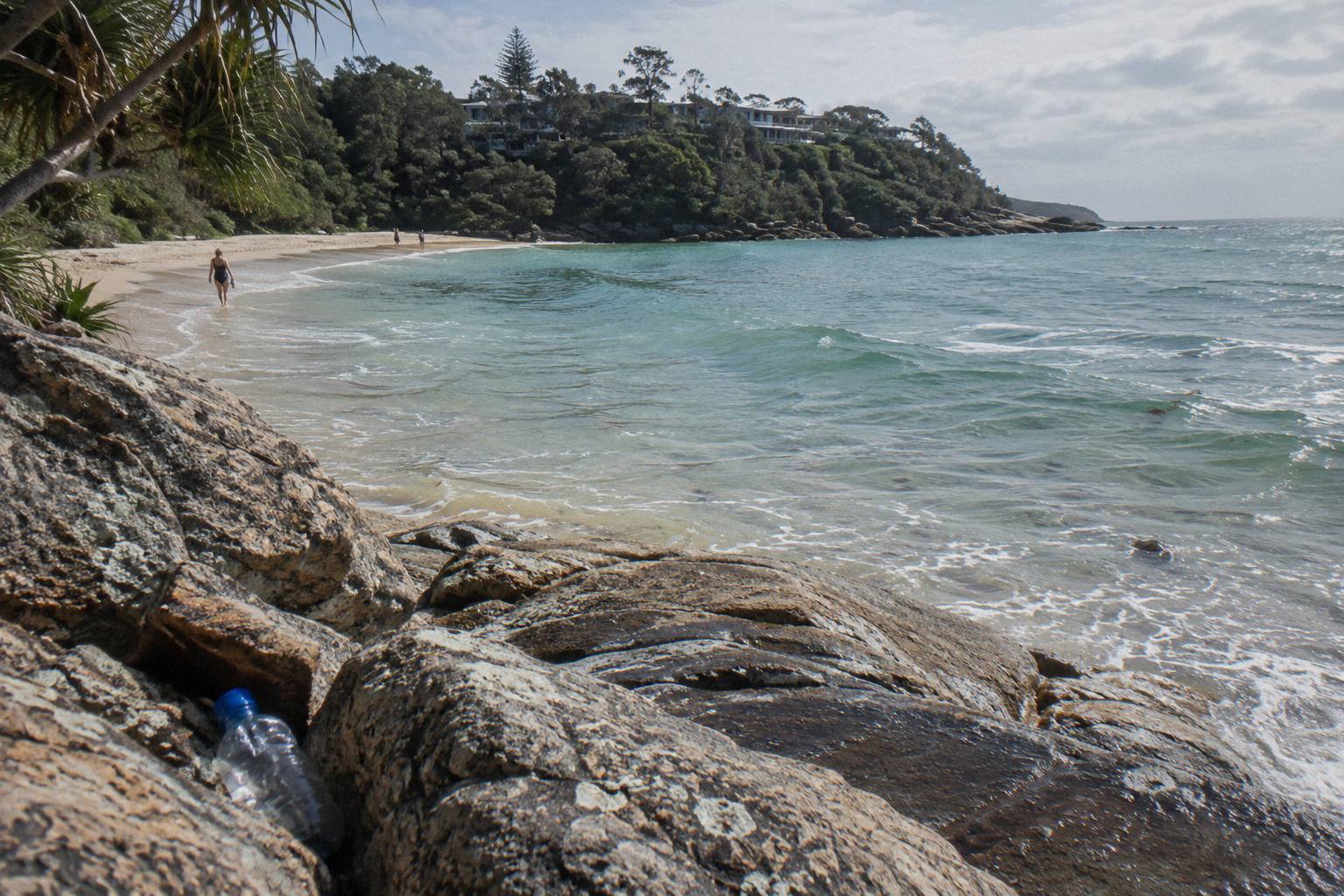
What the report cannot tell you is how any named Noosa break will behave on the day. First Point, Little Cove, Tea Tree Bay, Granite Bay and Boiling Pot all exist as places on the headland, and the Noosa World Surfing Reserve, designated 2020, describes them collectively as home to five of the world's best point breaks. But no official source covers swell behaviour, tide effects, crowds and difficulty at each individual break, so no report-reading guide can call a certain break beginner-friendly or dangerous. For a learner, that detail is largely irrelevant anyway: your lesson is not on those breaks. Beginner lessons at Noosa run on Main Beach, and the decision the report feeds is whether your specific session on that specific beach goes ahead, moves, or shifts time.
One more framing point. The council calls Noosa one of the world's most iconic longboard waves and is planning a Surf Management Plan community engagement in early 2027, which tells you the wave estate here is taken seriously at government level. But none of that heritage touches your first two hours on a soft board in waist-deep water. Read the report for your lesson, not for the point breaks in the photographs, and the whole exercise becomes much smaller and much more useful.
Which Noosa Beach Will Your Lesson Be On?
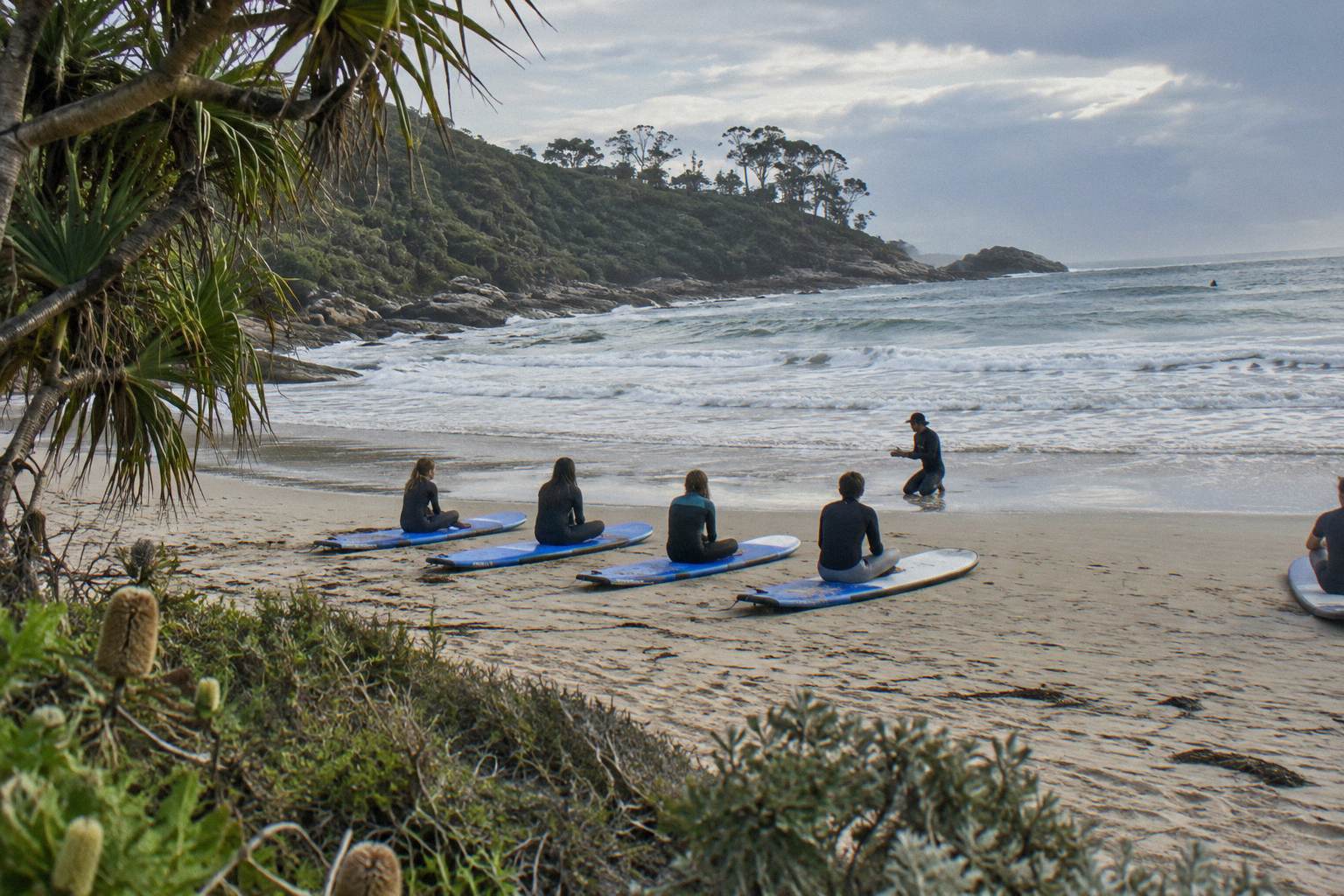
Almost every booked beginner lesson in Noosa happens on Main Beach, which the council describes as north-facing and sheltered, while the eastern beaches, Sunshine, Sunrise, Castaways, Marcus and Peregian, are, in the council's words, exposed to more powerful surf. Knowing which of the two you are on is the single most important line of your report check, because the same swell reading means different things on each. The two bookable meeting points sit side by side on Claude Batten Drive: Merrick's Noosa Learn to Surf meets at Beach Access 14 at the west end of Main Beach, and Go Ride A Wave meets at its white trailer at Beach Access 11 in Noosa Woods, with a 15-minute-early arrival asked of every guest. Those are two different access points on the same stretch of sheltered sand, so the report you read is the same report either way.
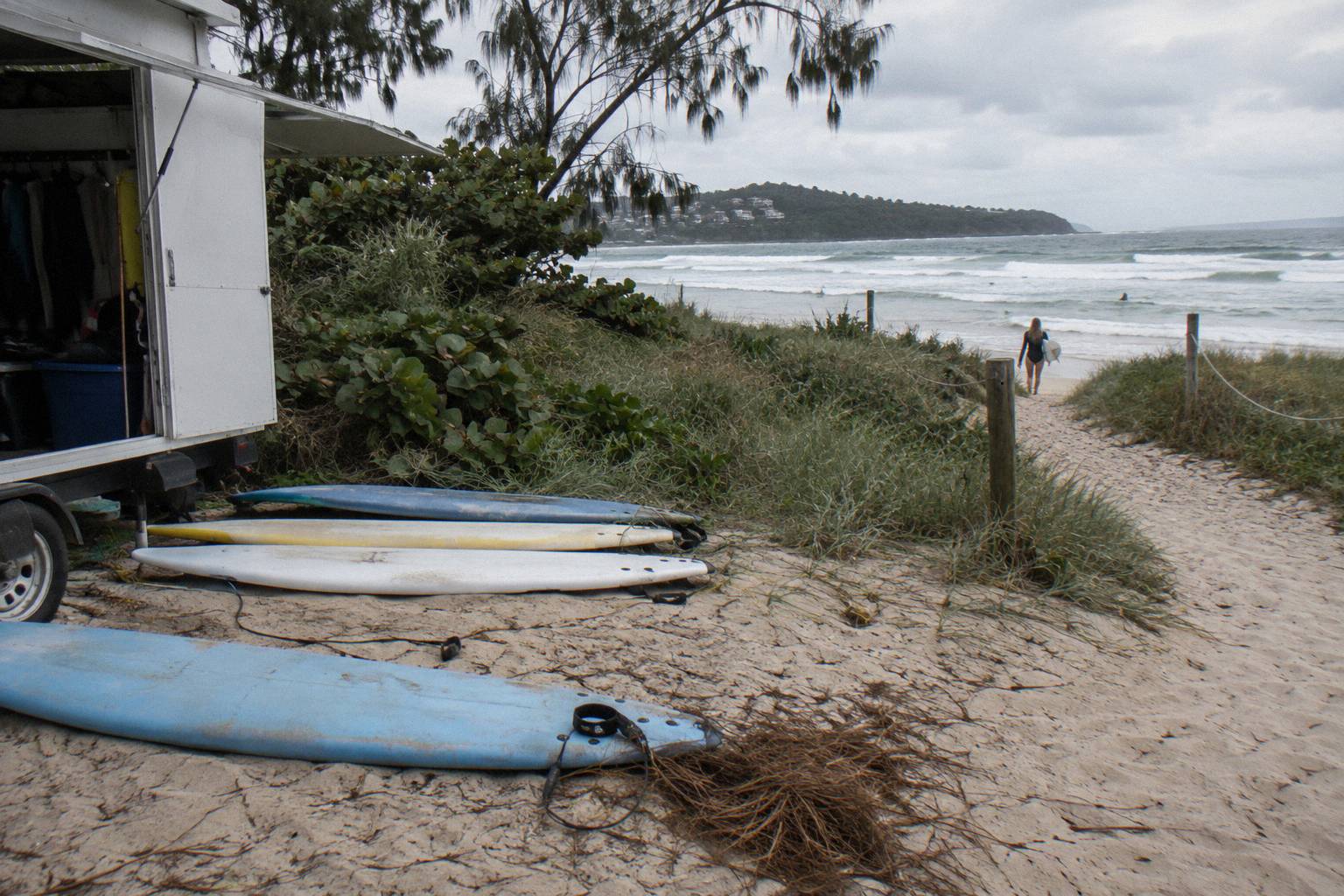
The exceptions are worth naming because they change what you watch. The Epic Learn To Surf Safari is a 4x4 trip to Double Island Point, meeting at The J Noosa on Noosa Drive, so the conditions that matter are at a completely different beach with its own report. The private local-pro session meets at 60 Hastings Street and runs about 3 hours for up to 4 people aged 18 and over. And two direct-booking schools operate off the eastern beaches: Sunshine Coast Elite Surf Coaching roams Peregian, Marcus, Castaways, Sunrise and Sunshine Beach with the spot chosen daily, and Send it Surf Academy is based at Peregian. If your lesson is with one of those, you are reading the report for the exposed coast, and the council's own wording tells you to expect more powerful surf there than on Main Beach.
Here is the practical version, in table form, so you can match your booking to the right report.
| Lesson or session | Where it happens | Report you read | What the council says about that water |
|---|---|---|---|
| Merrick's group lesson | Beach Access 14, Main Beach west end | Main Beach | North-facing, sheltered |
| Go Ride A Wave Surf Experience | Beach Access 11, Noosa Woods | Main Beach | North-facing, sheltered |
| Epic Learn To Surf Safari | Double Island Point | Double Island Point | Separate beach, not a Noosa Council swim beach |
| Local Pro private session | Meets 60 Hastings Street, beach per session | Ask the operator | Not stated |
| SC Elite Surf Coaching | Peregian, Marcus, Castaways, Sunrise or Sunshine Beach, chosen daily | Operator confirms the spot | Exposed to more powerful surf |
| Send it Surf Academy | Peregian Beach | Peregian Beach | Exposed to more powerful surf |
What Do The Operators Do When The Report Looks Big?
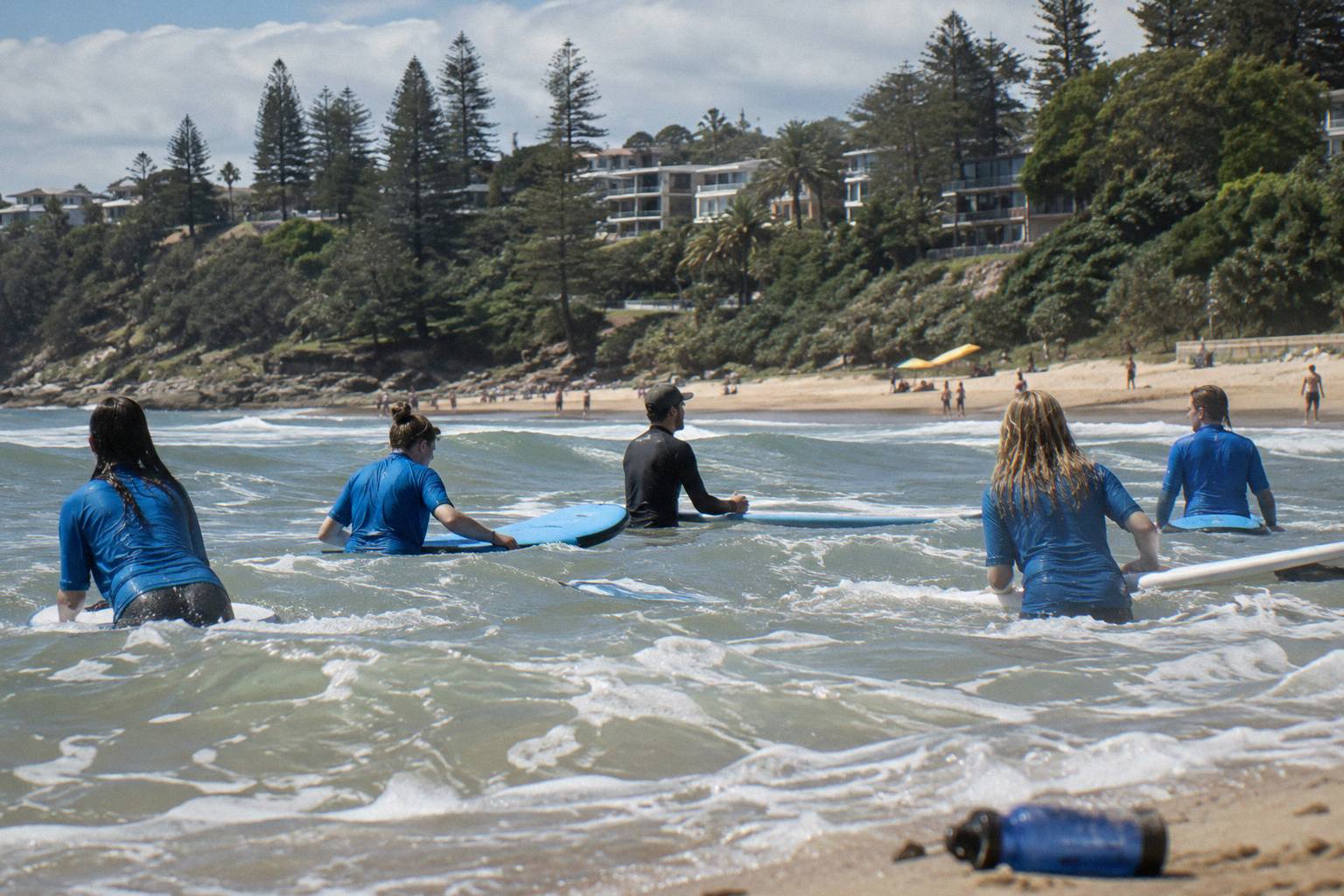
No Noosa operator cancels a lesson merely because the report is large: Go Ride A Wave stays closer to shore or moves to a more sheltered beach, Merrick's may move the lesson to the shore or reschedule if the water is unsafe, and both refund or credit with 24 hours' notice or when the instructor cancels for conditions. Rain alone is never a cancellation reason for Merrick's, whose policy is no refund if it rains. In other words, the report rarely decides whether you surf; it decides where and how. Go Ride A Wave's beginner sessions run in waist-deep water with a soft board, a leg rope and safety information upfront, so a big-swell morning typically becomes a closer-to-shore morning rather than a lost one. The operator's instructors are described on its own page as highly trained and fully qualified lifeguards, and the business carries AUD 20 million public liability and AUD 5 million professional indemnity insurance, which is worth knowing when you are trusting someone else's judgement on conditions.
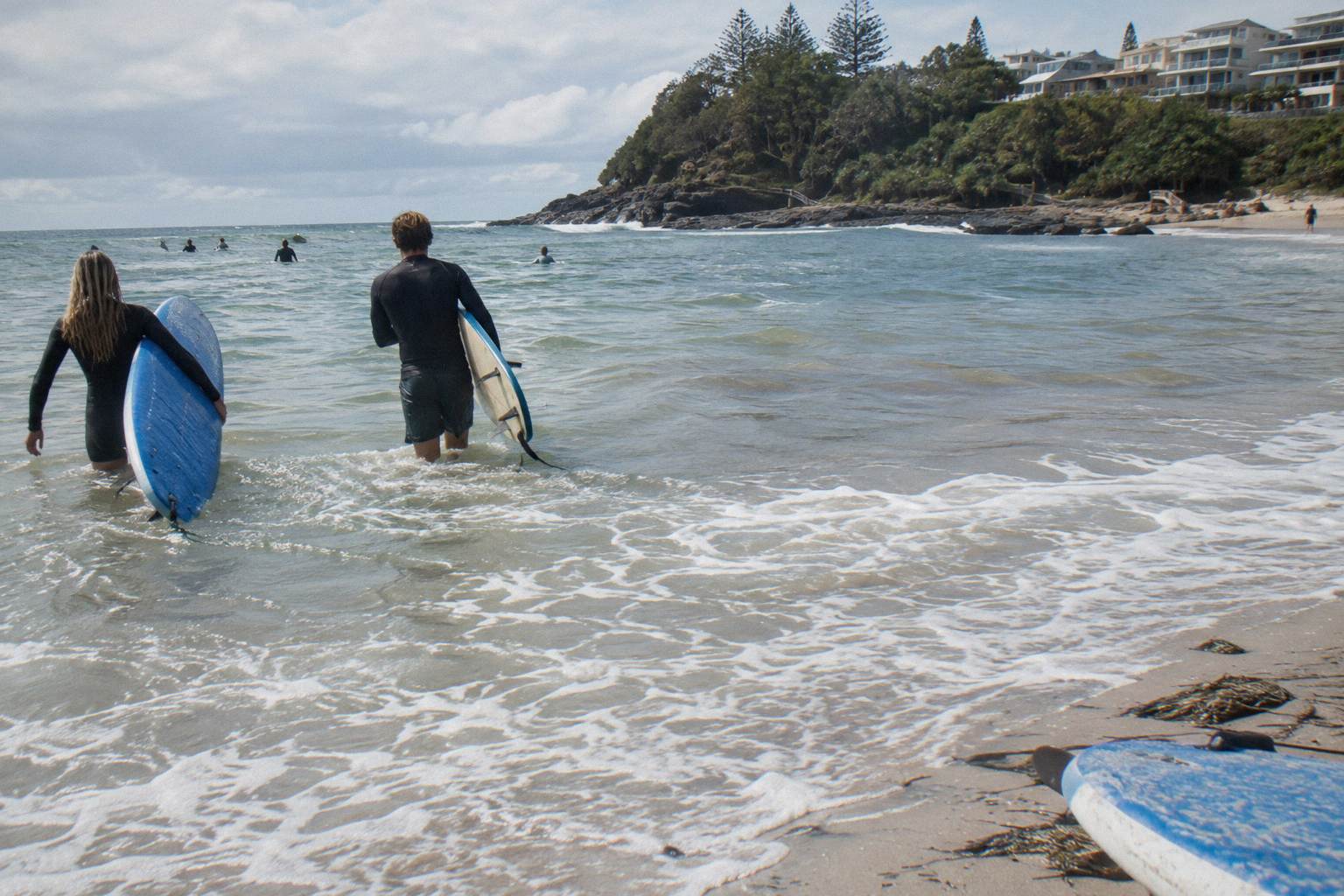
Merrick's runs group lessons 363 days a year, closed only on Christmas Day and New Year's Day, in all weather, rain or shine, at a ratio of one instructor to seven students with a board and a rash vest or wetsuit included. Its refund policy is unusually specific and worth reading before you panic at a forecast: refund or credit with 24 hours' notice, or if the instructor cancels for unsafe conditions, no refund for rain, unsafe water may mean the lesson moves to the shore or is rescheduled, and multi-lesson blocks are refunded at the undiscounted rate for lessons already used. Gift vouchers are non-refundable but transferable. That structure tells you the operator, not the forecast app, is the safety authority on the day, which is exactly how it should be.
The 2-hour Go Ride A Wave Surf Experience, rated 4.9 on its live listing, is a good example of how little the report should worry a booked beginner: it is built around waist-deep water and a soft board, and its fallback, staying near shore or relocating to a sheltered beach, is stated on the operator's own page. If you want a fuller walk-through of what happens when weather and bookings collide, the guide to Noosa surf class weather and cancellation rules covers it in depth.
Swell, Tide And Wind: What Should A Learner Actually Check?
Check three lines on the official app: the swell reading, the tide timing, and any hazard flags, and weigh them against the fact that your lesson is on a sheltered, north-facing beach in waist-deep water. No official source sets forecast thresholds, wave-height cutoffs or tide rules for Noosa lessons, so any specific number a blog gives you is invented and can be ignored. What can be said honestly is directional: a north-facing sheltered beach is not exposed to the same energy as the eastern beaches the council calls out for more powerful surf, which is why every booked beginner product in Noosa runs there rather than at Sunshine or Peregian. The report is context for your lesson, not a verdict on it.
Tide and wind matter to surfers everywhere, but for a first lesson the practical reading is simpler than any surf-forecast forum suggests. The instructor picks where on the beach the group sits, in what depth, and on what equipment, and those three choices absorb most of what the tide and wind do. Go Ride A Wave states plainly that beginners are taught in waist-deep water; Merrick's ratio of one instructor to seven students is the operational structure that keeps a group manageable in changing conditions. Your job on the morning of the lesson is to arrive on time at the right access point, suit up with what is provided, and ask the instructor anything the report made you nervous about. That last habit, asking, is treated in every official safety source as the core skill.
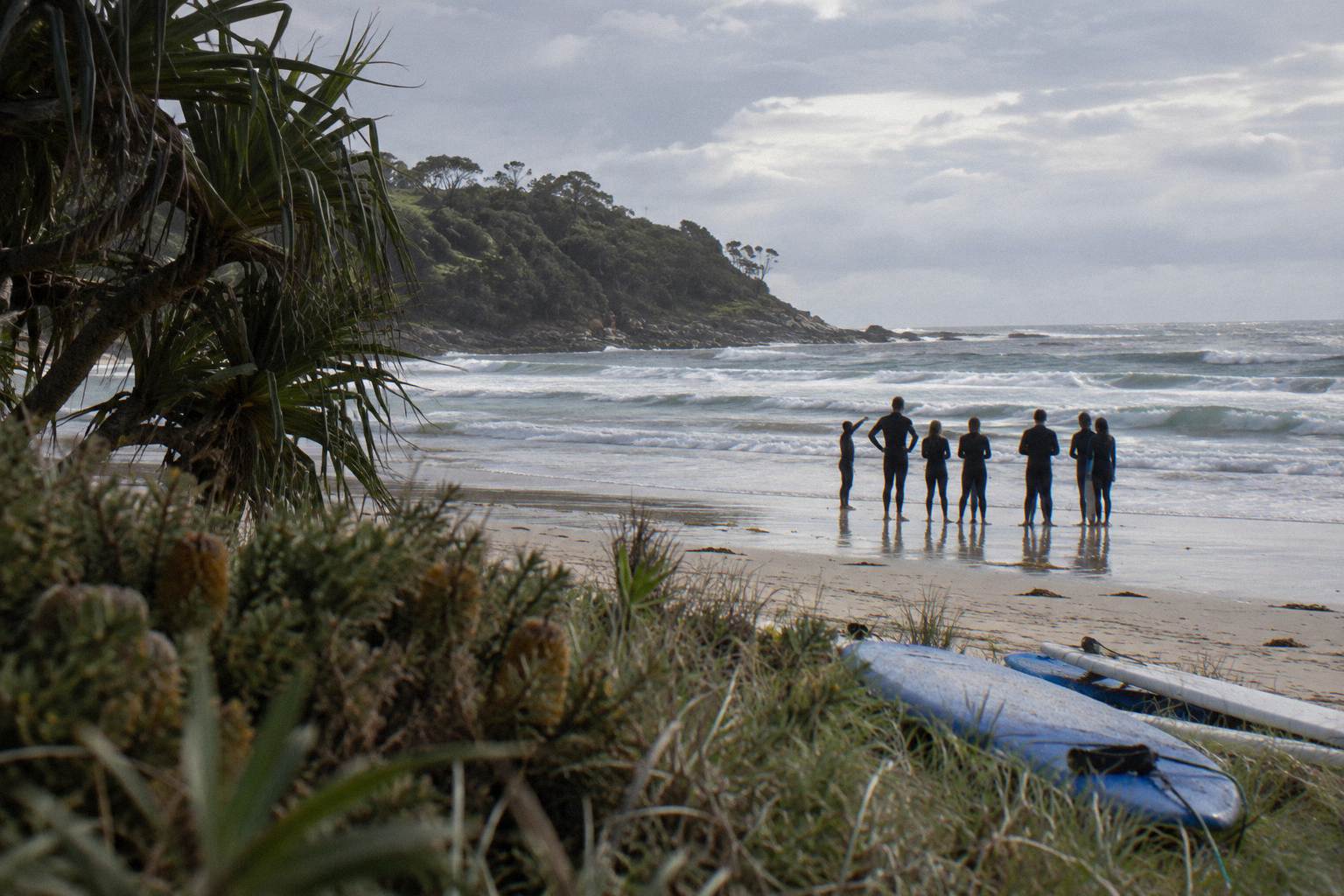
For context on how the timing of your session interacts with conditions, Merrick's runs group lessons daily at 8.45am and 1.15pm per the operator's own page, though the booking page displays 9.00am and 1.30pm, so confirm your slot when you book. Private lessons run daily at 10.45am, and the operator recommends booking those 72 hours ahead. The 2-hour group lesson is AUD 94 per person, with multi-lesson blocks of 2, 3 and 5 sessions at AUD 180, AUD 250 and AUD 385 respectively, figures that matter here because a rescheduled lesson from a bad-conditions day has to be re-slotted into one of those windows. The pattern of daily repetition is the point: with two group sessions a day, 363 days a year, a moved lesson is a delay of hours, not weeks.
What Do The Flags And Patrol Status Tell You?
Noosa Council lists Noosa Main Beach, Sunshine Beach and Peregian Beach as patrolled, with Sunrise Beach and North Peregian patrolled seasonally, and the universal rule is to swim between the red and yellow flags and never at an unpatrolled beach. The Beachsafe app shows patrol status, hazards, swell and tide. For a learner this is the cleanest part of the report check: open the app, confirm your lesson beach shows a patrol, and know that the council contracts Surf Life Saving Queensland for the lifeguard service. Commercial lessons also cluster in the two council permit zones at Access 11 and Access 14, so a booked beginner is normally in the most supervised water on the coast.
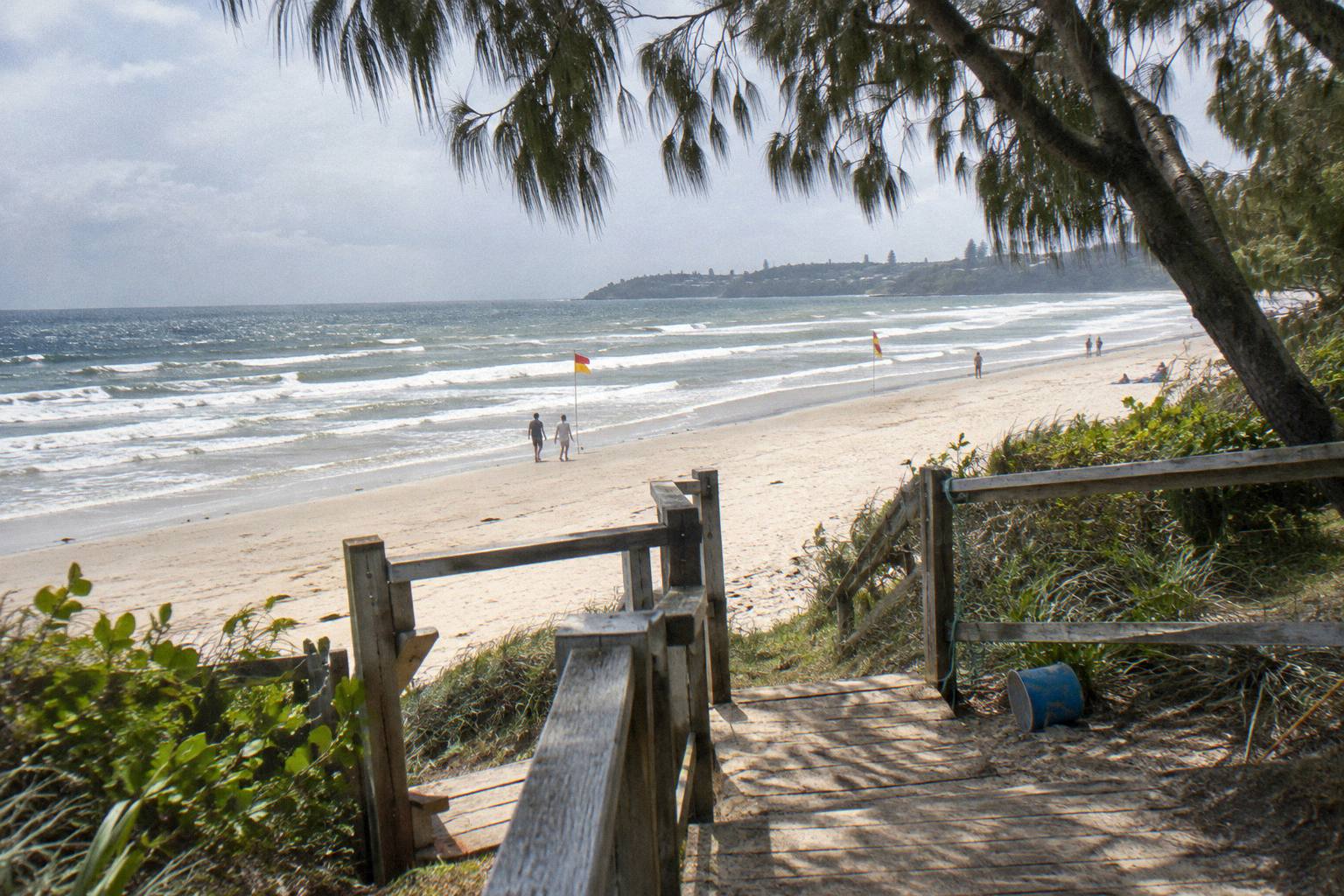
On rips, the official advice is simple: swim between the flags, and ask a lifeguard or your instructor about anything you are unsure of. A lesson is actually the best place to have that conversation, because your instructor is on the sand with you, reading the same water you are, and can point out what the flags and the app cannot. Treat the patrol line in your report as a gate rather than a grade: patrolled means the safety net is present, and everything beyond that is the instructor's call.
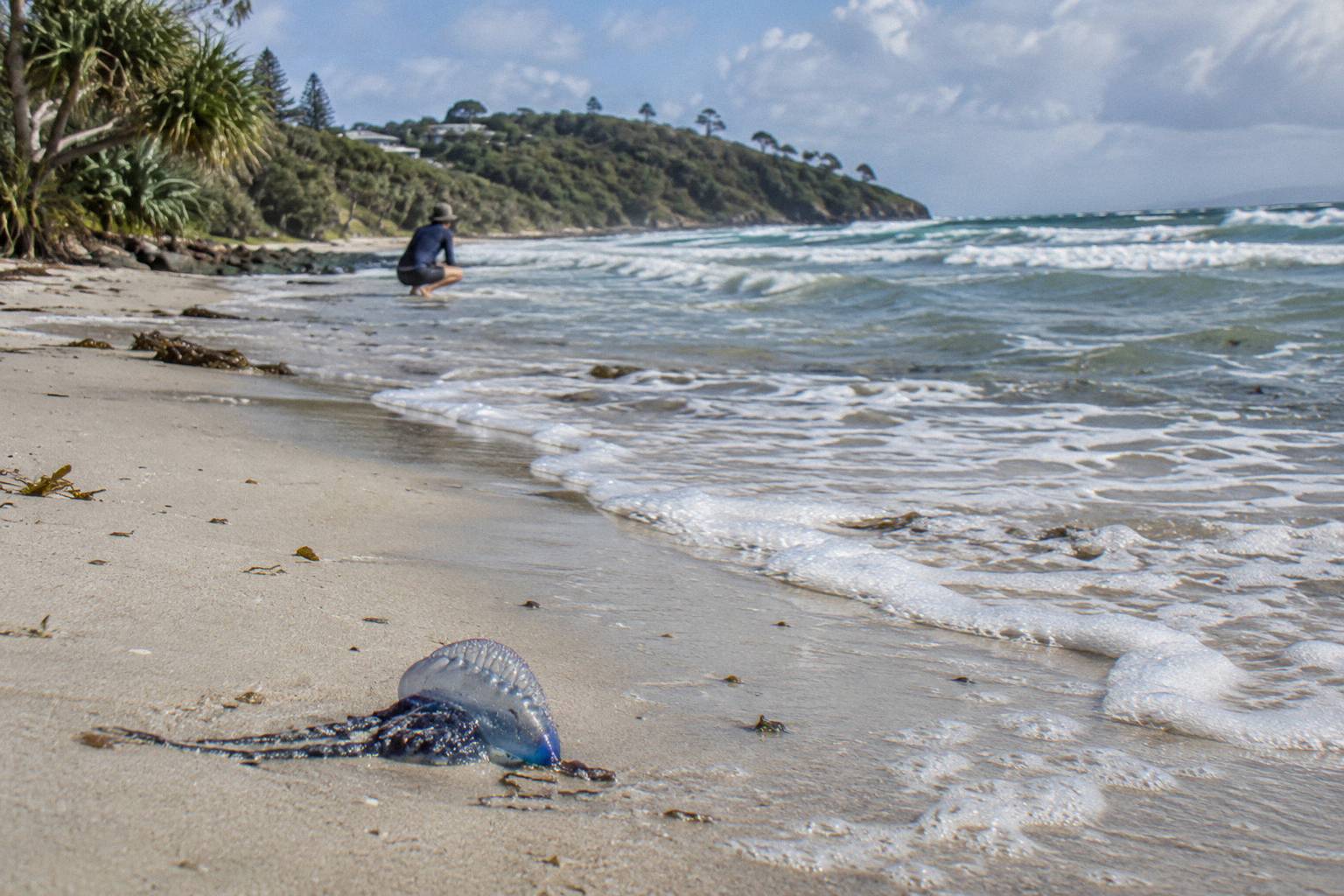
A reasonable question at this point is whether the whole report ritual is necessary for a sheltered beach, and the fair answer is that it is a five-minute habit, not a research project. The same check that tells you the patrol status also tells you the hazard flags, and those occasionally carry information that changes your morning, like a bluebottle presence. If you want the broader safety picture for learners, including which beaches the Queensland Shark Control Program lists, the guide on whether Noosa surfing is safe for beginners goes through it beach by beach.
Stingers, Sharks And Bluebottles: What The Report's Hazard Lines Mean Here
The dangerous box jellyfish and Irukandji risks described by Queensland authorities apply to tropical Queensland, box jellyfish north of Agnes Water and Irukandji north of southern Fraser Island, and Noosa sits south of both ranges, so there is no stinger season or stinger net statement to make about Noosa. Bluebottles are the more likely local sting, and that is an inference, so frame it as a question for your instructor. On sharks, the Queensland Shark Control Program lists Noosa, Sunshine Beach and Peregian Beach on the Sunshine Coast, but does not state what equipment is installed, or any risk level or statistic. The hazard lines in the official app exist precisely so you do not have to reason from geography alone.
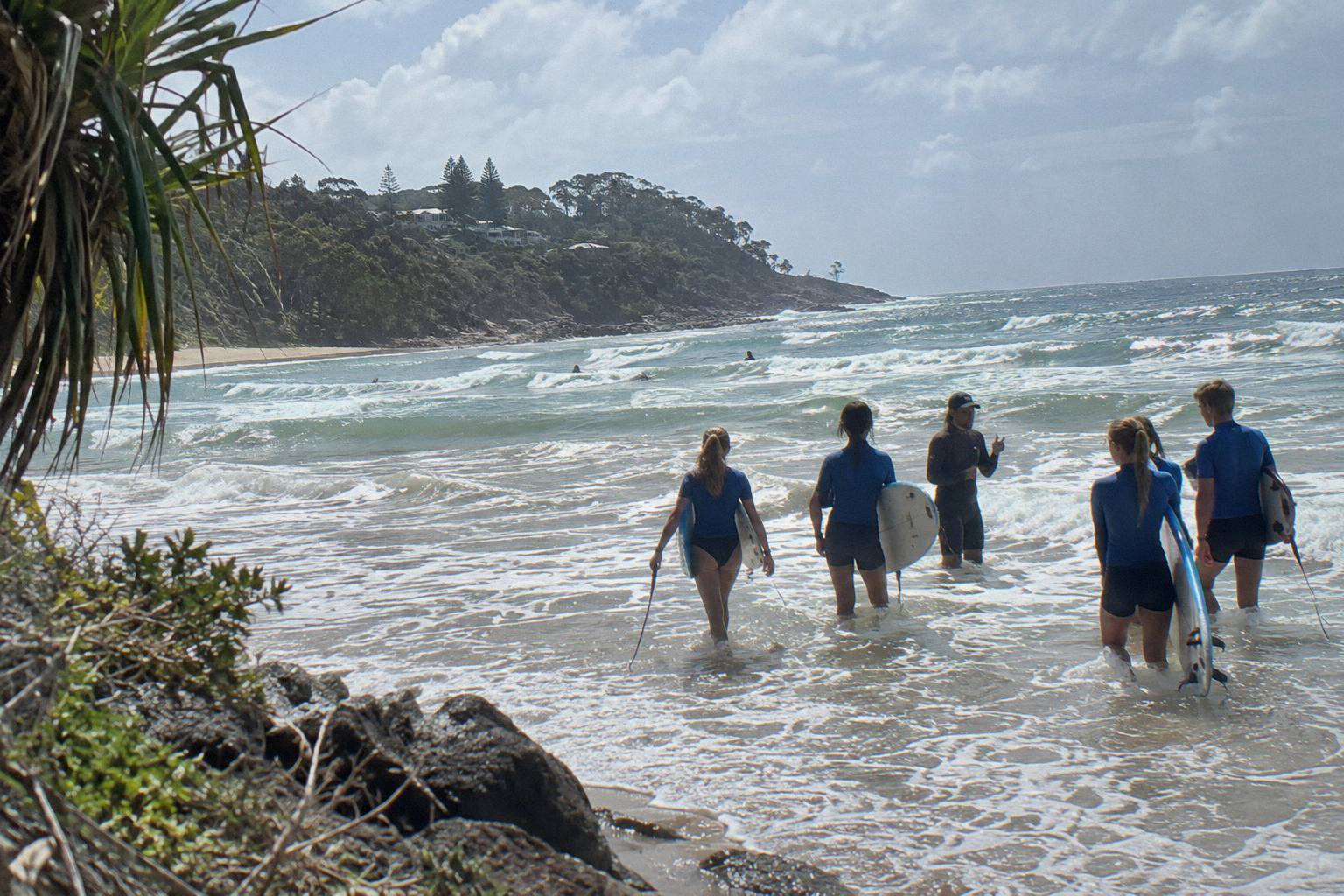
What this means in practice is that the marine-life section of your report check is short. Look at the hazard flags on Beachsafe, note anything mentioned, and mention it to your instructor on arrival, since they will have been in that water daily and will know what the flags translate to on the sand. Go Ride A Wave runs beginner sessions in waist-deep water with safety information built into the session start, and Merrick's operates in all weather with equipment included, so both structures assume the conversation happens. There is no local protocol beyond that: no net schedule, no season calendar, no sting statistic, and any page offering you one for Noosa is filling a gap with someone else's geography.
It is also worth separating the hazards you check from the ones you cannot. Patrol status, swell, tide and flagged hazards are all visible in the official app before you leave your accommodation. Everything else, including how the water actually feels at 9:00am versus how it looked in the evening forecast, is read on the day by the people running your session. That division of labour is not a limitation of the report, it is the system working as designed, and trusting it costs you nothing on the morning.
How Do You Match The Report To Your Lesson Time?
Match the report to your session by checking Beachsafe the evening before and again on the morning, noting the swell, tide, patrol status and hazard flags for your specific beach, then letting the operator's stated fallbacks decide the outcome. Merrick's own page lists group lessons at 8.45am and 1.15pm, the booking listing shows 9:00am and 1:30pm, Go Ride A Wave asks for arrival 15 minutes early at Access 11, and neither publishes a condition threshold for guest self-cancellation. The 24-hour notice window both operators offer for refund or credit is the practical deadline that matters: before that window, a change is free of drama, and inside it, the instructor's conditions call governs.
Timing logic comes only from the stated lesson lengths. A 2-hour group lesson, whether Merrick's at AUD 94 per person or the Go Ride A Wave Surf Experience, sits inside one tide phase and one weather window for the most part, which is why a morning check is more useful than a forecast made three days out. The Epic safari runs about 6 hours, so it swallows more of the day and its conditions picture at Double Island Point is a different beach's story entirely. The local-pro private runs about 3 hours. If a big system is crossing the coast, the longer the session, the more the conditions can shift inside it, and the more the operator's adaptability, rather than the morning snapshot, is what you are relying on.
Here is how each session format interacts with the conditions picture, using only the stated durations.
| Session format | Stated duration | How it interacts with the report |
|---|---|---|
| Merrick's group lesson | 2 hours | One tide phase; daily 9.00am and 1.30pm slots give a same-day reshuffle option |
| Go Ride A Wave Surf Experience | 2 hours | Waist-deep beginner format; large surf moves the session shoreward |
| Local Pro private session | About 3 hours | Longer window; no stated start time, so confirm timing with the operator |
| Epic Learn To Surf Safari | About 6 hours | Different beach at Double Island Point; the longest window for conditions to shift |
For multi-session bookings the report matters least of all. Merrick's 3 x 2-hour block is AUD 250 and the 5 x 2-hour block AUD 385, and a single rough day in a block is a reshuffle, not a loss, with the operator's own policy refunding unused lessons at the undiscounted rate for those used. If your dates are fixed and short, a one-off lesson with the 24-hour notice rule is the flexible option. If your dates are loose, a block absorbs whatever the sea does. Neither choice needs a forecast judgement call from you, which is the quiet point of this whole guide: the report informs the booking shape, the operator handles the water.
Should You Move Or Cancel A Lesson Based On The Report?
Almost never cancel: both major Noosa operators give a refund or credit with 24 hours' notice, both will cancel or adapt for genuinely unsafe conditions with the lesson refunded or rescheduled, Merrick's explicitly does not refund for rain, and Go Ride A Wave's large-surf response is to stay closer to shore or move to a more sheltered beach. The report is a reason to talk to your operator early, not a reason to walk away from a booking. The one genuinely cancellable reason in the terms is the operator's own conditions call, and you cannot make it for them, because no operator sets a wave-height threshold or cancellation rule tied to forecast numbers. The Noosa Surf Lessons roster exists to make that early conversation easy, since every session listed here links to a live listing with the operator's own terms.
The private options follow the same logic with different numbers. Merrick's private 2-hour lesson runs AUD 250 for one person up to AUD 500 for five, booked daily at 10.45am with 72 hours' notice recommended, and its Ultimate Surfing Experience, two hours one on one with Merrick Davis, is AUD 500 on request, not on Sundays. The local-pro session at 60 Hastings Street, about 3 hours for up to four people aged 18 and over, publishes no price, rating, start time or inclusions on this site, so those are questions for the operator. Sunshine Coast Elite Surf Coaching, a direct-booking school on the eastern beaches, runs 90-minute lessons from AUD 220 for one surfer and reschedules when conditions are unsafe, which is the same adaptive pattern on a different coast.
Pulling the whole decision into one table keeps the morning honest.
| What the report shows | Merrick's stated response | Go Ride A Wave's stated response | What you should do |
|---|---|---|---|
| Large surf at Main Beach | May move to shore or reschedule if water unsafe | Stays closer to shore or moves to a sheltered beach | Turn up; ask on arrival |
| Rain | Lessons run in all weather; no refund for rain | Lessons run; refund or credit only per 24-hour rule | Bring whatever the operator suggests; ask what to wear |
| Unsafe conditions, instructor cancels | Refund or credit | Refund or credit | Nothing; the slot is resolved by the operator |
| You want to change plans | Refund or credit with 24 hours' notice | Refund or credit with 24 hours' notice | Contact the operator before the window closes |
| No-show | Not stated as a waiver | Charged in full | Do not simply skip the session |
The pattern across every operator is the same: adaptation first, cancellation second, guest-initiated changes handled on a clean 24-hour rule. A report that looks dramatic on a Thursday often reads completely differently by a Saturday 9:00am slot, and the sheltered, north-facing geometry of Main Beach is the reason beginner sessions here are so rarely lost to conditions. Watch the flags, trust the patrol, ask the instructor, and let the booking terms do the rest.
If any of the three sessions compared in this guide fits your dates, these are the current picks.
Common Questions About Reading The Noosa Surf Report
What Does A Noosa Surf Report Actually Tell You?
A proper Noosa surf report check covers four things at once: the swell, the tide, the patrol status at your beach, and any flagged hazards. The Beachsafe app is the official source that carries all four, which is why this site treats it as the baseline for every pre-lesson check.
Which Beach Will My Noosa Surf Lesson Be On?
Almost certainly Main Beach: Merrick's meets at Beach Access 14 and Go Ride A Wave at Beach Access 11, both on Claude Batten Drive on the sheltered, north-facing stretch the council describes as sheltered. The Epic safari surfs at Double Island Point instead, and the direct-only eastern-beach schools choose their spot daily.
What Happens If The Surf Is Too Big For My Lesson?
Go Ride A Wave stays closer to shore or moves to a more sheltered beach, and Merrick's may move the lesson to the shore or reschedule if the water is unsafe. Neither operator cancels for rain, and both refund or credit with 24 hours' notice or when the instructor cancels for conditions.
Are There Stingers At Noosa?
The dangerous box jellyfish and Irukandji risks described by Queensland authorities apply north of Noosa, box jellyfish north of Agnes Water and Irukandji north of southern Fraser Island, so there is no stinger season statement to make about Noosa. Bluebottles are the more likely local sting, and that is an inference, so ask your instructor.
Should I Cancel My Lesson If The Forecast Looks Bad?
Almost never. Both major operators run adaptive sessions with a 24-hour refund or credit window, and no published forecast threshold lets a guest self-judge conditions. Contact the operator early if you are worried, and let their conditions call decide the day.
Where Can I See Patrol Status And Hazards Before My Lesson?
The Beachsafe app shows patrol status, hazards, swell and tide for Noosa's beaches. Noosa Council lists Noosa Main Beach, Sunshine Beach and Peregian Beach as patrolled, with Sunrise Beach and North Peregian patrolled seasonally, and the council contracts Surf Life Saving Queensland for lifeguard services.